This 6-minute video breaks down a critical distinction in vestibular and balance rehabilitation: how clinicians interpret data from the Clinical Test of Sensory Interaction and Balance (CTSIB) or Sensory Organization Test (SOT). Instead of treating normative data as the ultimate destination, the video challenges physical therapists to look beyond statistical averages and prioritize real-world capability.
Key Video Highlights
The Core Mismatch: Meeting age-matched peer averages does not automatically mean a patient possesses the postural stability required for their specific lifestyle, environment, or high-level functional goals.
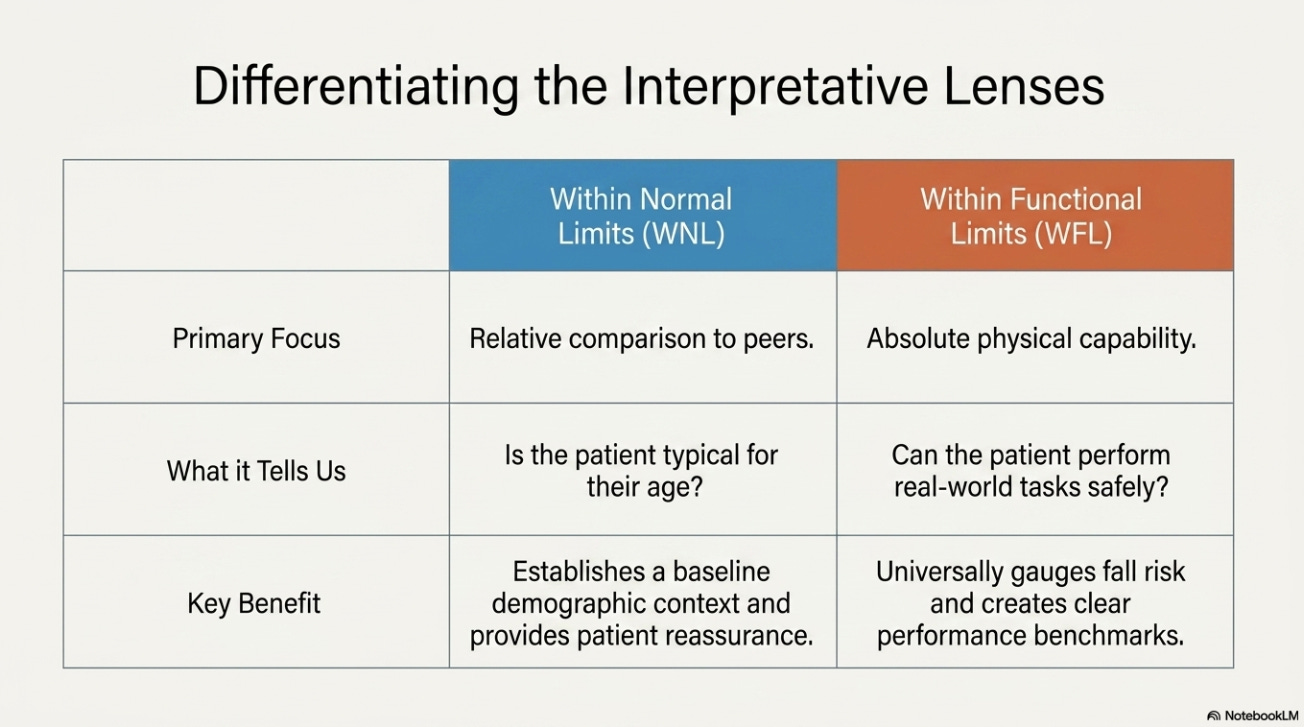
Within Normal Limits (WNL) Explained: A relative, normative lens. It answers the question, “How does this individual compare to the mean of their specific demographic?” While useful for baseline tracking and patient reassurance, it fails to capture absolute physical capacity.
Within Functional Limits (WFL) Explained: An absolute, performance-based lens. It measures the patient’s actual ability to maintain stability under distinct sensory challenges (surface and visual alterations), regardless of age.
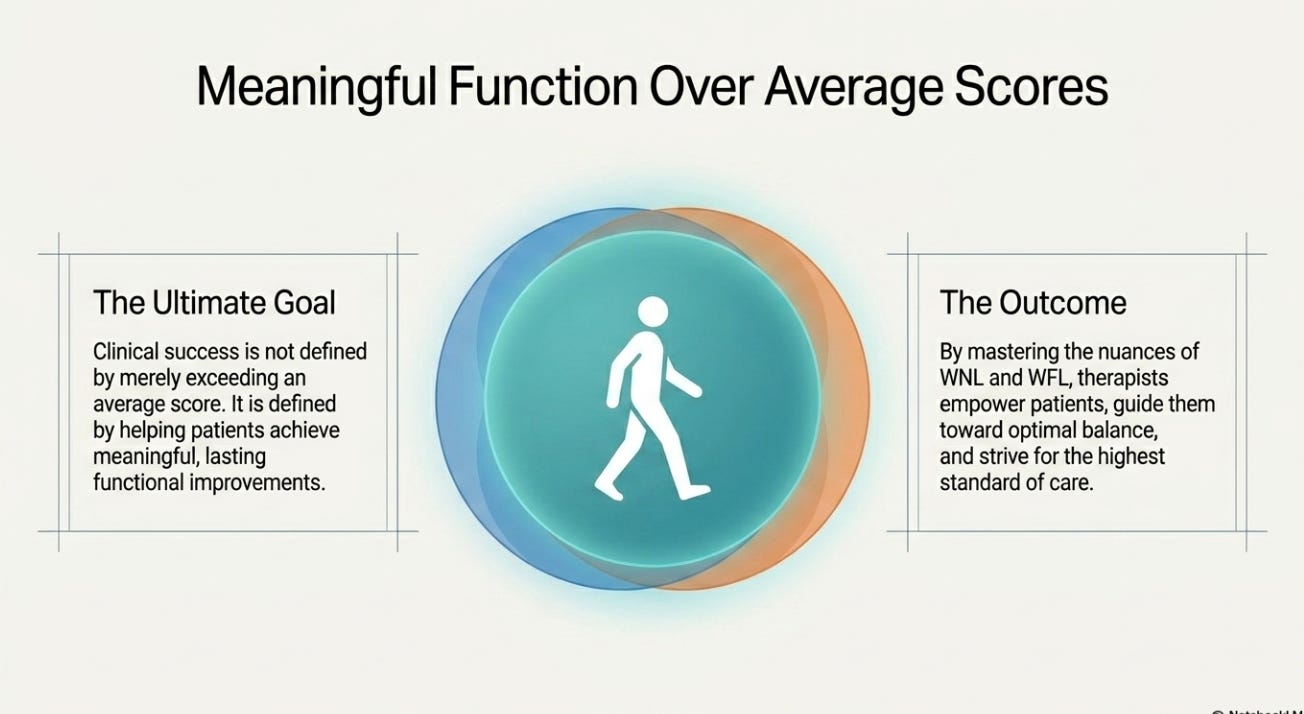
The Clinical Objective: Shift the focus from simply chasing a normative demographic score to designing targeted, individualized training plans that build real-world functional capacity and reduce fall risk.
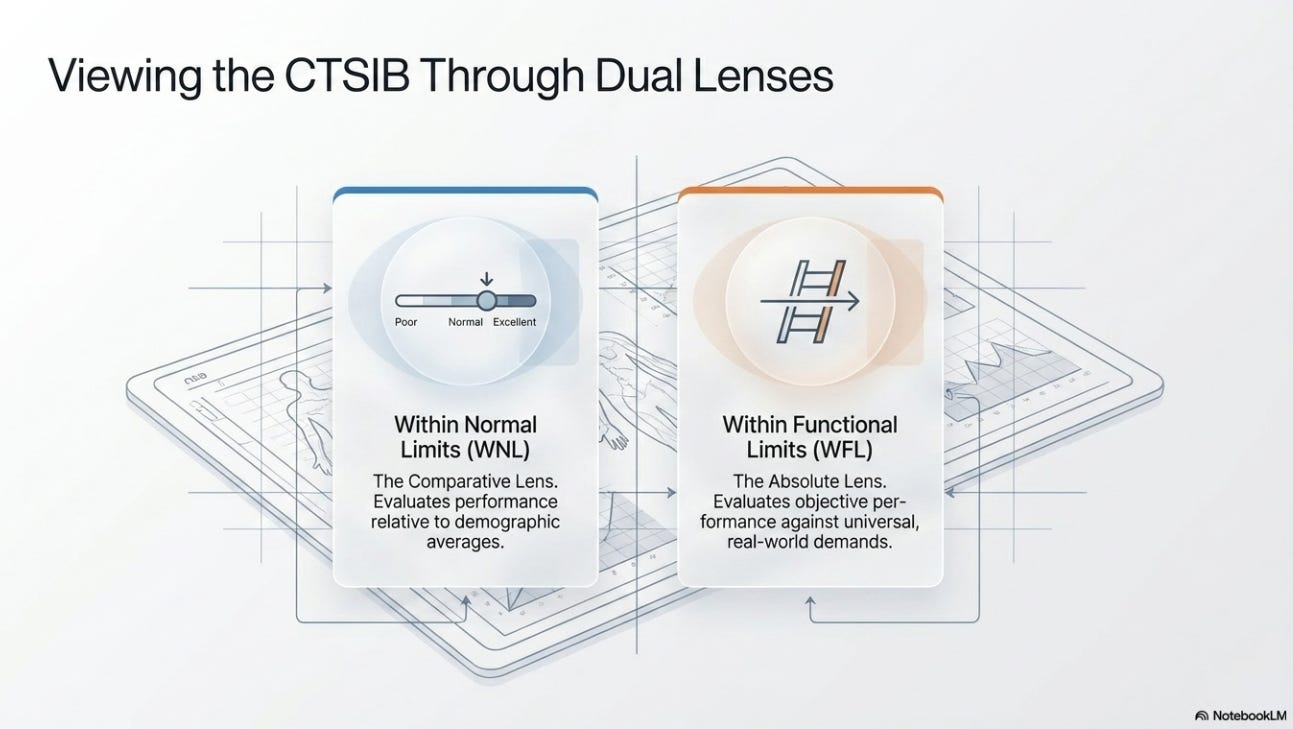
Two Lenses for Clinical Interpretation
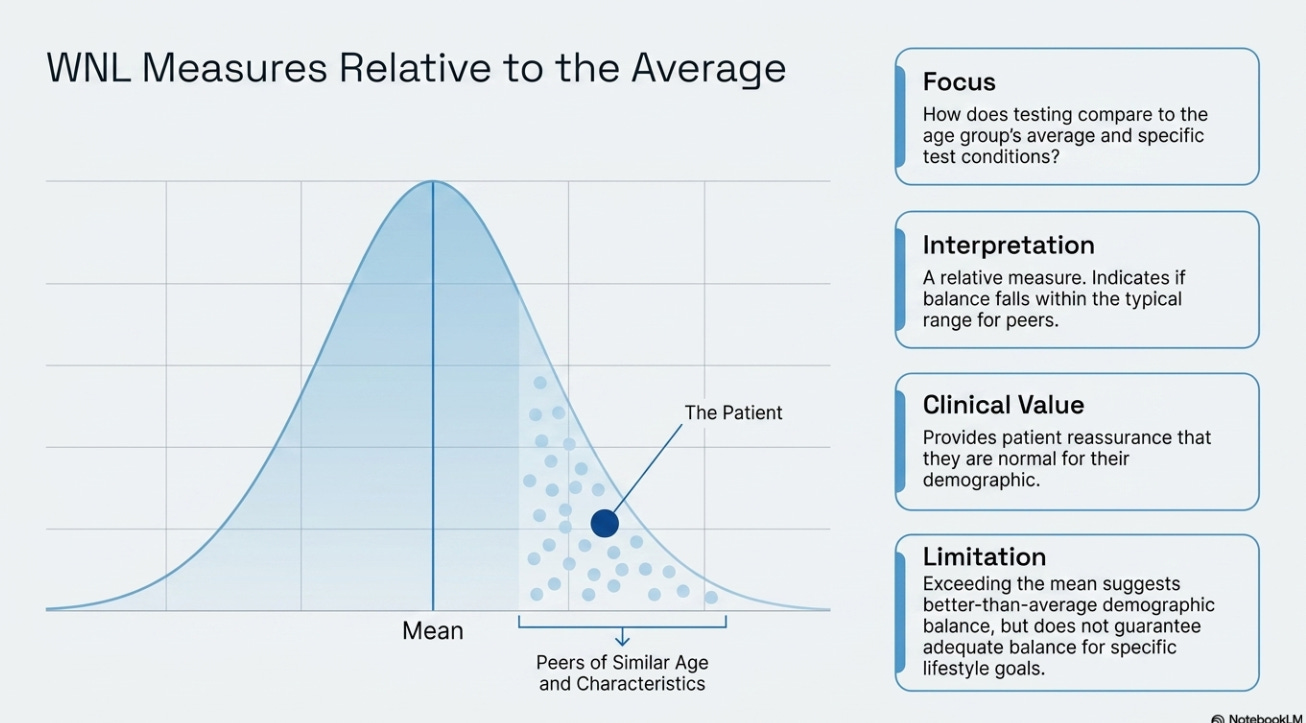
Within Normal Limits (WNL): Comparing to the Average
Primary Focus: Demographic comparison. This metric tracks how a patient’s test results compare to their age group’s average and to specific test conditions.
Clinical Value: This lens provides relative status, peer group benchmarking, and a baseline reference. It offers an excellent starting point for general comparison but does not reflect the complete picture of physical capability.
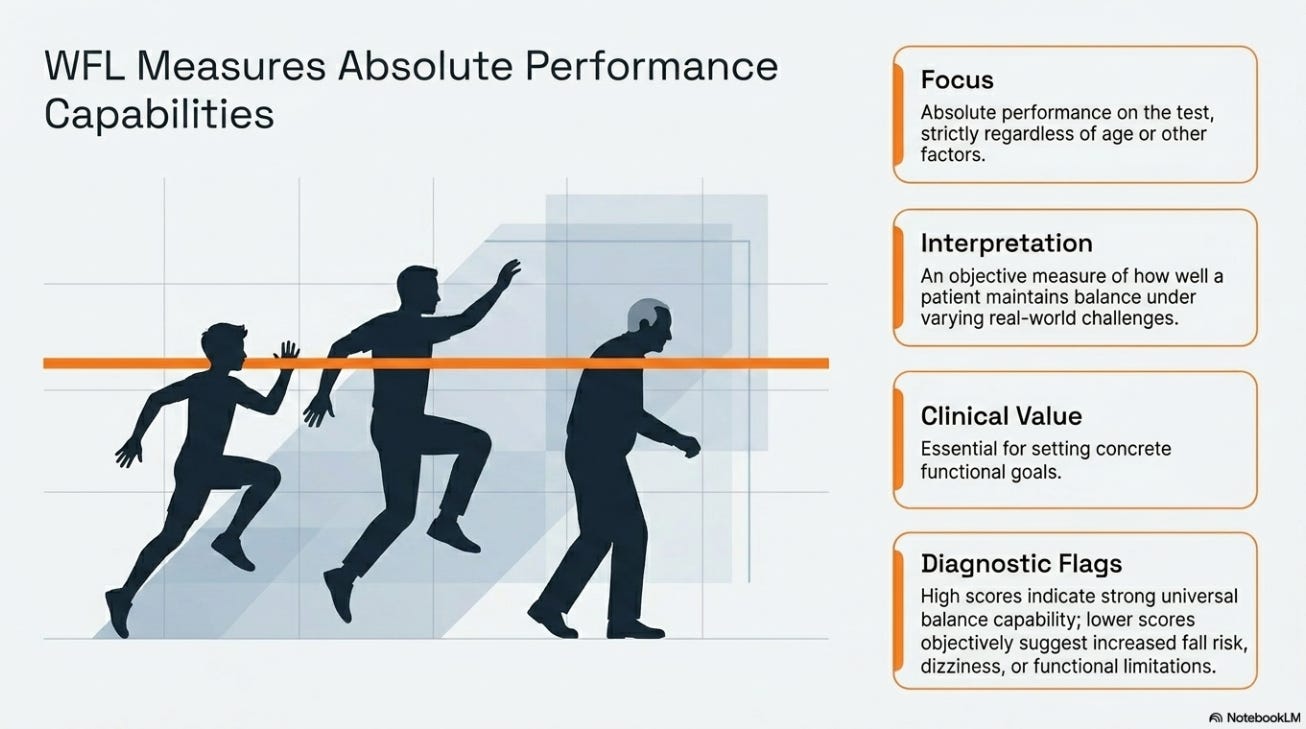
Within Functional Limits (WFL): Performance-Based Assessment
Primary Focus: Absolute performance. This metric evaluates absolute capability on the test, independent of age or demographic factors.
Clinical Value: This lens measures real-world capability, provides an objective assessment of fall risk, and guides functional goal setting. It directly reflects a patient’s ability to navigate complex environmental challenges safely.