
Cochlear Implants: A Two-Part Series for Vestibular and Physical Therapists - Part 1

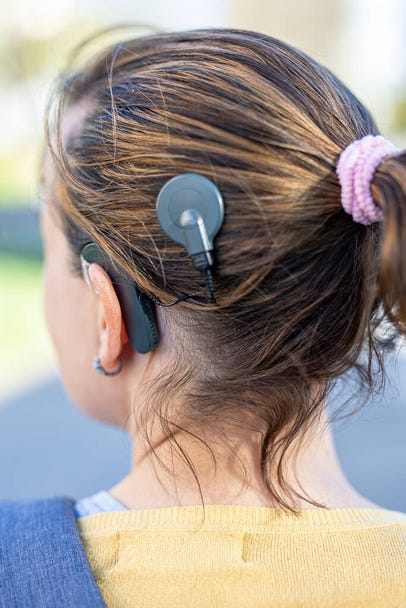
Children and adults who are deaf or severely hard of hearing can be fitted for cochlear implants. As of December 2019, approximately 736,900 registered devices have been implanted worldwide. In the United States, roughly 118,100 devices have been implanted in adults and 65,000 in children.
As vestibular and physical therapists, we are no strangers to the intricate connection between hearing and balance. This two-part series delves into the fascinating world of cochlear implants, a technology that has revolutionized how we approach hearing loss. But there's more to this story than meets the ear.
In Part 1, we'll explore the fundamentals of cochlear implants - how they work, who they're for, and the remarkable benefits they offer. We'll unravel the science behind these devices and shed light on their potential to transform lives.
But here's where it gets exciting for us. In Part 2, we'll delve deep into the unexpected consequences of cochlear implants: their potential to disrupt balance. This is a crucial aspect that we, as therapists, must be alert and prepared for. We'll uncover the mechanisms behind this phenomenon and explore how it can manifest in our patients, from subtle unsteadiness to more severe balance disorders, equipping us with the knowledge to serve our patients better.
So, whether you're curious about cochlear implants or want to understand their implications for your patient's balance, this series is for you. Join me as we explore the intricate interplay between hearing, balance, and this remarkable technology.
What are Cochlear Implants?
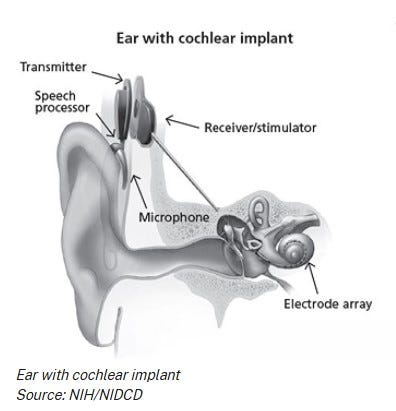
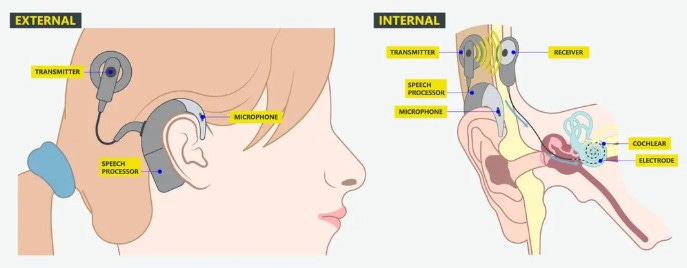
Cochlear implants are surgically implanted electronic devices that bypass damaged portions of the inner ear to provide a sense of sound to individuals with severe-to-profound sensorineural hearing loss. The surgery involves making an incision behind the ear, placing the internal components under the skin, and inserting the electrode array into the cochlea. Unlike hearing aids, which amplify sound, cochlear implants directly stimulate the auditory nerve. This is achieved through a system with both external and internal components. The external components consist of a microphone that picks up sound from the environment, a sound processor that converts sound into electrical signals, and a transmitter coil that sends signals to the internal receiver. The internal components include the receiver/stimulator, which receives signals from the transmitter coil, and the electrode array, a thin wire with multiple electrodes inserted into the cochlea to stimulate the auditory nerve.
How Cochlear Implants Work
The process begins with the microphone picking up sound and the sound processor converting it into electrical signals. These signals are transmitted to the internal receiver, which sends electrical impulses to the electrodes in the cochlea. These electrodes stimulate the auditory nerve, bypassing damaged hair cells. The auditory nerve then sends signals to the brain, interpreting them as sound.
Candidacy
It's important to note that, like any surgical procedure, cochlear implantation carries some risks, including infection, facial nerve damage, and taste changes. However, these risks are relatively low, and the potential benefits often outweigh them. Ideal candidates typically have severe-to-profound sensorineural hearing loss in both ears and receive little or no benefit from traditional hearing aids. They also strongly desire to improve their hearing and communication abilities and have realistic expectations about the outcomes of cochlear implantation. Additionally, they are in good overall health and have no contraindications to surgery.
Benefits
Cochlear implants can provide significant benefits, including improved speech understanding, enhanced communication ability in various environments, increased awareness of environmental sounds, and improved quality of life. These potential benefits can bring hope and optimism to therapists and their patients as a beacon of light in their journey toward better hearing and balance.
Conclusion
Cochlear implants are a remarkable technology that can significantly improve the lives of individuals with severe-to-profound hearing loss. As vestibular and physical therapists, your understanding of the basics of cochlear implants is not just crucial; it's a commitment. It allows you to play an integral role in caring for our patients with these devices, and it's a testament to your dedication to their well-being.
In Part 2 of this series, we will delve into the potential effects of cochlear implants on balance, a crucial aspect for our patient population.