

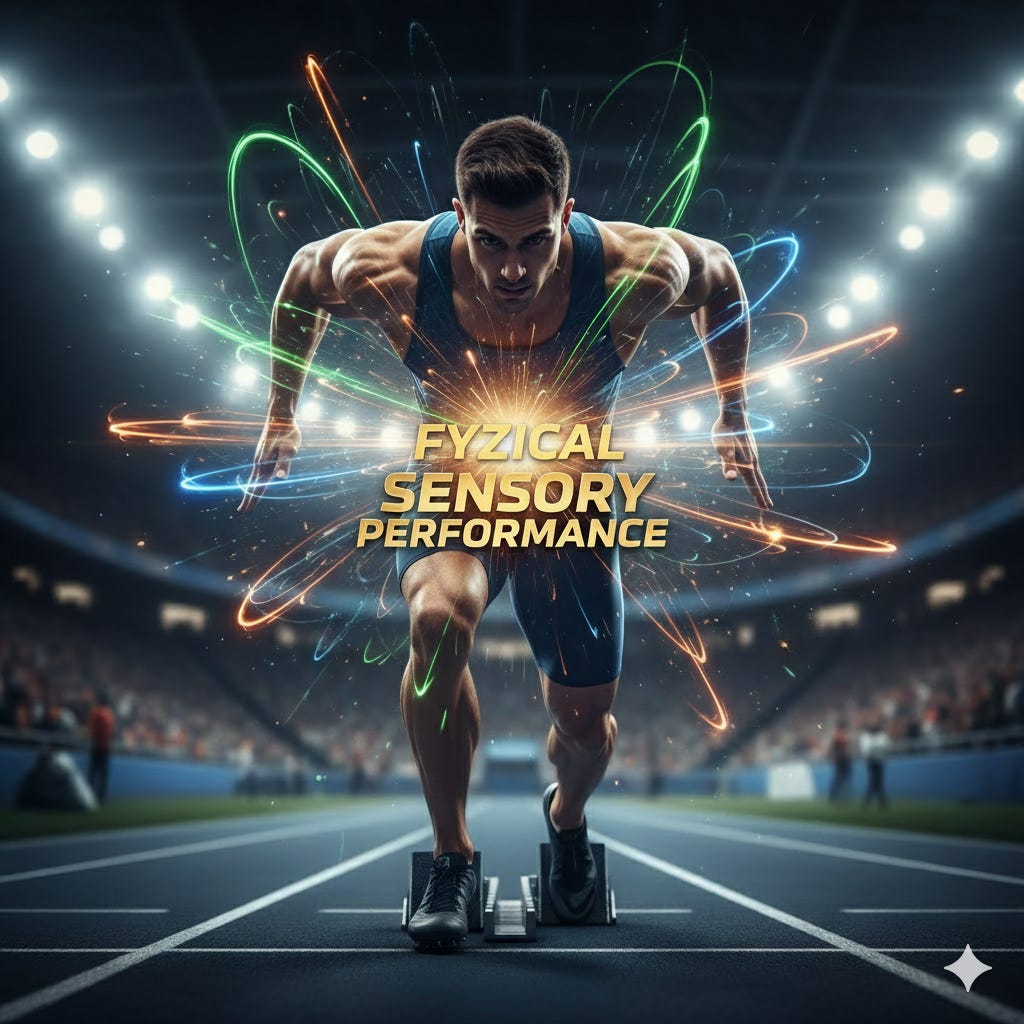
The world of elite sports celebrates high performance, but a silent, long-term consequence of sports-related concussions (SRC) often undermines athletic capability: the increased energy drain required just to stand upright. A recent study in Frontiers in Neurology (Al-Husseini et al., 2022) has unveiled a significant revelation. It showed that former elite athletes with persistent post-concussive symptoms (PPCS) use dramatically more energy to maintain postural control and struggle to adapt to balance challenges.
The full article, Long-term postural control in elite athletes following mild traumatic brain injury, is available here: https://pmc.ncbi.nlm.nih.gov/articles/PMC9511028/.
At FYZICAL Therapy & Balance Centers, we have developed the FYZICAL Balance Paradigm, a pioneering solution to address precisely this type of profound, underlying dysfunction. The study’s findings offer a critical analysis of Sensory Performance—the efficiency and accuracy with which the central nervous system (CNS) processes and responds to sensory input—and establish its vital role in preventing injury and maximizing an athlete’s potential. Our paradigm is at the forefront of this understanding, providing a comprehensive approach to restoring balance and performance.
⚡ The Energy Crisis: Postural Control Demands a High Price
The study clearly demonstrates that months after a mild traumatic brain injury (mTBI), the injured athletes expend significantly more energy than their healthy counterparts across all conditions:
143% more total energy during balance perturbations.
128% more total energy during quiet stance.
Applying the FYZICAL Balance Paradigm (FBP)
In the FBP, we identify this energy expenditure as the physical cost of an inefficient sensory strategy. When an athlete’s primary balance systems (Vestibular, Visual, Somatosensory) become compromised or out of sync, the CNS must work harder, consciously or subconsciously, to achieve stability.
The authors noted that this increased energy use primarily resulted from rapid corrective movements (high-frequency energy>0.1 Hz). This suggests the CNS maintains a state of hyper-vigilance, firing rapid, high-gain movements to prevent a fall. This defines a mismatch strategy in the FBP, specifically identifying:
VVM (Visual-Vestibular Mismatch): The athlete overrelies on visual cues at the expense of somatosensory and vestibular input, leading to dizziness. The finding that vision helped reduce the stability difference indicates a dependence on visual input to compensate for vestibular deficits.
SVM (Somatosensory-Vestibular Mismatch): The athlete overrelies on surface cues rather than on visual and vestibular input. This strategy often contributes to the rigidity that drives those excessive, high-frequency corrective movements captured in the results.
This high-energy state forces the CNS to generate constant error messages, demanding high-effort, conscious control rather than the efficient, unconscious, automatic processing of a healthy system. Restoring efficiency is crucial for athletic longevity.
📉 The Failure to Adapt: A Direct Threat to Performance and Safety
The most compelling finding for an athletic population involves the diminished sensorimotor adaptation that the study uncovered. While control athletes adapted by 37% to repeated balance challenges, the concussed group only managed 18%. This reduced ability to adapt shows the injured athlete’s brain lacks the essential learning capacity required at the elite level. This failure creates a critical vulnerability that impacts both performance and safety.
First, performance suffers because adaptation drives athletic success. An athlete must constantly adjust to dynamic competition, changing surfaces, and physical fatigue. If the central nervous system (CNS) struggles to learn and reduce error signals, the athlete will continuously expend extra mental and physical energy just to execute baseline movements, directly compromising their speed and skill.
Second, this deficit is a critical safety issue. When the brain fails to learn from a predictable perturbation in a lab setting, it is severely unprepared to respond to an unpredictable force—like a sudden collision or a simple ankle turn on the field. The result is a slow, inaccurate protective reflex, which significantly increases the risk of secondary injuries. As the study authors correctly stated:
‘Results from posturography may predict the length of expected recovery and the outcome of rehabilitation since sensorimotor adaptation is key to both.’
🎯 Treatment Focus: Unwinding the Mismatch and Driving Neuroplasticity
This research strongly justifies the Sensory Performance approach used exclusively at FYZICAL:
Identify the Mismatch: At FYZICAL, we use advanced testing, including the FYZICAL-CTSIB (our version of sensory organization testing), to precisely determine which sensory system (or systems) the patient over-relies on (e.g., VVM, SVM, SVVM, or VSVM). This comprehensive testing enables us to tailor our treatments to each athlete's specific needs, ensuring the most effective therapeutic outcomes.
Unwind the Central Sensitization: The athlete must regain trust in their system. Our therapists apply progressive, challenging treatments, often within the Safety Overhead Support System (SOS), a state-of-the-art safety system that ensures the athlete’s safety during therapy. This system allows us to safely force the central nervous system to recalibrate, reducing the need for high-frequency, high-effort corrective movements. This CNS adaptation requires the brain to process inputs unconsciously, which may initially worsen symptoms before neuroplastic changes occur.
Drive Adaptation (Motor Learning): Treatment must specifically target the capacity to adapt. We challenge the athlete with predictable and then randomized sensory inputs (surface changes, visual flow) to promote sensorimotor adaptation, as the study demonstrated was deficient. We teach the brain to make those corrective changes automatically and efficiently, eliminating the constant, exhausting energy drain.
By focusing our therapy on improving Sensory Performance—reducing the ‘energy drain’ and restoring sensorimotor adaptation—we do not simply treat a symptom; we restore the athlete’s capacity to return to peak performance while actively mitigating their risk of future injuries. Our approach holds the promise of a brighter, injury-free future for athletes.
Brian Werner, PT, MPT, is a physical therapist who has been specializing in vestibular and balance disorders for over a quarter of a century. He is the founder of the FYZICAL Balance Paradigm and one of the co-founders of FYZICAL, LLC, Balance Center Division with Dr. Daniel Deems, MD, PhD, where he serves as the National Director of Vestibular Education & Training.