


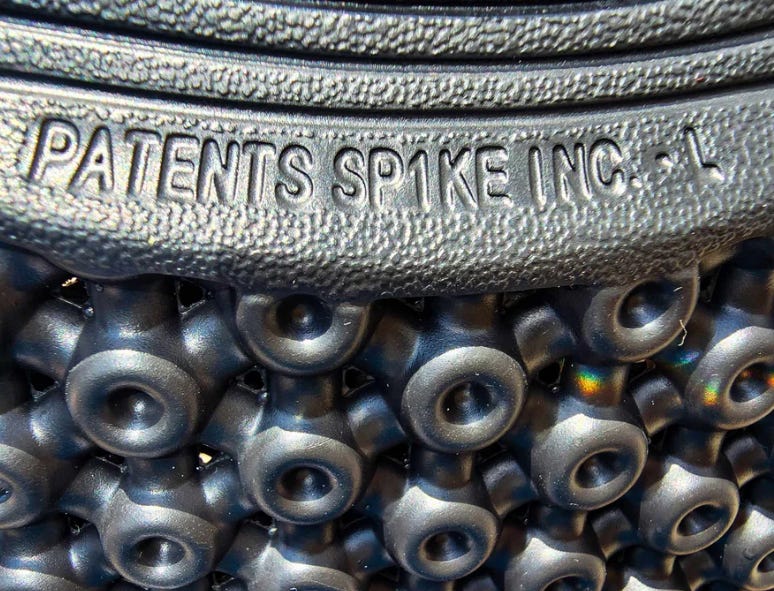
The clinical management of Persistent Postural-Perceptual Dizziness (PPPD) necessitates a transition from maladaptive sensory strategies—specifically, visual and surface preferencing (dependency)—toward more integrated postural control. While traditional orthotics aim to enhance somatosensory feedback, their inherent rigidity often creates a secondary barrier of discomfort and pain, leading to high rates of patient non-compliance. When an orthotic is uncomfortable or difficult to adapt to, the patient often fails to adhere to the intervention, further entrenching their maladaptive dependencies.
How natural kinetics trigger the alarm system
A primary driver of the alarm system in PPPD is the brain’s hypersensitivity to natural kinetics. The visual system picks up both egocentric and exocentric flow, and that “jolt” of optics induces a high-arousal alarm response. To resolve this, many patients resort to “sensory docking”—lying down, sitting, or avoiding movement—to provide their vision with a stable platform. While this provides temporary relief, it is non-functional and ultimately destructive.
By staying still, the patient allows the visual system to anchor even more firmly to a fixed horizon, making the “jolt” of actual movement even more threatening. We cannot simply desensitize patients to this flow; we must encourage the vestibular system to integrate naturally by providing functional artificial somatosensory input that competes with visual “noise.”
The role of SP1KE™ technology as a somatosensory protagonist
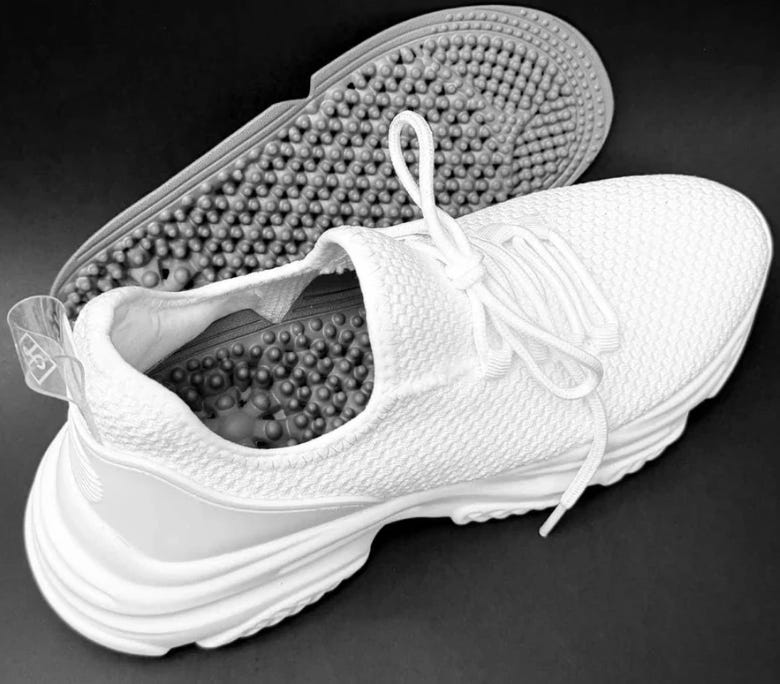
SP1KE™ technology represents a shift in the science of ergomorphology by providing a structural support surface that facilitates sensory integration without the negative stimulus of traditional rigid orthotics. This technology acts as a protagonist in the rehabilitation process by optimizing the microenvironment of the foot-surface interface. By introducing these products—whether through orthotics or mats—we provide a strong, organized somatosensory signal that serves as a functional anchor, helping offset visual dependency.
Enhancing somatosensory feedback and signaling
Patients with PPPD present with a sensory mismatch where the brain over-relies on visual cues due to a perceived unreliability of vestibular inputs. SP1KE™ supports the re-weighting of these senses through:
Active Bio-feedback: The unique structural design provides consistent somatosensory signaling, helping the patient “find” their center of gravity through the feet. This consistent feedback “drowns out” the exocentric flow that causes the alarm.
Pressure Distribution: By using bio-based materials that adapt to the foot, the technology avoids the localized pressure points that make rigid orthotics intolerable.
Facilitating Functional Movement: Because the material is responsive rather than restrictive, it allows for a more natural gait cycle, which is essential for neuroplastic recovery in vestibular rehabilitation.
Overcoming the barrier of sensory overload
A common reason for failure in orthotic intervention for PPPD is that the stimulus is “too much.” The brain, already in a state of high arousal and anxiety, perceives rigid correction as a threat. SP1KE™ technology coordinates a more nuanced feedback loop. It provides the necessary somatosensory “anchor” to reduce visual preferencing while remaining comfortable enough for long-term functional use. Using mats that provide increased somatosensory input for extended periods helps patients offset their visual dependence and promote healthy somatosensory-vestibular integration.
Conclusion
Effective recovery from PPPD is not achieved by avoiding movement, but by the intelligent reintegration of the sensory systems. By replacing the false safety of “sensory docking” with a reliable, functional somatosensory anchor, we address the root of the optical “jolt” that triggers the alarm system. Technologies like SP1KE™ enable a transition away from visual and surface-based preferences by providing a consistent, organized signaling environment. This approach supports the integrity of the vestibular system, enabling the patient to engage in vigorous movement and reclaim a functional life without the barrier of pain or sensory overload.
Accessing SP1KE™ Technology
For those looking to incorporate these advanced structural support surfaces into their rehabilitation program, you can explore the full range of mats and orthotic inserts at Vigurus Technologies.
Note for my subscribers: I have coordinated with the team at Vigurus to ensure that if you mention my name (Brian Werner) when reaching out or placing an order, you will receive a discount on their products. Please note that I receive no financial compensation or commission for this—my goal is simply to ensure you have access to the functional tools necessary for effective sensory integration.