
Elevate Your Vestibular Therapy: Master the Art of Progression Frameworks


Let's face it: we've all encountered the same hurdles in our vestibular therapy practice.
The cones are out, or the hurdles are already set up, and it's just easier to use what's already available, even if it might not be the most appropriate challenge for the patient standing in front of us.
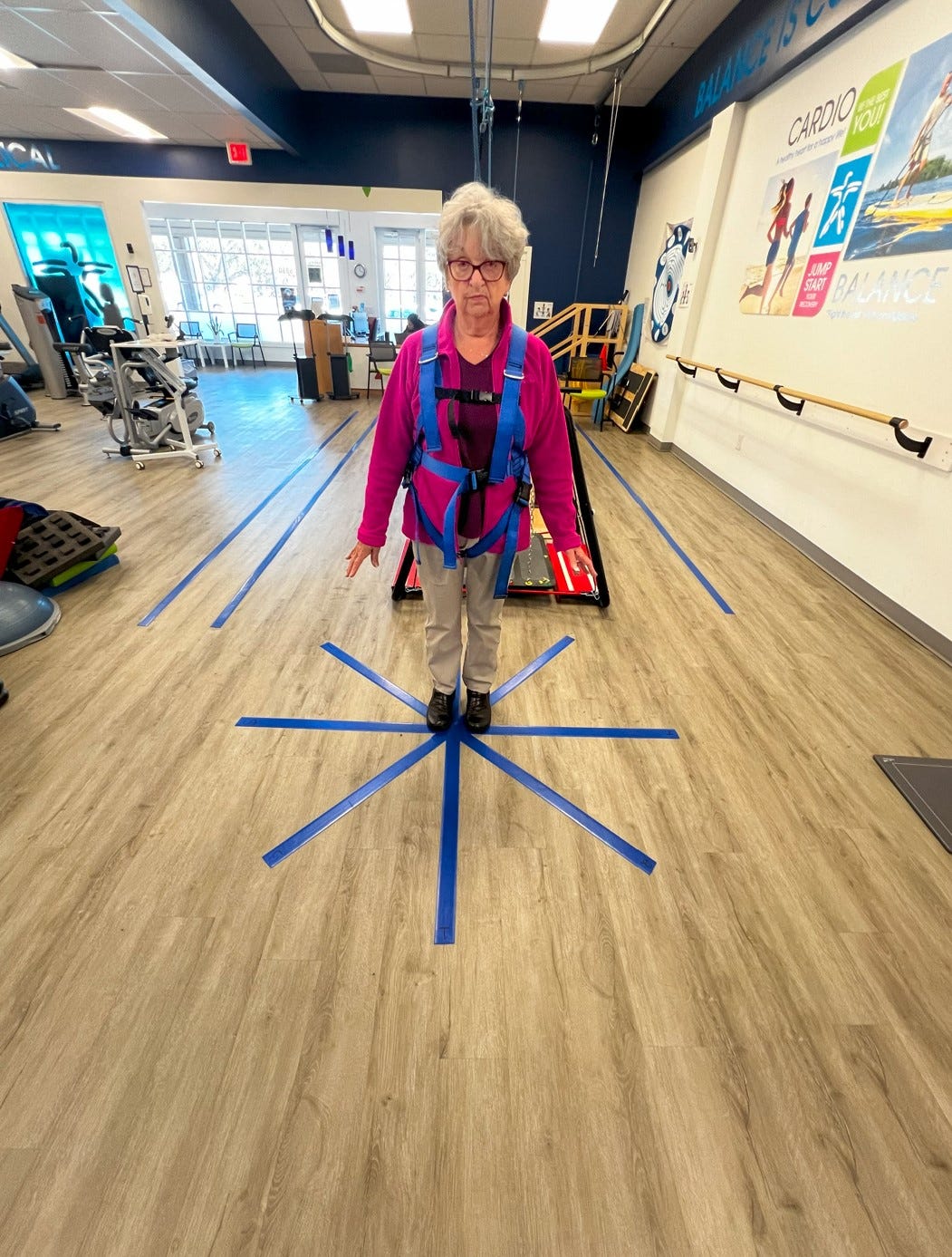
We may be short on time and pressured to squeeze in as many exercises as possible. Or we may fall into the trap of thinking 'harder is always better,' pushing our patients beyond what they're truly ready for.
Sound familiar?
It's easy to get caught up in our practice's day-to-day demands and lose sight of the bigger picture. But what if those 'in-the-moment' decisions, like choosing a standard exercise over a more tailored one or pushing a patient too hard, limit our effectiveness and hinder our patients' progress?
Imagine the relief of adopting a more strategic, brain-based approach to vestibular rehabilitation. A framework that eliminates the guesswork in treatment planning and ensures we tackle the root cause of our patients' balance dysfunction. This is the path to confidence and reassurance in our practice.
Empowerment comes with a deeper understanding of the sensory strategy and the power of progressive frameworks. This knowledge is crucial in guiding our treatment decisions and ensuring we provide the best care for our patients.
Unlocking a New Level of Care with the Sensory Strategy
Identifying the individual's unique sensory profile—their preferred way of processing and prioritizing sensory information—provides a robust roadmap for rehabilitation.
Think of it like this:
In orthopedics, a rehabilitation program is designed after a thorough assessment of strength, range of motion, and functional limitations.
In the neurological world, we wouldn't treat a stroke patient without considering their specific motor and sensory deficits.
Similarly, vestibular rehabilitation needs a framework that guides treatment decisions based on the individual's sensory strengths and weaknesses.
Introducing Progressive Frameworks
Progressive frameworks in vestibular rehabilitation offer a structured, individualized approach that mirrors the principles we use in other areas of physical therapy. These frameworks provide a step-by-step progression of exercises and activities carefully calibrated to challenge the balance system and promote optimal adaptation. They are a roadmap that guides us in gradually increasing the difficulty of exercises to match the patient's abilities.
The Base of Support and Surface Progressions: A Practical Example
To illustrate this concept, consider how we might progressively challenge balance through manipulations of base of support and surface stability:
Static Balance Progression:
Supine/Sidelying/Prone/Quadruped/Tall Kneeling/Half-Kneeling: Begin with a stable base of support in a supine position.
Sitting on a firm surface: Progress to a seated position on a firm surface.
Standing with support: Transition to standing with support.
Standing without support: Progress to unsupported standing.
Sitting on a compliant surface: Introduce surface instability in a seated position.
Standing, narrow base of support on firm surface: Challenge balance with a narrow base of support while maintaining a firm surface.
The normal base of support on a compliant surface: Challenge balance with a compliant surface while maintaining a normal base of support.
The narrow base of support on a compliant surface: Combine both challenges for maximum difficulty.
Dynamic Balance Progression:
Rolling, side-lying to sitting/Getting off the Floor to a Chair: Develop fundamental movement patterns and core control.
Sit to Stand: Master transitions between sitting and standing.
Weight Shifting/Stooping/Squatting/Reaching: Practice dynamic balance control in a standing position.
Stepping/Turning/Marching: Develop stepping strategies and coordination (all precursors to walking).
Normal walking on firm surfaces (Forward/Backward/Side Stepping): Establish a baseline for gait on a stable surface.
Narrow base of support walking on firm surfaces: Narrowing the base of support (e.g., tandem walking, hurdles, cones) increases the challenge.
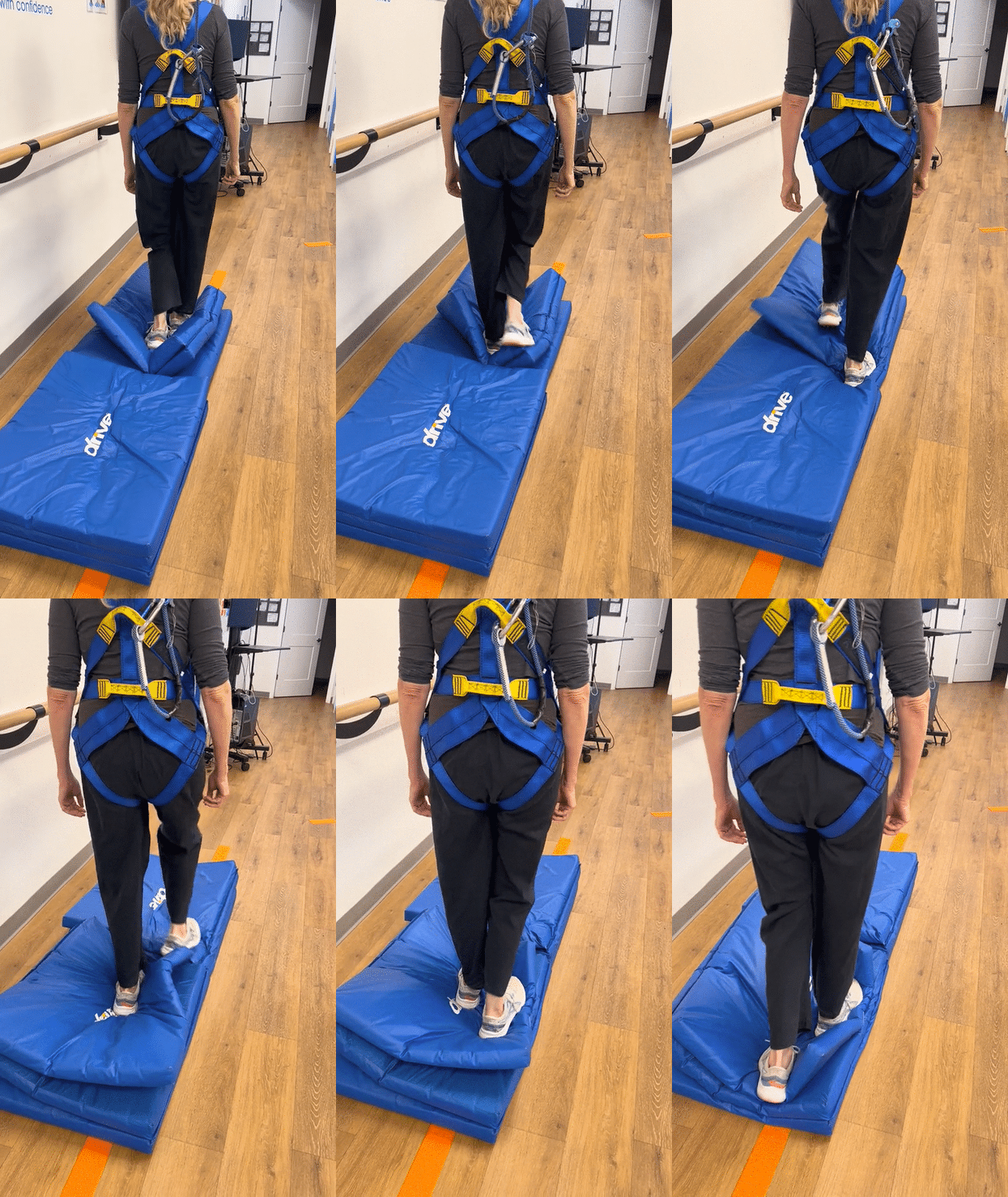
A normal base of support for walking on compliant/irregular surfaces is to introduce surface instability while maintaining a normal base of support (steps, cushions, stairs).
Narrow base of support walking on compliant/irregular surfaces: Combine both challenges for maximum difficulty.
Reflecting on Child Development: Neuroplasticity in Action

Notice how this dynamic progression mirrors a child's stages when learning to walk. They start with rolling and transitioning to sitting, then progress to pulling to stand, weight shifting, and finally, taking those first tentative steps.
This parallel highlights the principles of neuroplasticity and Hebbian Learning (neurons that fire together wire together) at play. Just as a child's brain adapts and forms new neural connections through repeated practice and exploration (Also known as Praxis), our patients' brains can rewire themselves through targeted and progressive challenges. This inspiring concept should motivate us to continue our work in vestibular rehabilitation, knowing that we are facilitating the brain's remarkable ability to heal and adapt.
Key Principles of Effective Progression:
Controlled Dosage: Gradually increase the challenge to the balance system, preventing overwhelm and promoting optimal adaptation.
Time Under Tension: Provide the brain sufficient 'time under tension' to stimulate neuroplasticity and strengthen neural connections.
Specificity: The exercises should target specific sensory systems and movement patterns, ensuring relevance to the individual's needs and deficits.
Repetition: Incorporate repetition to reinforce learning and strengthen neural pathways.
Neuroplasticity and Adaptation: Drive neuroplasticity, the brain's ability to rewire itself, and promote adaptation, leading to improved balance control and functional recovery.
Beyond Sensory Progression: Vision and the Limbic System
While the examples above focus on the base of support and surface progression, it's important to remember that progressive frameworks also encompass other key elements:
Visual Progression: Just as we progress the challenge to the balance system through movement and surface variations, we also need to progress visual challenges systematically. This might involve starting with eyes open, progressing to eyes closed, and finally introducing visual conflict. The key is gradually increasing the demand on the visual system while ensuring the patient feels safe and supported based on the known Sensory Strategy.
Limbic System Integration: We can't forget the powerful influence of the limbic system – the brain's emotional center – on balance control. If we push our patients too hard or create an environment of fear and anxiety, they may shut down, and their progress will stall. This is sometimes called the 'crocodile brain' taking over, where the fight-or-flight response overrides cognitive processing and motor learning. Understanding the interplay between the limbic system and balance control can create a safe and supportive environment that promotes optimal learning and adaptation.
Addressing Concerns and Embracing the Shift
Now, you might be thinking:
However, not all patients fit neatly into a structured progression. Flexibility is key. Progressive frameworks are a roadmap, not a straitjacket. We can adapt and modify them based on individual needs and responses.
Aren't traditional methods adequate? Conventional methods have their place, but progressive frameworks enhance them with a more strategic and brain-based approach.
What about time constraints and patient variability? Frameworks can help us work more efficiently by providing a clear roadmap and targeted interventions.
The Power of Informed Decision-Making
By understanding and implementing progressive frameworks, we move beyond intuition and embrace a more strategic, brain-based approach to vestibular rehabilitation. This empowers us to:
Become 'Architects of Neuroplasticity': We're not just prescribing exercises but strategically guiding the brain's ability to rewire, promoting optimal adaptation and recovery.
Elevate Clinical Reasoning: Progressive frameworks provide a structure for critical thinking, allowing us to make informed decisions based on objective data and a deep understanding of sensory integration.
Maximize Patient Outcomes: By targeting the root cause of balance dysfunction and providing a clear path for progression, we accelerate recovery and empower our patients to achieve their full potential.
Transform Patient Lives: We don't just treat symptoms; we restore function, build confidence, and enhance quality of life.
Embrace the Power of Progressive Frameworks
Progressive frameworks are more than exercises in vestibular rehabilitation. They are a strategic roadmap, a blueprint for brain re-engineering, and a testament to our expertise as expert clinicians.
By embracing these frameworks, we elevate our practice, enhance our clinical reasoning, and ultimately provide our patients with the highest level of care.
Ready to take your vestibular therapy practice to the next level?
Start exploring the concept of progressive frameworks and discover how they can transform your approach to patient care.