
Enhancing Vestibular Rehabilitation with Swiss Ball Exercises: Addressing Sensory Mismatch and Avoiding Progression Pitfalls


Dizziness is a common complaint among patients seeking physical therapy intervention. Physical therapists play a crucial role in assessing and treating dizziness, often utilizing vestibular rehabilitation exercises to improve balance and reduce symptoms. The Swiss ball is a versatile tool that can be incorporated into vestibular rehabilitation to provide a wide range of challenges and enhance therapeutic outcomes, particularly by addressing sensory mismatches and facilitating appropriate progression.
Understanding Sensory Mismatches
Patients with dizziness often develop specific sensory strategies to compensate for deficits in their vestibular system. These strategies rely more heavily on visual, proprioceptive, or somatosensory inputs for balance control. However, this over-reliance can lead to instability when a favored system is challenged or provides inaccurate information, resulting in a sensory mismatch. Visual Vestibular Mismatch (VVM) is one example where patients depend excessively on visual cues. Other mismatches may involve a reliance on surface cues (somatosensory mismatch) or difficulties integrating vestibular information with different senses.
Swiss Ball Exercises and Sensory Mismatch
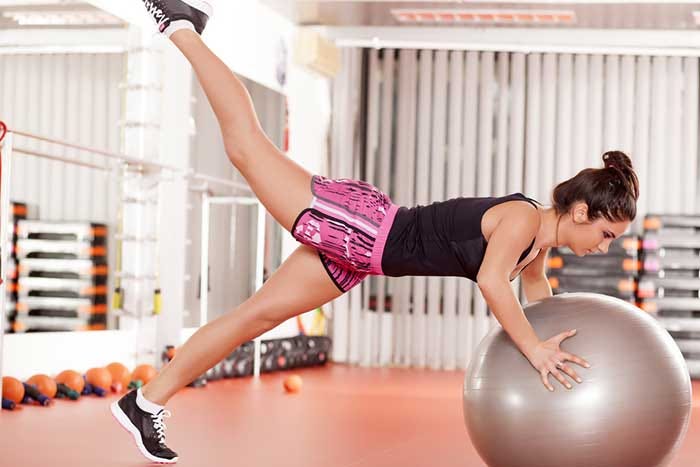
The Swiss ball manipulates surface and visual inputs to challenge patients' balance systems and address their specific sensory strategies. This manipulation can be categorized into two main areas:
Visual System Challenges:
Vision Stable: For patients with VVM, starting with eyes open allows them to utilize their preferred sensory input.
Eyes Closed: Progressing to eyes closed creates a sensory mismatch for VVM patients, forcing them to rely on their vestibular and proprioceptive systems and promoting adaptation.
Visual Conflict: Introducing visual distractions or illusions further challenges the VVM strategy and encourages the central nervous system to reweight all the sensory inputs for improved balance control.
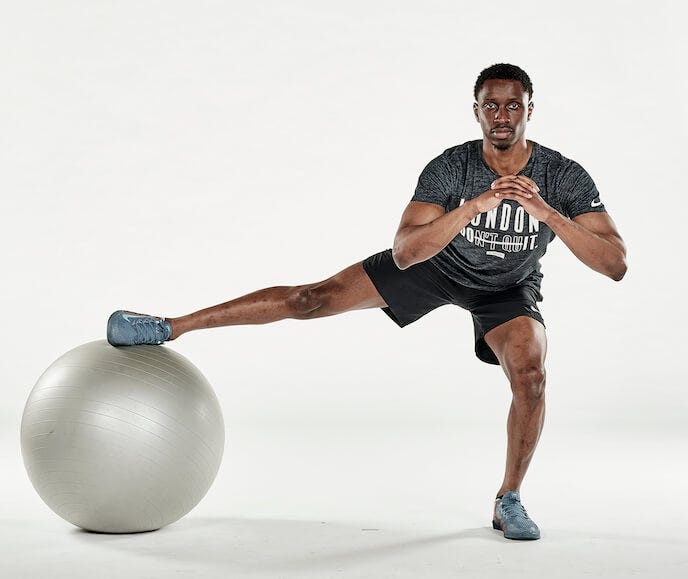
Swiss Ball Surface Challenges:
Static Exercises: Even in static positions, altering foot placement (narrow base of support, single-leg stance), adding arm movements, or placing the feet on compliant surfaces creates somatosensory and proprioceptive challenges that can induce sensory mismatch and promote adaptation.
Dynamic Exercises: Dynamic movements like side-to-side shifting, forward and backward rocking, controlled bouncing, and circular motions further challenge the vestibular and somatosensory systems, particularly when combined with visual challenges. This creates a significant sensory mismatch, forcing the central nervous system to adapt and improve balance control.
The Importance of Gradual Progression
It is crucial to progress gradually through the exercise framework, systematically increasing the challenge to each sensory system. Skipping steps or prematurely introducing complex exercises can reinforce maladaptive strategies and hinder patient progress. Each stage of the progression plays a vital role in recalibrating the patient's sensory system and promoting optimal adaptation.
Considerations for Effective Implementation
Patient Safety: Prioritize patient safety by starting with more straightforward exercises, progressing gradually, and using a spotter or safety overhead support (SOS) or Single Point Fixation (SPF) system when necessary, especially when introducing sensory mismatches.
Individualized Approach: Thoroughly assess each patient's sensory strategies and tailor exercises to their specific needs and abilities, considering the type of sensory mismatch they present.
Gradual Progression: Gradually increase the difficulty of exercises and the degree of sensory mismatch to avoid overwhelming the patient and promote a sense of accomplishment.
Therapist Cueing: Provide clear, concise instructions and feedback to ensure proper form and technique, maximizing exercise effectiveness and patient understanding.
Conclusion
The Swiss ball is a valuable tool for enhancing vestibular rehabilitation programs. By systematically varying visual and surface challenges, understanding the principles of sensory mismatches, and adhering to a gradual progression, physical therapists can create diverse exercises to address the unique balance needs of patients with dizziness, promoting improved function and quality of life.
Is it a sign that my vestibular system relies heavily on visual cues if I can stand on one leg with open eyes and totally cannot with closed eyes?