
Ewald's First & Second Laws: The Right Ear Paradox: Demystifying Left-Beating Nystagmus and the Nuances of Vestibular Stimulation


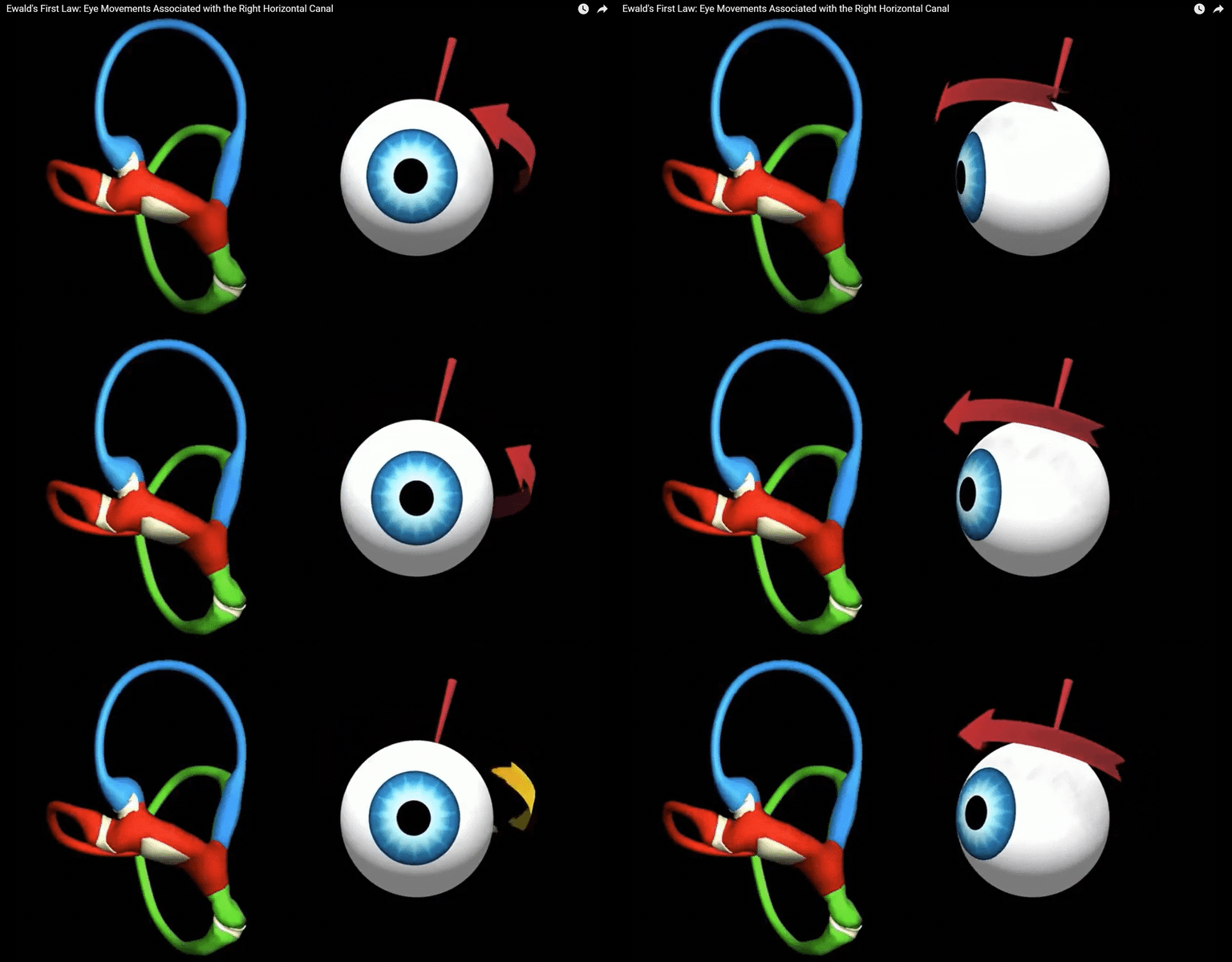
This was a tough one for me today to explain, as it has frustrated me for years observing it. In this video, Dr. Michael Teixido, MD, describes the type of nystagmus you would see if the right HSC is “stimulated.” Red is the slow phase to the right, and yellow is the fast phase to the left.
Let's watch this short video.
Citation: https://www.youtube.com/@DRMTCI (Michael Teixido, MD)
The video demonstrates a left-beating nystagmus, with the eye smoothly drifting to the Right (slow phase) and quickly jerking back to the Left (fast phase). The video's author attributes this nystagmus to stimulation of the right ear, which requires careful examination to avoid misinterpretation.
The Puzzle: Left-Beating Nystagmus with Rightward Eye Drift – What's Happening?
Here's where the confusion arises: the video shows the eyes slowly drifting to the Right, which correctly indicates a sinusoidal head turn to the Left. The slow phase of nystagmus always moves in the opposite direction of the head movement, reflecting the vestibular system's attempt to maintain gaze stability.
However, the persistent left-beating nystagmus (fast phase to the Left) initially contradicts this. A leftward head turn should excite the left ear and, according to Tate's Rule (nystagmus beats towards the more neurally active side), result in a left-beating nystagmus. This is indeed what we observe in the video.
The confusion stems from the author's attribution of the nystagmus to stimulation of the right ear. This seems counterintuitive, as stimulating the right ear would typically be expected to produce a right-beating nystagmus.
The Key Insight: It's Not Just Stimulation, It's Relative Activity (and Inhibition of the Right Ear)
The video highlights a crucial concept: nystagmus direction is determined by the relative activity of the two vestibular systems (the Right and Left inner ears), not solely by the direction of the head movement or the ear being directly stimulated.
In this case, the left-beating nystagmus indicates that the left ear is more neurally active than the right ear, as the Head is likely turning left. This is because the right ear is inhibited and not excited in this scenario.
The author's description is misleading, implying that the right ear is the primary driver of the nystagmus. In reality, the left-beating nystagmus results from the relative imbalance in neural activity between the two ears, with the left ear being more neurally active due to the inhibition of the right ear and the excitation of the left ear simultaneously (Push-Pull Phenomenon).
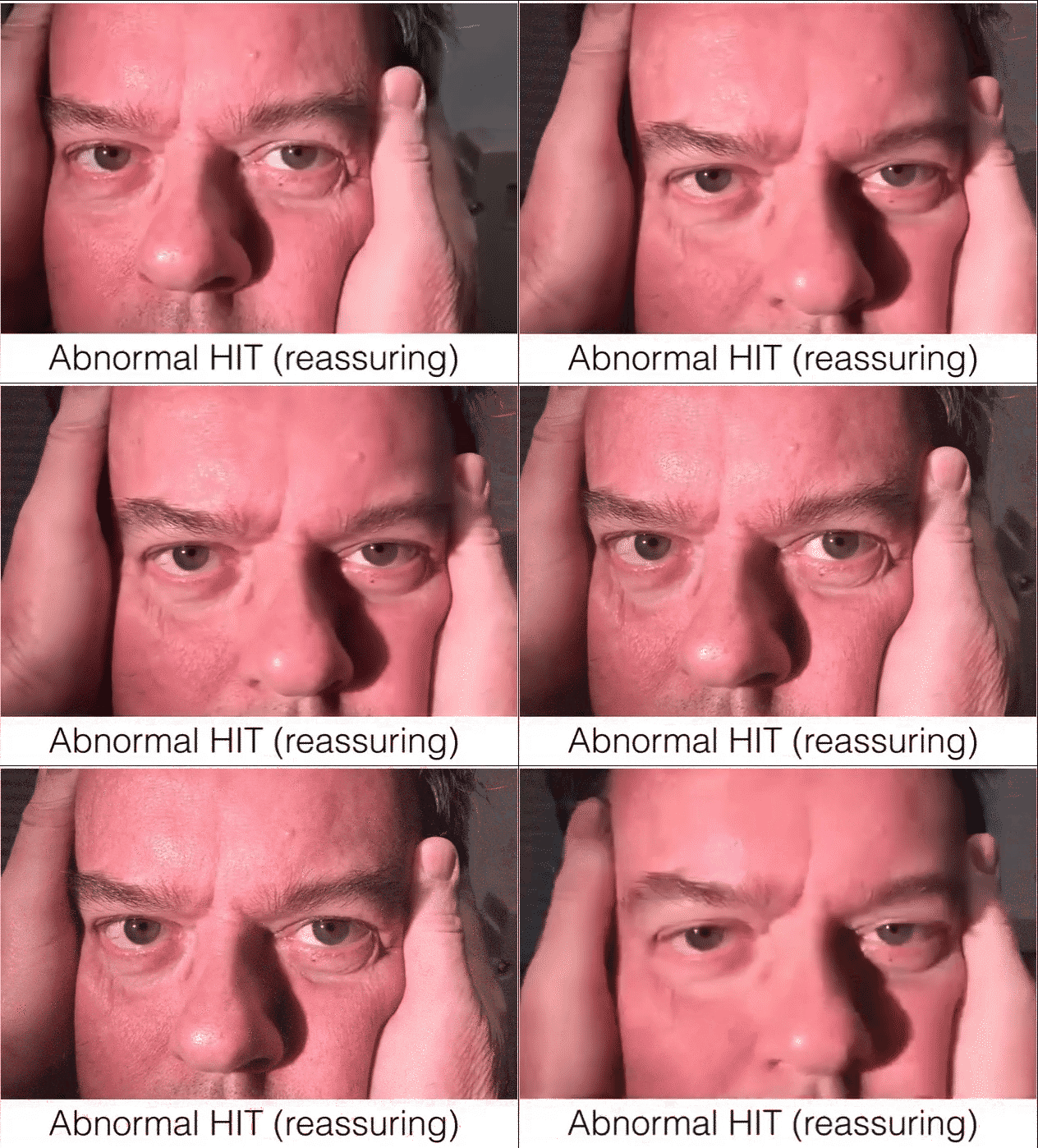
Problem: This inhibition could be caused by several factors, as discussed earlier: sustained rotation to the Right, cold caloric irrigation of the right ear, or a positive head impulse test on the right ear.
The Bottom Line: The video demonstrates that even with a rightward slow phase (suggesting a left-head turn), the nystagmus can be left-beating if the right ear is inhibited. This seemingly paradoxical phenomenon underscores the importance of considering the relative activity of both ears and the specific type of stimulation when interpreting nystagmus.
Why Left-Beating Nystagmus with Right Ear "Stimulation"?
Several scenarios could explain this phenomenon:
Sinusoidal Head Turn to the Left (Suspected): If the Head is being turned from Right to the Left in a rhythmic motion, this would excite the Left ear and inhibit the Right, resulting in the observed left-beating nystagmus. The rightward slow phase is the compensatory response to the leftward head turn, while the leftward fast phase is the corrective saccade.
Sustained Rotation to the Right (Post-Rotatory Nystagmus): If the person in the video were just spun to the Right for a prolonged period (25-30 seconds quickly), the endolymph in the right horizontal semicircular canal would continue moving even after the rotation stopped. This continued movement would cause the right ear to be inhibited and the left ear to be excited, resulting in the observed left-beating nystagmus.
Cold Caloric Irrigation of the Right Ear: Cold water in the right ear canal would cause the endolymph in the right horizontal canal to become denser and sink, creating a downward current that mimics a head turn to the Left. This would inhibit the right ear and lead to a left-beating nystagmus.
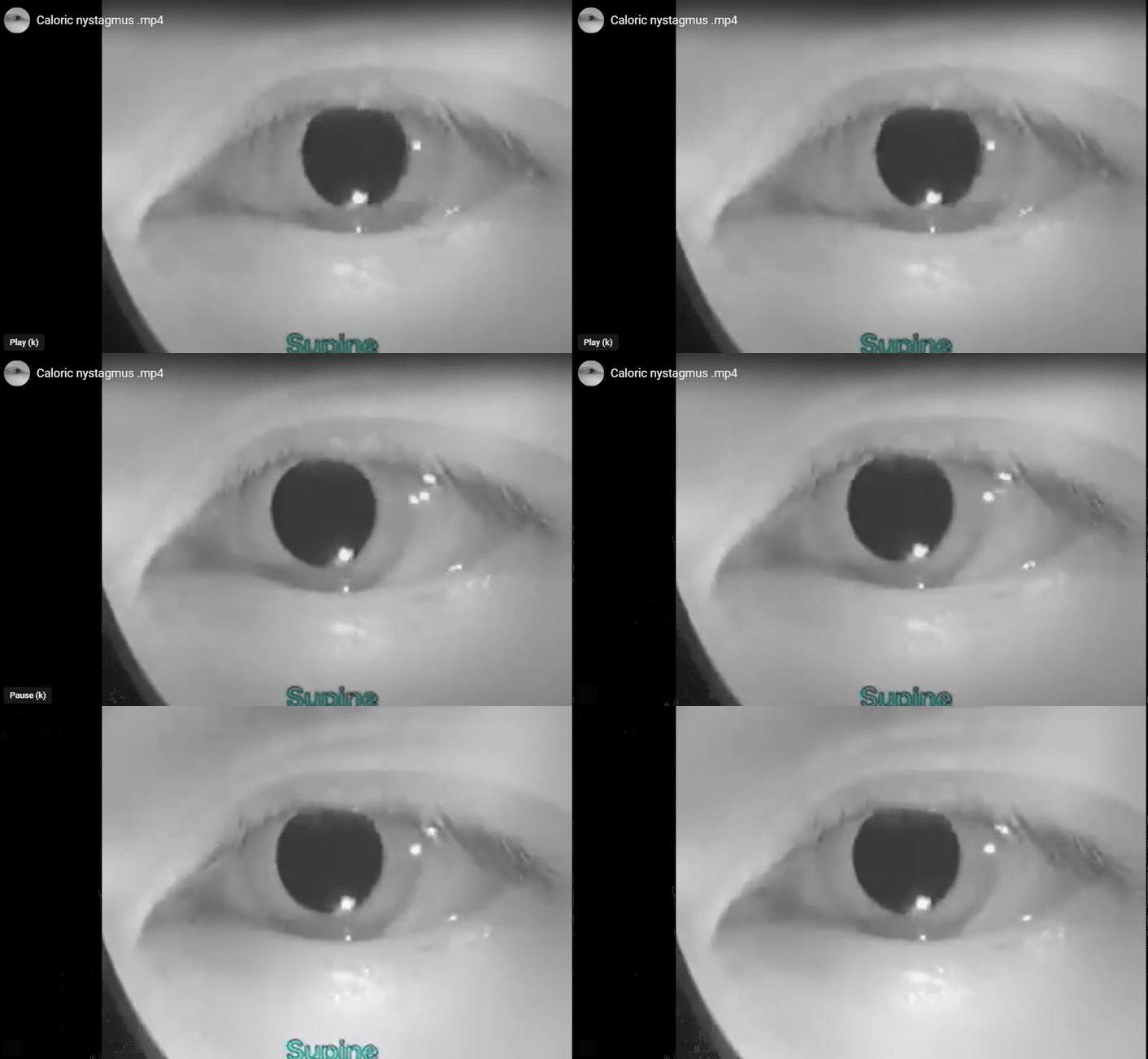
Head Impulse Test (HIT) to the Right (with right ear pathology): If the person in the video has a right vestibular hypofunction, a quick head thrust to the Right would reveal this weakness, resulting in a left-beating nystagmus as the left ear becomes relatively more active.
Key Takeaways:
The video likely demonstrates inhibition of the right ear, not excitation, despite the description stating "right ear stimulation."
Various factors, including sustained rotation to the right, cold caloric irrigation, or a positive HIT on the right ear, could cause this inhibition.
The slow phase of nystagmus always follows the direction of endolymph flow within the stimulated canal, while the fast phase is a corrective saccade.
Understanding the interplay of excitation and inhibition in the vestibular system and the different types of stimulation that can influence nystagmus direction is crucial for accurately interpreting and diagnosing vestibular disorders.