
Finding the Balance: Navigating Max Effort and Max Benefit in Dizziness Treatment


The Dosage Dilemma in Vestibular Rehabilitation
In our pursuit of helping individuals overcome the often debilitating effects of dizziness and imbalance, a fundamental question arises: how do we determine the right amount of challenge? It's tempting to think that pushing our patients to their absolute limits – their 'maximum effort' – will yield the quickest results. We might assess how long they can stand on an unsteady surface or how provocative a movement they can tolerate before symptoms escalate. While understanding these limits provides valuable information, the valid key to effective rehabilitation often lies in a more nuanced approach: finding the point of 'maximal benefit.'
Recognizing the Spectrum: Understanding Effort and Benefit
Maximum Effort: Pushing the Limits
The concept of 'maximum effort' is familiar across rehabilitation disciplines. Strength training might involve assessing the heaviest weight an individual can lift. In balance, it could translate to pushing patients to the edge of their stability or provoking their dizziness to its peak. While this approach can help establish a baseline for high-performance training, its direct application to vestibular rehabilitation requires careful consideration.
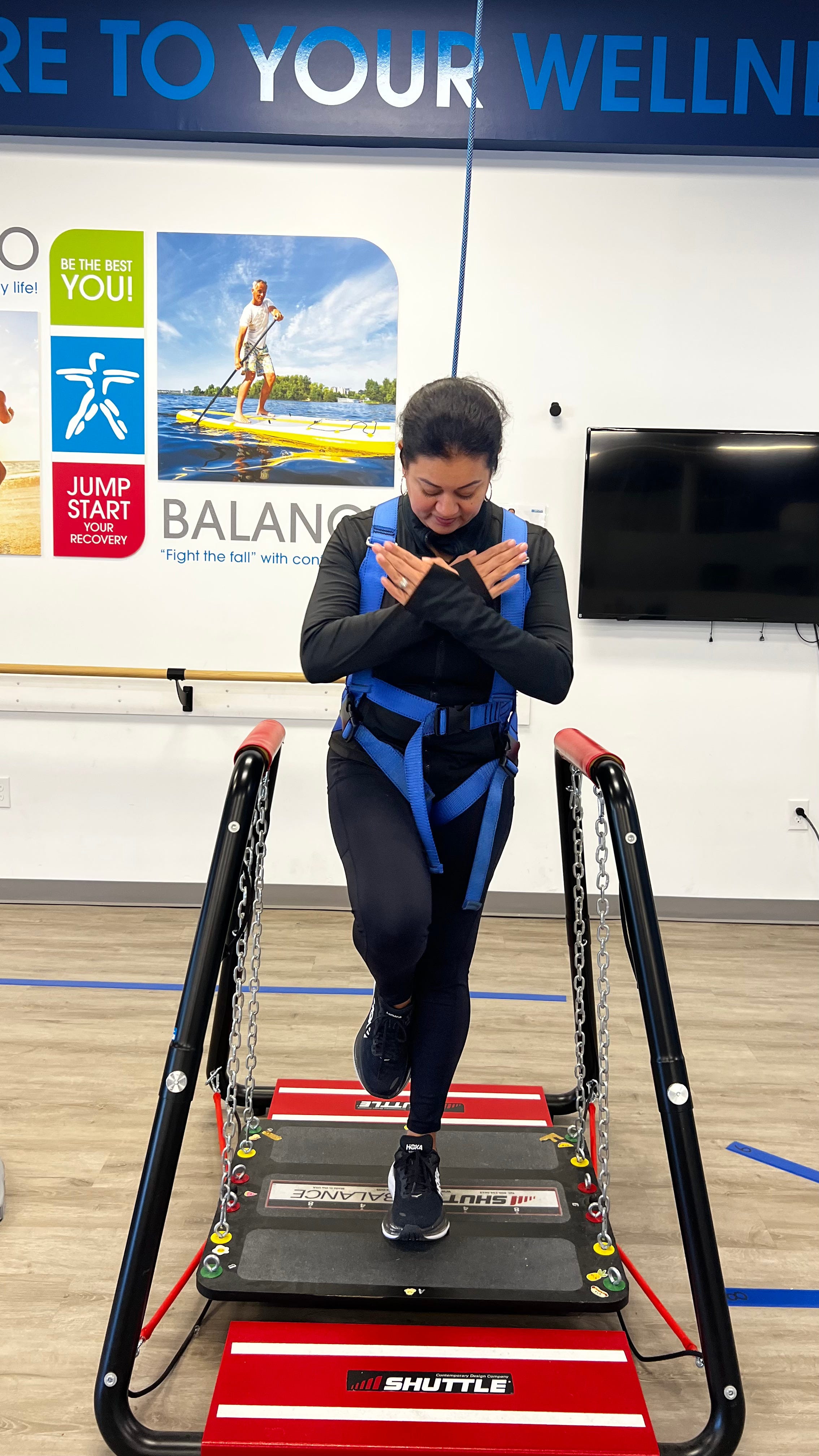
As we discussed, pushing patients with a compromised balance system to their 'maximum effort' can inadvertently trigger negative consequences. It might heighten their anxiety and fear of falling, exacerbate their dizziness symptoms, or even encourage the development of inefficient compensatory strategies rather than an accurate adaptation of the balance system. This can lead to patient frustration and potentially hinder long-term progress.
Maximal Benefit: The 'Goldilocks' Approach
On the other end of the spectrum lies 'maximal benefit,' often described as the 'Goldilocks dose' – the challenge is 'just right.' This approach, which provides sufficient stimulation to encourage the brain to adapt and improve balance control without overwhelming the patient or significantly provoking their symptoms, is where we often see the most sustainable and positive changes. It fosters a sense of accomplishment and encourages patient adherence, reassuring us of its effectiveness.
The Foundation of Balance: Sensory Integration
The Harmony of Our Senses
Our sense of balance is a complex interplay of information from our inner ears (vestibular system), our eyes (visual system), and the sensory receptors in our body (somatosensory system). When these systems work in harmony, we feel steady and oriented, allowing us to navigate our environment easily and confidently.
When Senses Clash: The 'Sensory Mismatch'
However, dizziness and imbalance can occur when there's a 'sensory mismatch' – a disconnect or conflict in the information these systems provide. For example, suppose the inner ear is not functioning correctly. In that case, the signals it sends to the brain might contradict the information coming from the eyes and body, leading to the sensation of spinning, lightheadedness, or unsteadiness.
Adapting to Disruption: 'Sensory Strategies'
In response to this mismatch, our brains develop 'sensory strategies,' prioritizing specific sensory inputs over others to maintain stability. For instance, someone with a vestibular issue might become overly reliant on their vision to stay balanced. Understanding these strategies is crucial for tailoring effective interventions enlightening us about the brain's adaptive mechanisms.
The Art of Dosage: Tailoring the Challenge for Adaptation
Identifying the 'Just Right' Zone
The 'just right' challenge typically involves exercises where the patient can perform the movements with:
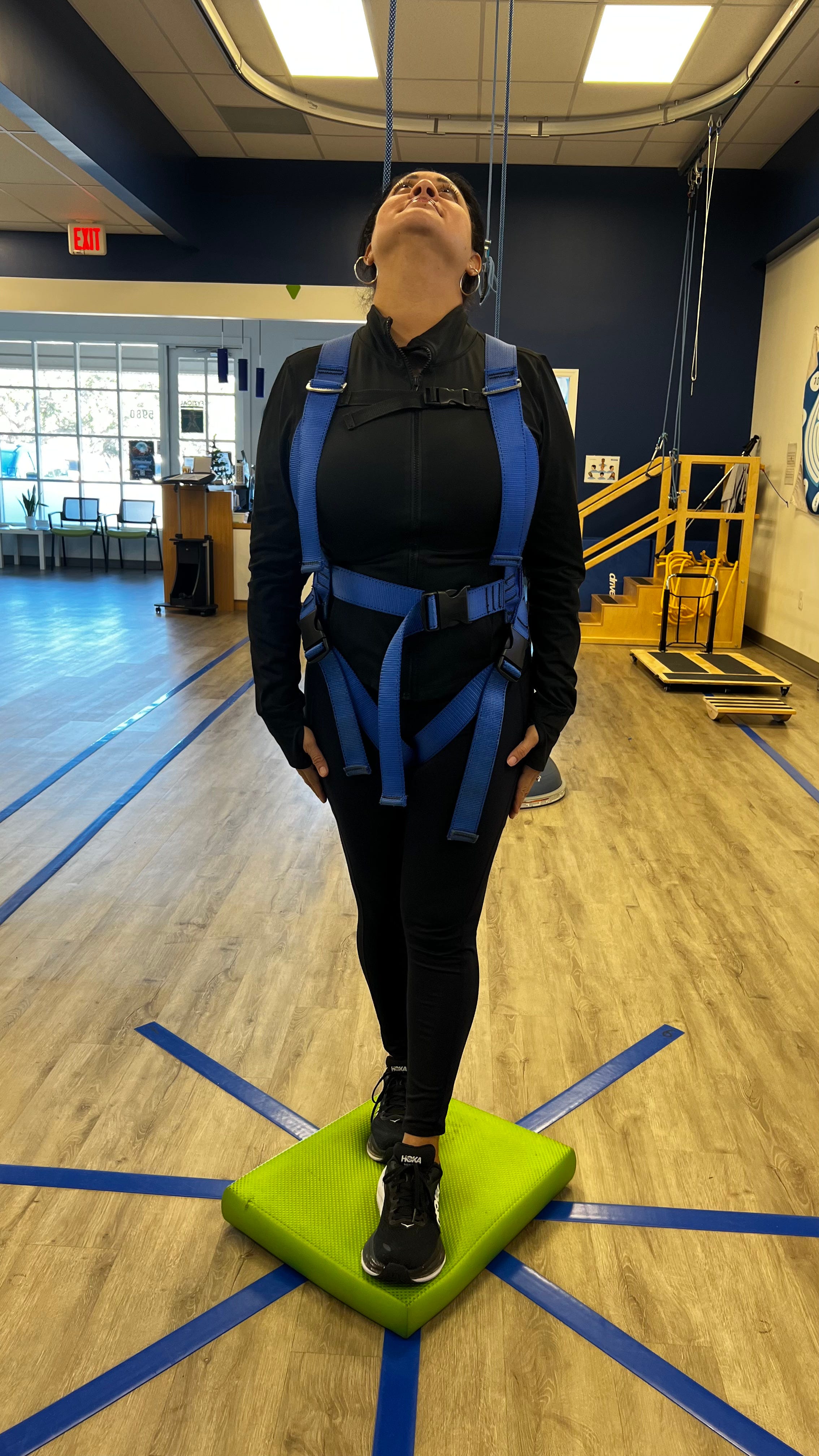
Minimal Observable Deficits: You might see subtle balance adjustments, but the patient maintains control without significant instability, indicating they are being challenged but within their capacity to respond effectively.
Good Form and Control: They can execute the exercise appropriately, effectively engaging the necessary balance mechanisms and not relying on excessive compensatory movements.
Minimal to No Symptom Exacerbation: The exercise does not significantly increase their baseline dizziness or other related symptoms, ensuring a positive experience and encouraging continued participation.
Beyond Repetitions: Measuring Progress
As we discussed, the endpoint isn't necessarily about reaching a specific duration or number of repetitions but rather about the patient consistently demonstrating the exercise with minimal symptoms and good form. This indicates that accurate adaptation is occurring. However, it's also crucial to recognize when a patient has adapted to a particular challenge and needs a gradual increase in intensity to continue progressing and avoid plateaus.
Practical Solutions for Therapists: Navigating the Path to Maximal Benefit
So, how do we, as clinicians, determine this optimal level of challenge? It requires a thoughtful and systematic approach:
Comprehensive Assessment: Uncovering Sensory Dependencies: A thorough evaluation of the patient's sensory processing and balance strategies is essential.
Consider: Which sensory system does the patient seem to rely on most in challenging situations? Are there specific environments or movements that significantly provoke their symptoms? What are their compensatory strategies?
Understanding these tendencies provides crucial insights into their balance control and guides exercise selection.
Careful Observation: Decoding Balance Responses: Pay close attention to the patient's balance responses and any signs of dizziness or instability during exercise. Subtle cues, such as increased postural sway, difficulty maintaining gaze stability, or reports of mild symptoms, can indicate whether the challenge is appropriate or too demanding.
Ask yourself: Is the patient actively controlling their balance and movements, or are they reacting and struggling to maintain equilibrium? Are their eyes stable during head movements? Is their posture efficient and controlled?
Gradual Progression: The Key to Adaptation: Incrementally implement exercise intensity, duration, or complexity changes. Monitor the patient's response at each stage to ensure they adapt without significant symptom exacerbation. A good rule of thumb only increases the challenge when the patient consistently performs the current exercise with minimal to no symptoms and good form for several sessions. Consider small, incremental increases rather than large jumps.
Prioritize Quality of Movement: Efficiency Over Effort: Focus on the patient's ability to perform exercises with good form and control. Compensatory movements might indicate that the task is too tricky for proper adaptation and could reinforce maladaptive strategies.
Ask: Is the patient using efficient and coordinated movements that target the appropriate balance systems, or are they adopting stiff or awkward postures to compensate for a lack of stability?
Individualized Approach: Recognizing Unique Needs: Recognize that what constitutes 'maximal benefit' will vary significantly between individuals based on their specific sensory challenges, functional abilities, and symptom sensitivity. What might be a moderate challenge for a younger individual recovering from a vestibular event could be near 'maximum effort' for a frail senior. Always tailor your approach to the individual patient, considering their overall health status, activity level, and specific functional goals.
Functional Relevance: Connecting Therapy to Life: Choose meaningful exercises for the patient's daily activities and goals. This helps to ensure that their therapy improvements translate to real-world situations and significantly increase patient motivation and engagement.
Ask: How will this specific exercise help the patient perform the activities they find most challenging or essential? Can we modify everyday tasks to serve as therapeutic exercises?
Listen to the Patient: The Power of Subjective Feedback: The patient's subjective feedback is invaluable. Please encourage them to communicate their symptom levels and perceived exertion during and after exercise. Their reports can provide crucial information about whether the challenge is within their adaptive capacity.
Ask: How did that exercise make you feel during and after? Did your dizziness increase significantly or remain manageable? Did you feel challenged but successful?
Recognizing the Role of Maximum Effort (With Careful Consideration)
It's important to acknowledge that there might be instances where pushing closer to a patient's 'maximum effort' is appropriate. For highly active individuals or those aiming for peak performance, challenging their limits in a controlled and monitored environment can be a component of their rehabilitation. Similarly, in cases where a patient has plateaued despite consistent effort at a submaximal level, a carefully considered and temporary increase in challenge might be necessary to stimulate further adaptation.
However, the overarching principle should remain maximizing benefit even in these situations. The goal is not simply to push harder for the sake of trying harder but to strategically challenge the system to promote meaningful and lasting improvement without risking setbacks or negative associations with therapy.
Consider: Even when increasing the challenge, are we still closely monitoring for signs of maladaptation or excessive symptom provocation? Is the increased effort leading to functional gains that outweigh the potential risks? Are we providing adequate rest and recovery periods?
Conclusion: The Art and Science of Finding Balance
Ultimately, the art of vestibular rehabilitation lies in our ability to discern the optimal dosage of exercise – that sweet spot between 'maximum effort' and 'maximal benefit.' By carefully assessing our patients' sensory processing, observing their responses, and progressively challenging them in a way that promotes adaptation without overwhelming their system, we can guide them toward a successful recovery and a more balanced life. It's about understanding the individual, respecting their limits, and strategically guiding them toward their full potential, always keeping the goal of functional improvement and symptom reduction at the forefront.