
'Flying Blind': A Deeper Dive into Virtual Reality (VR) Training for Vestibular Rehabilitation


As a physical therapist specializing in vestibular disorders, I've always been fascinated by the parallels between flight and balance. Both require a complex interplay of sensory information, motor control and trust in one's 'instruments,' whether in the cockpit or the human body. But just as a pilot needs rigorous training to handle instrument flight, patients with vestibular disorders require careful guidance as they navigate the challenging terrain of balance rehabilitation. And just as instrument flight can be dangerous if mishandled, so can VR therapy if its power is not fully understood and respected. We must remember working in a 'blind' environment with VR. This creates a situation where the central nervous system cannot fully perceive its surroundings, making safety paramount. However, this controlled 'blindness' is also our greatest tool. It allows us to move beyond simply habituating patients to challenging stimuli and facilitating true adaptation – effectively 'taming the lion' of their disrupted balance system.
My patient, Peter, a former fighter and instrument-rated pilot, provided a unique opportunity to explore these parallels. His understanding of flight dynamics and the critical difference between visual and instrument flight proved invaluable in his rehabilitation.
Let's break down the nuances:
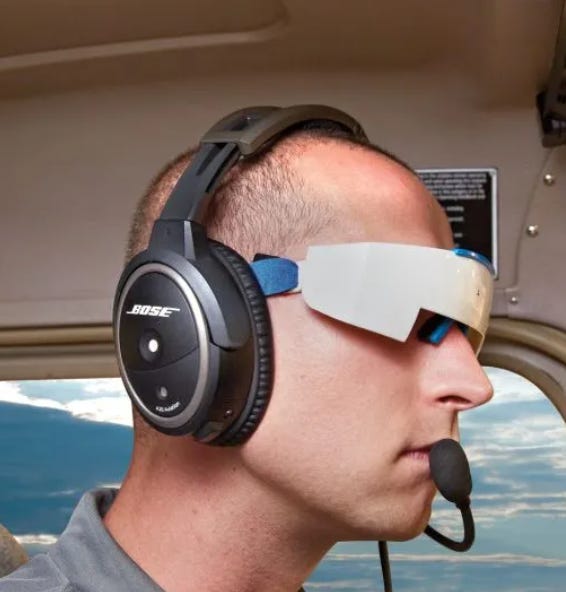
Visual Flight vs. Instrument Flight:
Visual Flight: Relies on visual cues – the horizon, landmarks, etc. – to maintain orientation and control. It's intuitive and how most people learn to fly initially. However, it's unreliable in poor visibility or when visual cues are misleading.
Instrument Flight: Relies on instruments – altimeter, airspeed indicator, artificial horizon – to provide accurate information about the aircraft's position and attitude, regardless of external visibility. It requires training, trust in the instruments, and disregarding potentially conflicting visual information.
The Vestibular System: Our Internal 'Instrument Panel'
The vestibular system in the inner ear is our body's 'instrument panel' for balance. It provides information about head position and movement in space, working in concert with visual and somatosensory (touch and proprioception) input.
Vestibular Disorders: 'Flying Blind'
When the vestibular system malfunctions, it's like experiencing 'instrument failure.' The brain receives inaccurate or conflicting information, leading to dizziness, vertigo, and imbalance. Just like a vision-trained pilot caught in a cloud bank, patients with vestibular disorders can become overly reliant on visual cues, leading to a dangerous cycle of visual dependency.
VR: 'Instrument Training' for Balance
This is where VR shines. By immersing patients in a virtual environment and manipulating visual input, we can simulate 'instrument conditions' for balance. We can create scenarios that challenge their visual dependency and force them to rely more on their somatosensory and vestibular systems, much like an instrument-rated pilot relies on their instruments.
Beyond Desensitization: Adaptation and Neuroplasticity
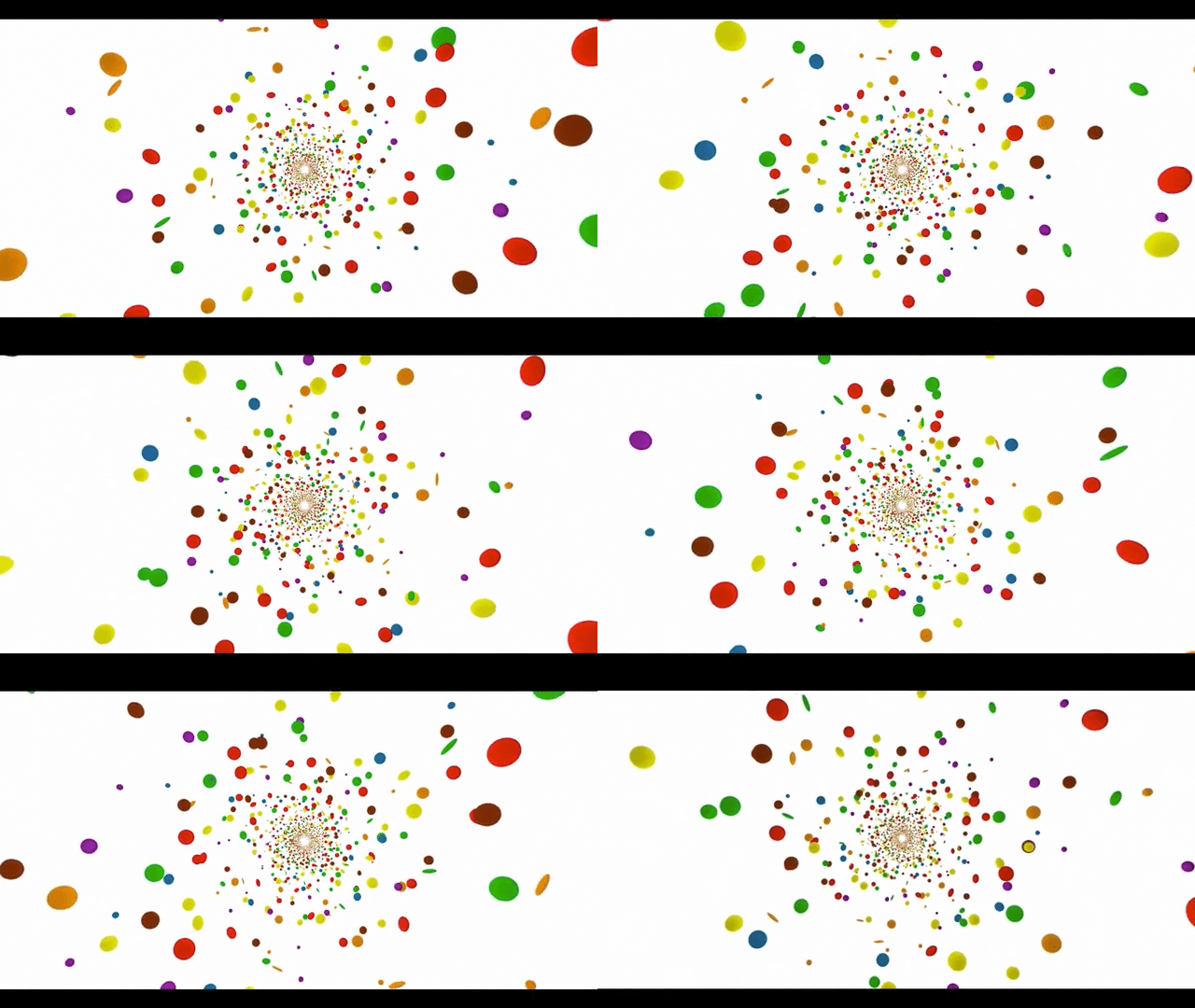
VR allows us to go beyond traditional habituation exercises. We're not just trying to reduce sensitivity to visual motion; we're actively retraining the brain to process sensory information more effectively. The optic flow within the VR environment becomes a tool for neuroplasticity, driving adaptation and promoting a more balanced reliance on all sensory systems.
Peter's Case: A Pilot's Perspective
Peter's background as an instrument-rated pilot gave him a unique advantage in understanding and engaging with VR therapy. When visual information was unreliable, he grasped the importance of trusting his 'internal instruments' – his somatosensory and vestibular systems. This connection facilitated his progress and reinforced the power of VR in vestibular rehabilitation.
The Future of VR in Vestibular Therapy
VR holds immense potential for transforming how we treat vestibular disorders. It allows us to create personalized, engaging, and challenging experiences that push patients beyond their comfort zones and promote actual neuroplastic change. By embracing the principles of instrument flight, we can empower patients to regain their balance, confidence, and freedom.
Key Takeaways for Physical Therapists:
Acknowledge the inherent risks: VR therapy, especially in the early stages, can be disorienting and potentially dangerous. Prioritize patient safety at all times.
Understand the distinction between visual and instrument flight: This analogy can help patients grasp the concept of visual dependency and the need to retrain their brains.
Embrace VR as a tool for 'instrument training' for balance: VR allows us to create controlled environments that challenge patients and promote neuroplasticity.
Go beyond desensitization: Use VR to drive adaptation and re-integrate sensory information. We are 'taming the lion' of their imbalance.
Empower patients: Help them understand their condition and actively participate in their recovery.
By integrating VR into our clinical practice, we can help patients like Peter 'fly' again, navigating their world with confidence and stability.