
Magnesium: The Essential Biochemical Buffer in Vestibular Care

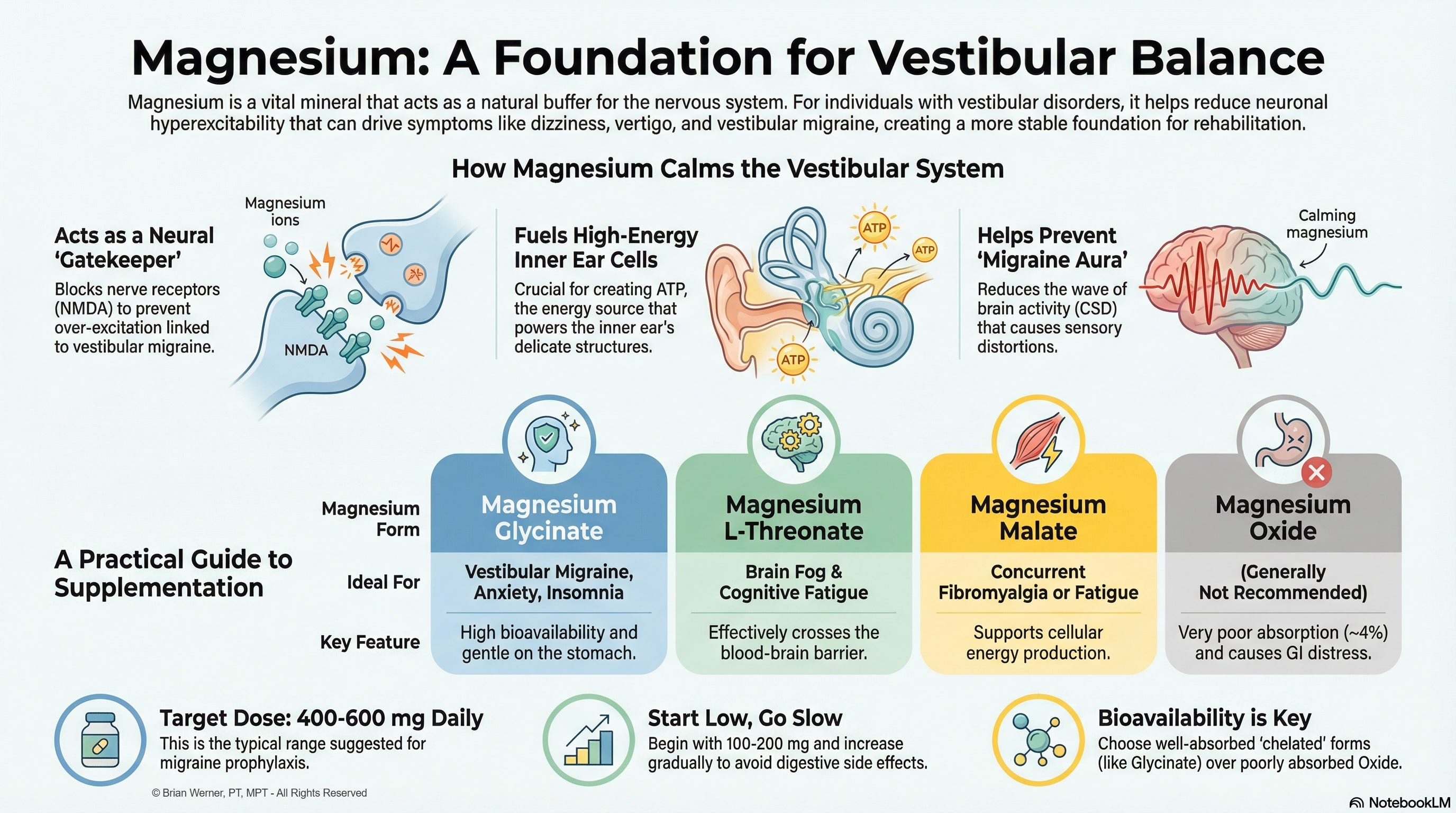
As vestibular professionals, we focus on the intricate mechanics of the inner ear and the complex neural pathways that maintain equilibrium. While we prioritize physical maneuvers and habituation exercises, we must also consider the biochemical environment in which these systems operate. Magnesium (Mg2+) is a critical player in this environment, acting as a gatekeeper for neural excitability and a spark plug for cellular energy.
The Science of the Gatekeeper
Magnesium is an essential cofactor for over 300 enzymatic reactions, but its role in the Central Nervous System (CNS) and peripheral vestibular system is where it truly shines for our patient population.
NMDA Receptor Regulation: Magnesium acts as a natural calcium channel blocker. In the resting state, magnesium ions plug the pore of the N-methyl-D-aspartate (NMDA) receptor. This prevents excessive influx of calcium, which can lead to ‘excitotoxicity’ and neuronal death. When magnesium levels are low, this ‘plug’ is lost, leading to ‘neuronal hyperexcitability’—a primary driver in Vestibular Migraine (VM) and potentially PPPD.
ATP Production: The hair cells of the inner ear and the neurons of the vestibular nerve are metabolically demanding. Magnesium is required for the synthesis and stabilization of ATP. Without adequate magnesium, the Sodium-Potassium (Na+/K+) pumps that maintain the endocochlear potential cannot function efficiently, leading to breakdowns in signaling.
Cortical Spreading Depression (CSD): Magnesium deficiency is strongly linked to CSD, the wave of depolarization across the cortex associated with ‘migraine aura’ and the subsequent sensory distortions our patients experience.
Navigating the Forms of Magnesium
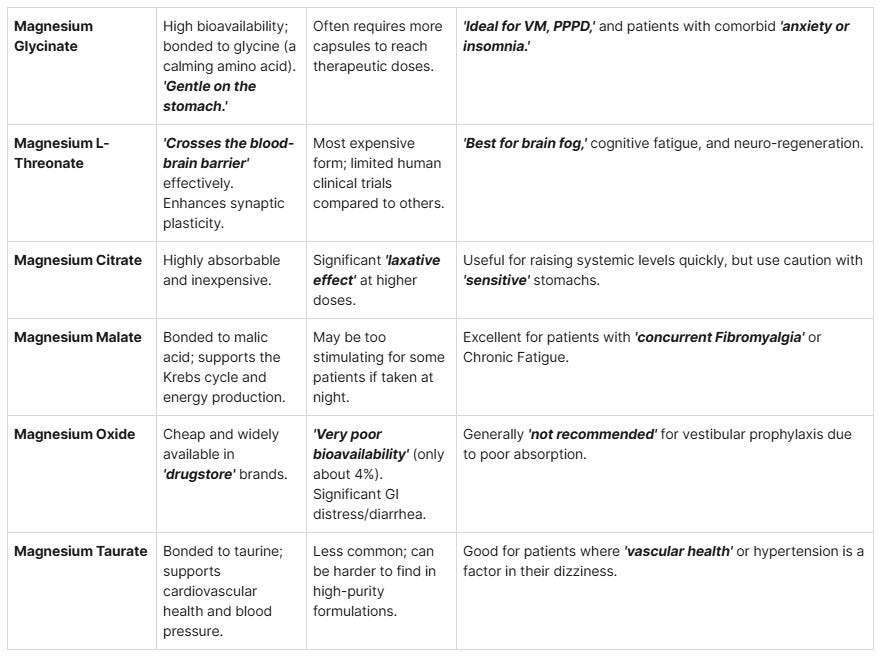
Not all magnesium is created equal. The ‘carrier’ molecule determines where the magnesium goes and how well the gut tolerates it. Please take a moment if you are listening to this to review the table.
Practical Implementation for Vestibular Clinicians
When discussing supplementation with patients, we must stay within our scope while providing evidence-based guidance.
The Dosage Range: Most clinical guidelines for migraine prophylaxis recommend 400-600 mg of elemental magnesium daily.
The Start Low Rule: To avoid the common side effect of loose stools, I recommend patients start with 100-200 mg and titrate up over two weeks.
Timing Matters: For forms like Magnesium Glycinate, taking it in the evening can leverage its calming properties to improve sleep quality—a known trigger for vestibular episodes.
Bioavailability is King: Remind patients that the ‘total mg’ on the front of the bottle isn’t always ‘elemental mg.’ Encourage them to look for chelated forms (Glycinate, Malate, Threonate) rather than Oxide.
Conclusion
As vestibular professionals, our goal is to restore function through movement and adaptation. However, we cannot ignore the fuel that powers the system. Magnesium is not a ‘cure-all,’ but it serves as a foundational biochemical buffer. By reducing neuronal hyperexcitability and supporting the high metabolic demands of the inner ear, proper magnesium supplementation creates a ‘quieter’ nervous system. This stability allows our patients to engage more effectively with their rehabilitation and, ultimately, find a faster path back to balance.
Medical Disclaimer
‘The information provided in this article is for educational and informational purposes only and is not intended as medical advice. Always seek the advice of your physician or other qualified health provider with any questions you may have regarding a medical condition or nutritional supplementation. Magnesium can interact with certain medications, including those for heart rhythm, blood pressure, and antibiotics, and may not be suitable for individuals with kidney disease. Never disregard professional medical advice or delay in seeking it because of something you have read in this article.’
Fantastic article on how magnesium can help with vestibular health. Highly recommend
So useful - and a good description of all the forms of magnesium, thank you!