
Orthotropic Nystagmus: The Missing Link in BPPV Assessment and Treatment


Benign paroxysmal positional vertigo (BPPV) is a common yet often misunderstood vestibular disorder. While canalith repositioning maneuvers (CRMs) like the Epley or Semont are effective for many, some patients experience persistent or recurring symptoms despite treatment. Could orthotropic nystagmus be the key to unlocking more accurate diagnoses and personalized treatment plans?
Unraveling Orthotropic Nystagmus
Orthotropic nystagmus is a distinct pattern of eye movements observed during BPPV assessment maneuvers. Characterized by a fast phase beating toward the undermost ear, this phenomenon offers valuable insights into the location and movement of otoconia (dislodged calcium crystals) within the semicircular canals.
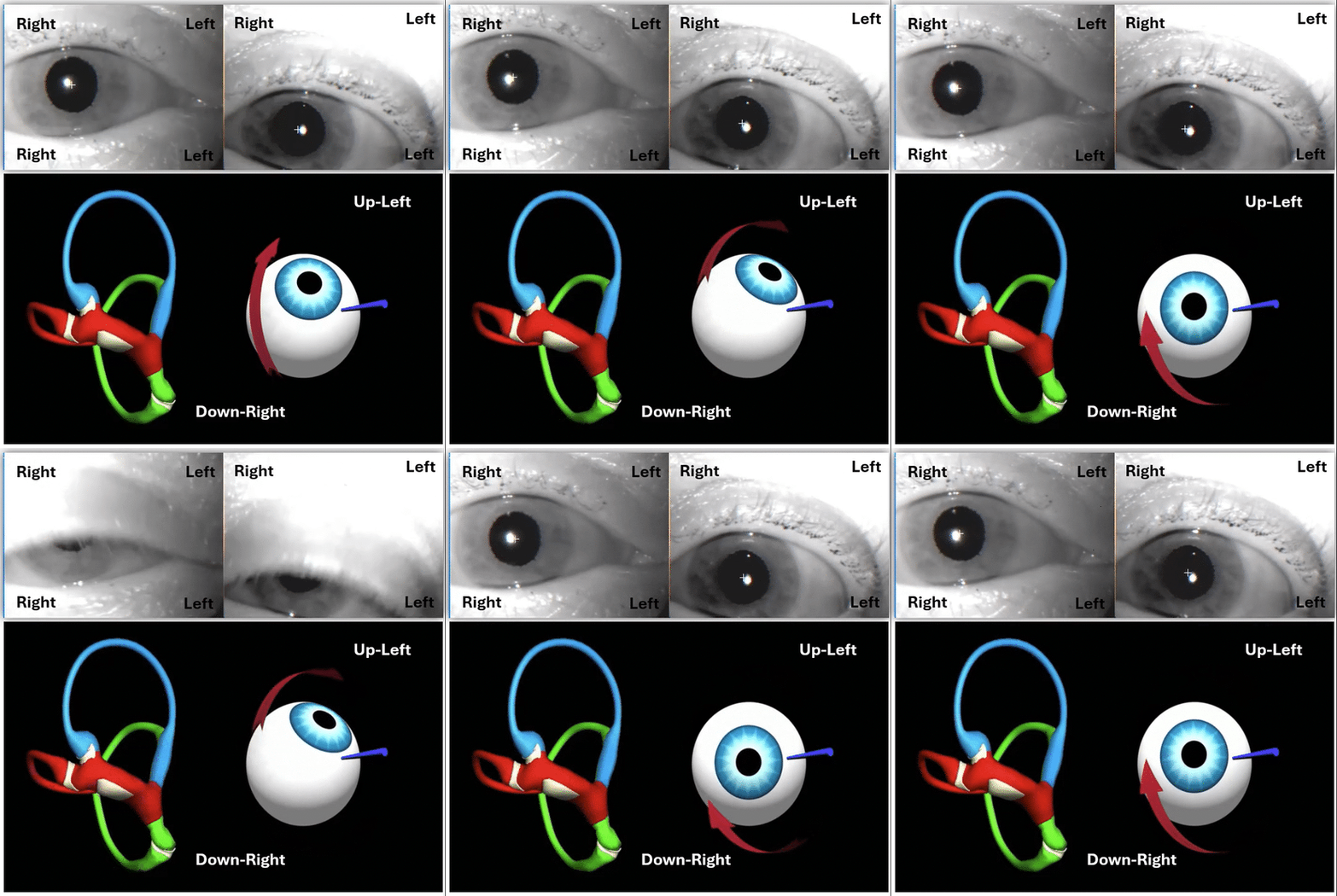
Historical Context and Key Figures
The term ‘orthotropic’ originates from the Greek words ‘orthos’ (straight) and ‘tropos’ (turn). While the precise origin of the term in the context of BPPV is not definitively documented, it likely emerged organically within the scientific community as a way to concisely describe the consistent, ear-directed nystagmus commonly seen in posterior canal BPPV. It was probably a natural evolution of earlier, less specific descriptions such as ‘unidirectional,’ ‘fixed-direction,’ or simply ‘towards the affected ear.’
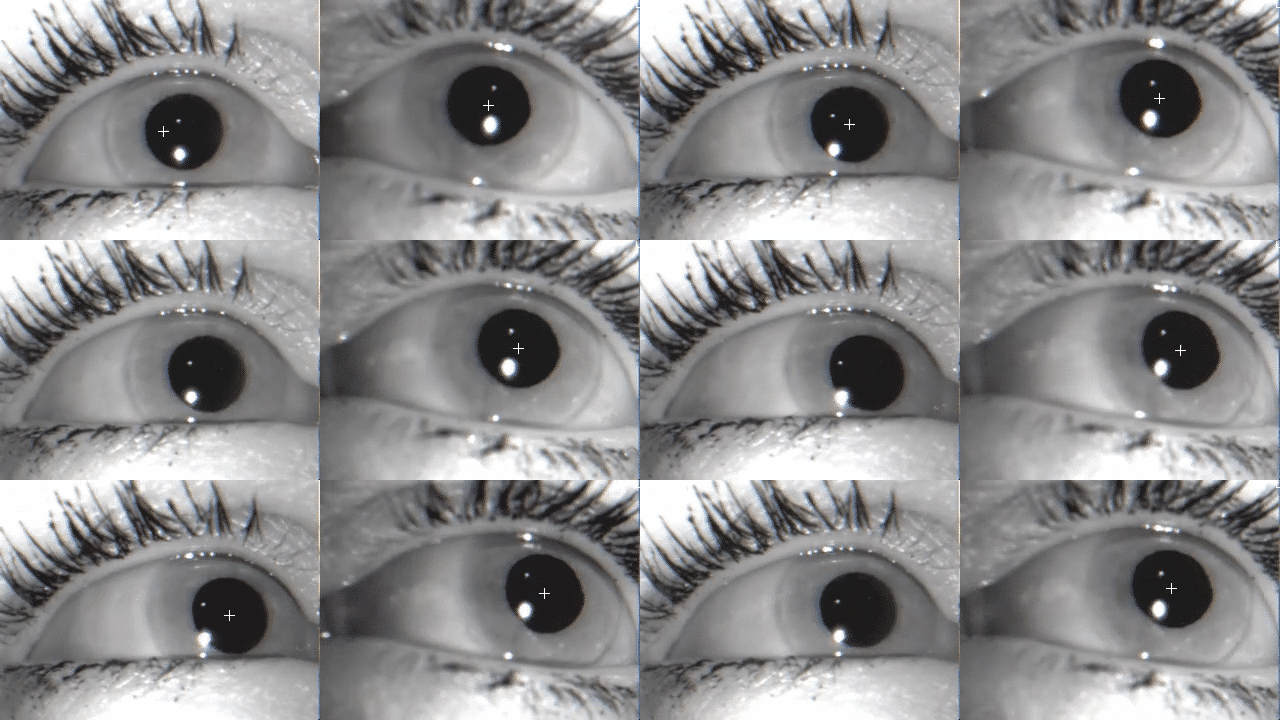
Even before the widespread recognition of BPPV, early researchers in vestibular disorders likely observed and described different types of nystagmus associated with positional changes. With the advent of the Dix-Hallpike maneuver and the development of the Epley maneuver in the 1980s and 1990s by pioneers like Dr. John Epley and Dr. Robert Baloh, the understanding of BPPV expanded rapidly. These researchers and others started meticulously documenting the specific characteristics of nystagmus associated with different types of BPPV. As the understanding of BPPV and the associated nystagmus patterns grew, the term ‘orthotropic nystagmus’ likely gained traction and became more widely adopted within the vestibular community. Its inclusion in textbooks, scientific publications, and clinical practice guidelines further solidified its place in the lexicon of BPPV assessment.
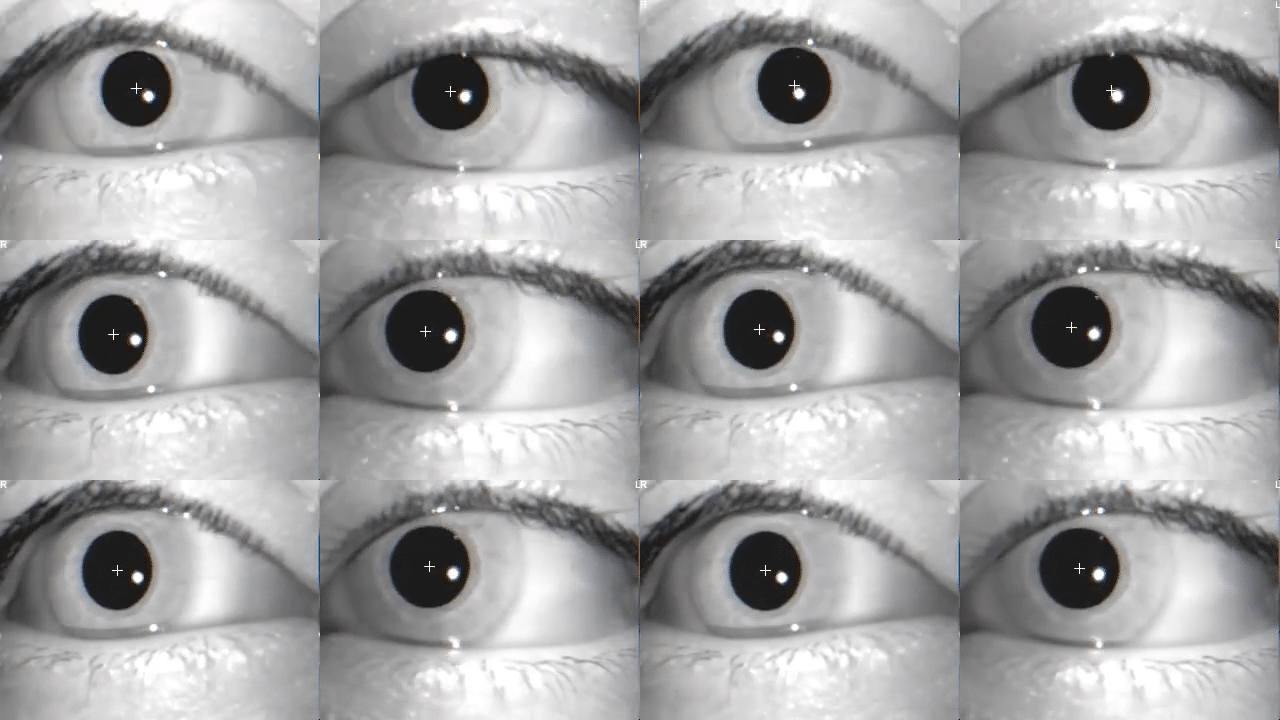
While the exact history of the term may remain somewhat elusive, its significance in vestibular disorders is undeniable. The term's widespread adoption highlights its importance in accurately diagnosing and treating BPPV. Understanding its origins and evolution sheds light on the rich history of BPPV research. It emphasizes the importance of meticulous observation and precise terminology in advancing our knowledge and treatment of this common vestibular condition.
The Importance of Orthotropic Nystagmus
Accurate Diagnosis: Orthotropic nystagmus, mainly when observed during the Dix-Hallpike maneuver, strongly suggests posterior canal BPPV. This allows for targeted treatment and avoids unnecessary or ineffective maneuvers.
Real-Time Monitoring of CRM Effectiveness: Observing the change in nystagmus patterns during CRMs provides immediate feedback on the success of repositioning. For instance, the transition from orthotropic to geotropic nystagmus often signifies the successful movement of otoconia from the posterior canal to the utricle.
Personalized Treatment: Recognizing different nystagmus patterns can help tailor treatment plans for individual patients. Some cases may require modifications to standard CRMs or the addition of other interventions like vestibular rehabilitation exercises.
Differential Diagnosis: While orthotropic nystagmus is strongly associated with posterior canal BPPV, its absence doesn't necessarily rule out the condition. Other factors, like cupulolithiasis (crystals adhered to the sensory organ) or atypical debris migration patterns, can lead to variations in nystagmus. Understanding these nuances helps differentiate between posterior canal BPPV and other vestibular disorders, leading to more accurate diagnoses and appropriate treatment strategies.
Predicting Treatment Outcomes: Research suggests that the presence of orthotropic nystagmus during specific stages of the Epley maneuver may predict successful repositioning of otoconia. For instance, persistent orthotropic nystagmus in the third position of the maneuver might indicate a lower likelihood of immediate symptom resolution. Recognizing this can help manage patient expectations and guide treatment decisions, such as considering alternative maneuvers or additional interventions.
Identifying Central Vestibular Involvement: In rare cases, orthotropic nystagmus may indicate central vestibular involvement, suggesting a pathology beyond the inner ear. While this is less common, awareness of this possibility is essential for prompt referral and further investigation, ensuring patients receive appropriate care for any underlying neurological conditions.
The Missing Piece in Standard Assessments
CRUCIAL TO UNDERSTAND: Despite its diagnostic and therapeutic value, orthotropic nystagmus assessment is often overlooked in clinical practice. Relying solely on subjective symptom reports or generic nystagmus observations can lead to misdiagnosis and suboptimal treatment outcomes.
A Call to Action for Vestibular Specialists
Integrating orthotropic nystagmus assessment into routine BPPV evaluations is essential for advancing our understanding and treatment of this common disorder. By recognizing the significance of this subtle yet crucial finding, vestibular specialists and physical therapists can elevate their practice and improve patient outcomes.
Future Directions
As research in vestibular disorders continues to evolve, we can expect a deeper understanding of the role of orthotropic nystagmus in BPPV and other conditions. Additionally, technological advancements in eye-tracking and vestibular assessment tools may further enhance our ability to identify and interpret nystagmus patterns, ultimately leading to more precise and personalized patient care.
Conclusion
Orthotropic nystagmus is not merely a theoretical concept but a practical tool that can revolutionize how we approach BPPV. By embracing and integrating this knowledge into our assessment and treatment protocols, we can unlock a new level of precision and effectiveness in managing this common vestibular disorder.
References and Further Readings
Lou Y, Xu L, Wang Y, Zhao Z, Liu X, Li Y. Orthotropic nystagmus in predicting the efficacy of treatment in posterior canal benign paroxysmal positional vertigo. Am J Otolaryngol. 2020 Jul-Aug;41(4):102472. Doi 10.1016/j.amjoto.2020.102472. Epub 2020 Apr 1. PMID: 32276733.
Oh, H. J., Kim, J. S., Han, B. I., & Lim, J. G. (2007). I am predicting a successful treatment for posterior canal benign paroxysmal positional vertigo. Neurology, 68(15), 1219–1222. https://doi.org/10.1212/01.wnl.0000259037.76469.e4
Paz Pérez-Vázquez, Virginia Franco-Gutiérrez,Treatment of benign paroxysmal positional vertigo. A clinical review, Journal of Otology, Volume 12, Issue 4, 2017, Pages 165-173, ISSN 1672-2930,https://doi.org/10.1016/j.joto.2017.08.004.
https://www.neuroophthalmology.ca/textbook/disorders-of-eye-movements/x-nystagmus/iv-positional-nystagmus