
Part 1: "Inner Ear Enigma: Why Do Those Tiny Tubes Have So Many Names?"


All right, my fellow vestibular lovers, let's dive into the fascinating anatomy world! We all understand the importance of the semicircular canals in maintaining balance and spatial orientation. But have you ever found yourself puzzled by the complex naming system of these tiny, fluid-filled tubes? It's a common challenge that even the most experienced clinician can relate to.
The Name Game: A Vestibular Vocabulary Lesson
Let's review the vocabulary that often trips us up:
Horizontal Canal / Lateral Canal
Superior Canal / Anterior Canal
Posterior Canal / Inferior Canal
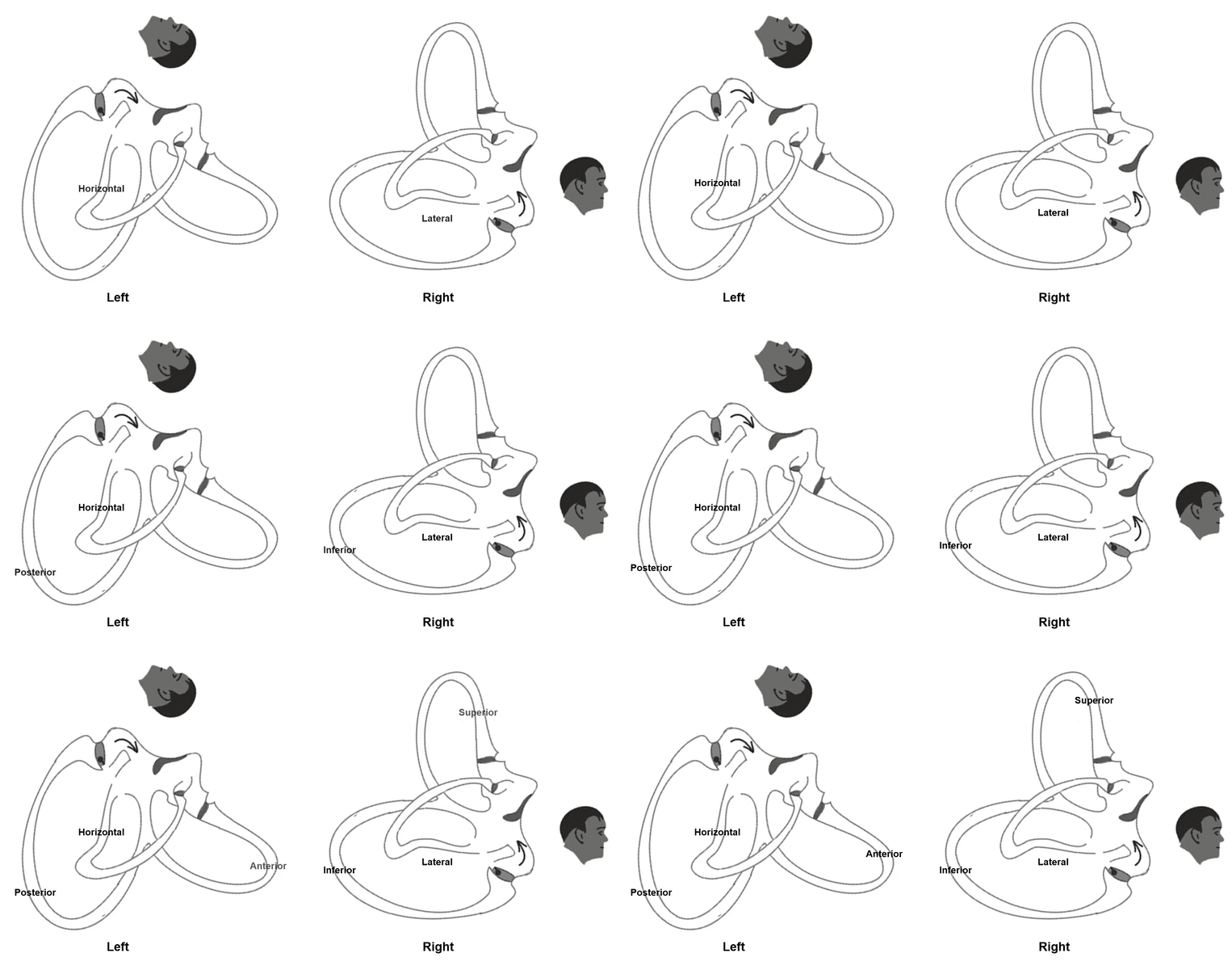
It's like those quirky regionalisms we encounter in language. You know, "soda" versus "pop" or "sneakers" versus "tennis shoes." But in our case, it's not just a matter of regional preference. So, why the dual nomenclature?
Delving Deeper: Unraveling the Mystery
The truth is, naming these canals is a fascinating historical hodgepodge. Early anatomists, in their quest for understanding, sometimes disagreed on terminology. Some focused on the canals' relative positions (superior/inferior), while others emphasized their orientation within the skull (anterior/posterior). The term' lateral' even describes the horizontal canal's position relative to the midline. It's like a linguistic journey through time!
Think of it like the evolution of medical terminology itself. We've got vestiges of Latin, Greek, and even Arabic woven into our anatomical lexicon. Sometimes, older terms persist alongside newer, more descriptive ones. It's a testament to the ever-evolving nature of medical knowledge.
Why Should We Care? (Besides Avoiding Awkward Moments)
While a mix-up between 'posterior' and 'inferior' may not lead to a medical catastrophe, a solid understanding of this dual naming system is crucial for effective communication among vestibular professionals. It's about avoiding awkward moments and accurately discussing diagnoses, treatment plans, and research findings. Precision in our language can make a significant difference.
Imagine explaining a complex BPPV case to a colleague while fumbling over canal names. Not exactly a recipe for clarity.
Beyond BPPV: The Importance of Precision
Moreover, understanding the anatomical relationships implied by these different names helps us visualize the canals' spatial orientation. This is crucial when interpreting diagnostic tests, analyzing nystagmus patterns, or planning canalith repositioning maneuvers.
In Conclusion, Embrace the Quirkiness
So, the next time you encounter these "double-named" canals, don't let them intimidate you. Embrace the quirkiness, appreciate the historical context, and remember that clear communication is paramount in our field. After all, we're the ones who help patients navigate the often-dizzying world of vestibular disorders.
Stay tuned for Part 2, where we'll explore the functional significance of the canals' orientation and how it relates to those perplexing "horizontal" and "vertical" designations!