
Part 2: "Horizontal vs. Vertical: Decoding the 3D World of Your Inner Ear"


Welcome back, vestibular enthusiasts! In Part 1, we tackled the curious case of the double-named semicircular canals. Now, let's dive into a straightforward concept that can confuse: the distinction between horizontal and vertical canals.
A Tale of Two Canals...or is it Four?
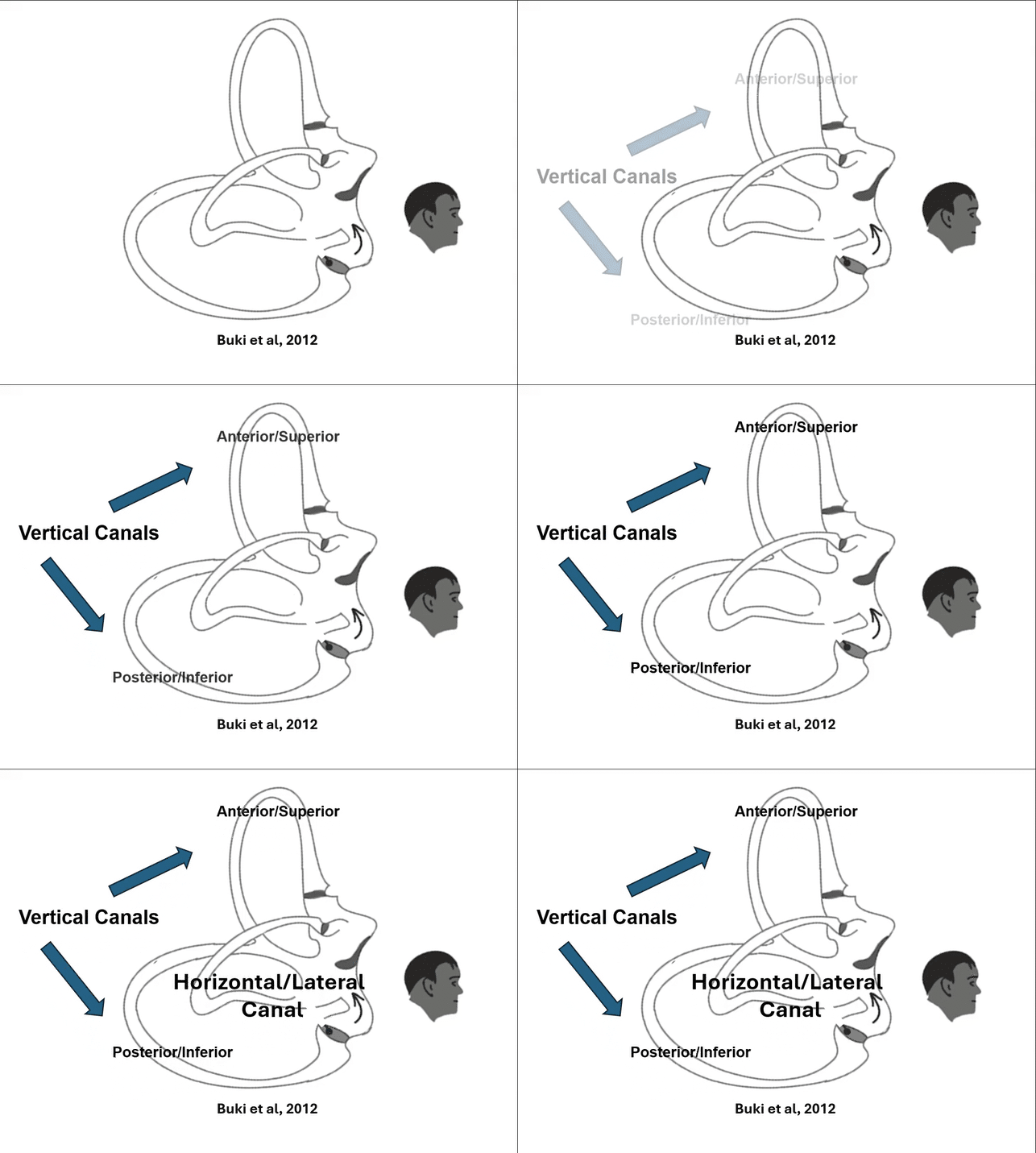
Remember those early days in your vestibular training when the term "vertical canals" threw you for a loop? You understood the horizontal canal, of course. But where were these elusive vertical ones hiding?
The "vertical canals" are a pair: the anterior and posterior canals (or, if you prefer, the superior and inferior). They're oriented roughly at a 90-degree angle to the horizontal/lateral canal.
Why the Confusion?
It may be the singular form that throws us off. When we hear "horizontal canal," we naturally assume there's a corresponding "vertical canal." But there are two vertical canals, each playing a distinct role in our sense of balance.
Why Does Orientation Matter?
The distinct orientation of each canal allows it to detect head rotation in a specific plane. The horizontal canal senses yaw movements (like shaking your head "no"). In contrast, the anterior and posterior canals detect pitch (nodding "yes") and roll (tilting your head side to side) movements, respectively.
This intricate system allows your brain to create a three-dimensional map of your head's position and movement in space, ensuring you stay balanced and oriented, even when the world around you is in motion.
Clinical Implications: Connecting the Dots
Understanding the functional differences between horizontal and vertical canals is essential for accurately diagnosing and effectively treating vestibular disorders.
For instance, in BPPV, the specific canal affected determines the characteristic nystagmus pattern and the appropriate canalith repositioning maneuver. Horizontal canal BPPV typically presents with horizontal nystagmus when rolling over in bed. In contrast, posterior canal BPPV often causes an upbeat with torsional nystagmus when lying down or tilting the head back.
Beyond BPPV:
The distinction between horizontal and vertical canals also helps explain other vestibular conditions, such as vestibular neuritis, labyrinthitis, and superior canal dehiscence syndrome. Each condition can affect specific canals, leading to unique patterns of dizziness and imbalance.
In Conclusion: Mastering the Basics
While the concept of horizontal and vertical canals may seem elementary, it's a foundational principle that underpins our understanding of vestibular function. By mastering this seemingly simple distinction, we gain a deeper appreciation for the intricate workings of the inner ear and its role in maintaining our balance and spatial orientation.