
Predictive Failure: The Neurological Precursor to Non-Contact Ligament Injuries


In the world of sports medicine, the non-contact ligament tear remains a clinical paradox. We observe a well-conditioned athlete, performing a familiar movement, who suddenly sustains a catastrophic joint injury without any external impact. We traditionally analyze these events through a biomechanical lens, highlighting factors such as dynamic knee valgus or poor landing technique. This approach, however, often overlooks a critical question: why did the neuromuscular system fail to execute the correct protective pattern in the first place? The answer may lie not in the mechanics themselves, but in the predictive failure of the central nervous system.
This article posits that many of these injuries represent the endpoint of a neurological cascade that begins with a disruption of the body's primary predictive sensor—the vestibular system—and ends with a critical delay in the protective reflexes that guard our joints.

The Essence of Athleticism: Predictive vs. Reactive Control
Elite athletic movement is not a series of reactions; it is a symphony of predictions. The central nervous system uses a feed-forward control model, constantly predicting upcoming forces and pre-setting muscle stiffness and reflex sensitivity to meet those demands. This predictive control allows for fluid, powerful, and safe movement.
A purely reactive response, on the other hand, always lags, occurring only after a force has already subjected the body to stress. For an athlete moving at high speeds, a reactive system is a failing system. Injury often happens in the milliseconds between an unexpected event and the body's delayed reaction to it. The key to injury prevention, therefore, lies in ensuring the integrity of the systems responsible for predictive control.
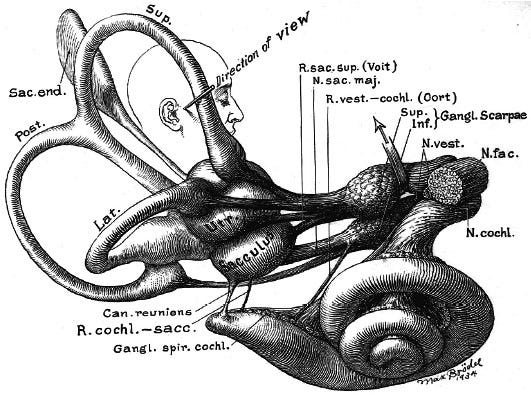
The Vestibular System: The Body's Foremost Predictive Sensor
While vision and proprioception are crucial, the vestibular system is the brain's ultimate sensor for predictive postural control. Its unique ability to detect linear and angular acceleration of the head provides the raw, unfiltered data the brain needs to calculate where the body's center of mass is headed before the feet even touch the ground.
The vestibular system transmits this information directly to the brainstem's vestibular nuclei, the command center for the vestibulospinal tracts. These descending neural superhighways carry predictive signals to the spinal cord, setting the stage for every movement we make. They function as the architects of our anticipatory postural adjustments.
Spinal Reflexes: Sophisticated Circuits, Not Simple Switches
We must abandon the common misconception of viewing spinal reflexes, like those involving the Golgi Tendon Organ (GTO), as simple, independent circuits. In reality, they are highly sophisticated and adaptable loops. Descending pathways from the brain constantly ‘gate’ or ‘tune’ their excitability.
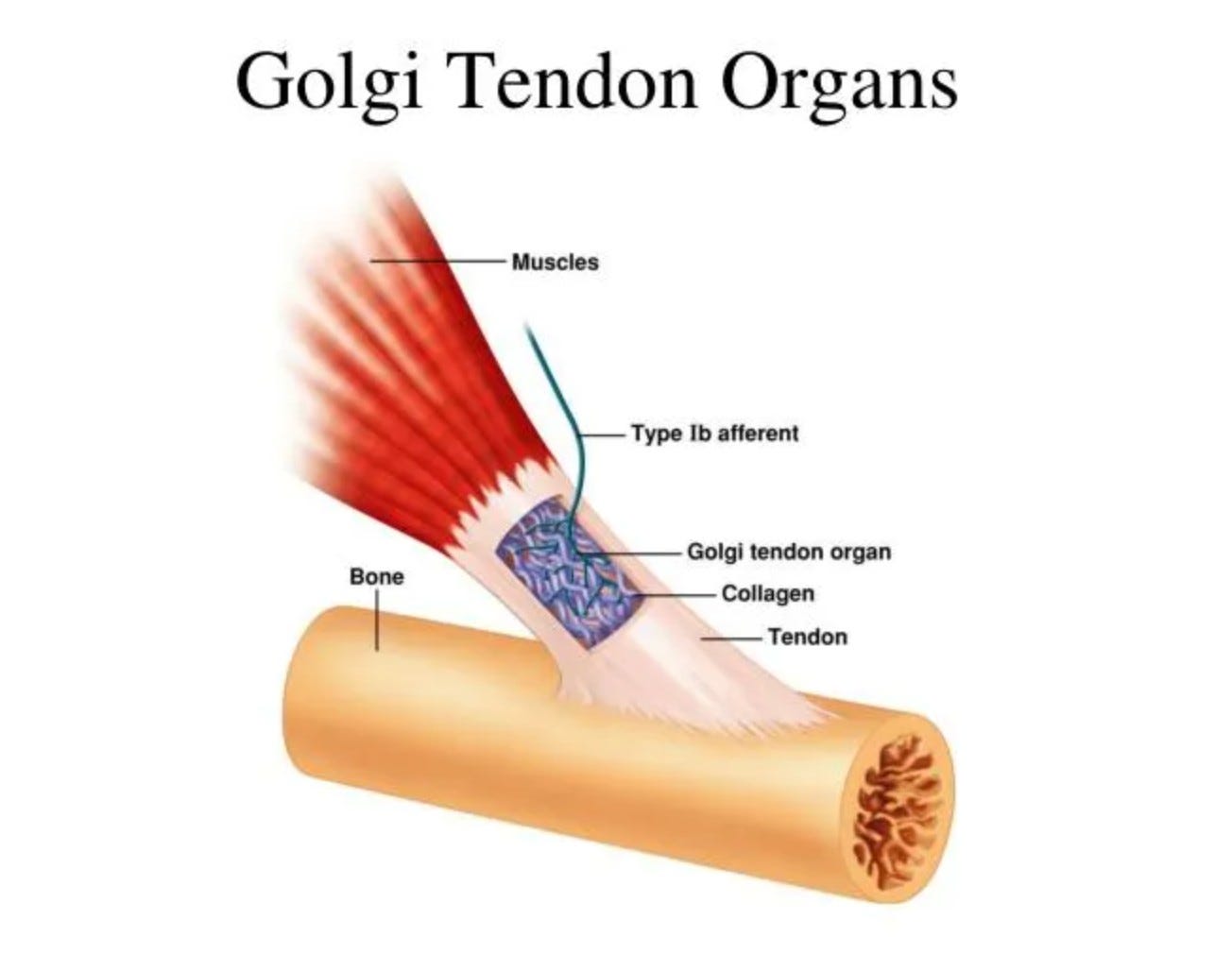
The GTO, our body's primary tension-monitoring system, provides a perfect example. Its protective inhibitory reflex is not immutable. Based on the predictive data it receives from the vestibular system, the CNS can raise or lower the GTO's firing threshold. For an anticipated hard landing, the CNS primes the GTO to be ready for high forces. For a delicate balance task, it uses the GTO's feedback for fine motor adjustments. This gating mechanism ensures our protective reflexes are always appropriate for the task at hand.
The Post-Concussion State: A System Forced into Reactive Mode
A concussion or any form of vestibular dysfunction throws this entire predictive system into chaos. Research has consistently demonstrated that even a mild traumatic brain injury can significantly impair sensorimotor processing and postural stability (Broglio et al., 2009). When a concussion damages the vestibular apparatus, it robs the brain of its most reliable predictive sensor.
This injury starves the brain of high-quality data. The brain can no longer accurately anticipate upcoming forces. As a result, it downgrades the entire motor control system from a predictive, feed-forward model to a slower, less efficient reactive one. The descending signals that once gated the spinal reflexes become weak or corrupted.
The GTO's Failure in a Reactive System
In this reactive state, the GTO's protective function faces a critical compromise. Without the predictive "heads-up" from the vestibular system, the brain no longer pre-tunes its inhibitory reflex for the demands of an athletic movement. The GTO can only react to tension after that tension has already begun to build to dangerous levels.
Imagine an athlete landing from a jump—the force on their patellar tendon skyrockets. In a healthy system, vestibular input would have primed the GTO to fire its protective inhibitory reflex as the force ramped up. However, in the post-concussion reactive state, that priming is absent. A critical delay of milliseconds slows the GTO's response. In that brief window, the force exceeds the tensile strength of the passive structures, such as the ACL, and the ligament fails. The injury occurs not because the muscle was weak, but because its neural braking system was late. Researchers are increasingly focusing on this link between neuromuscular control deficits and injury risk (Lepley et al., 2017).
Conclusion: A Neurocentric Model for Injury Prevention
This evidence compels us to evolve beyond a purely biomechanical model of injury. We need to adopt a neurocentric approach that prioritizes the health of the predictive systems that govern movement. Strengthening muscles is vital, but it proves insufficient if an injury has compromised the neural pathways that control them.
Proper injury prevention and rehabilitation require us to assess and train the integrity of the sensorimotor system, starting with its fastest and most predictive component: the vestibular system. By identifying and treating vestibular dysfunction, we can help restore an athlete's feed-forward control, enabling the brain to properly gate its protective reflexes. We must look beyond the joint and address the predictive failure in the nervous system that acts as the precursor to so many non-contact injuries.
References
Broglio, S. P., Sosnoff, J. J., & Rosengren, K. S. (2009). A comparison of balance performance: collegiate athletes with and without a history of concussion. Clinical Journal of Sport Medicine, 19(5), 367–372.
Lepley, L. K., Gribble, P. A., & Pietrosimone, B. G. (2017). The influence of concussion on lower extremity injury risk: a review of the evidence. Journal of Athletic Training, 52(4), 374-384.
Horak, F. B. (2006). Postural orientation and equilibrium: what do we need to know? Motor Control, 10(2), 113-118.