
Targeted Interventions for MS: Beyond the Basics – The Crucial Role of Sensory Assessment


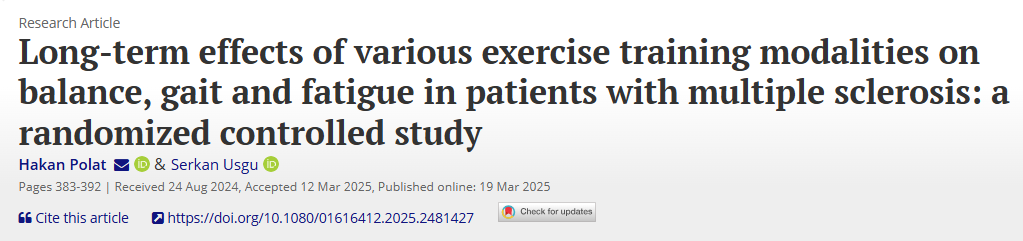
A recent study, "Long-term effects of various exercise training modalities on balance, gait, and fatigue in patients with multiple sclerosis: a randomized controlled study" by Polat and Usgu (Neurological Research, 2025), offers compelling evidence for the efficacy of specific exercise modalities in managing Multiple Sclerosis (MS) symptoms. This research underscores what many of us in vestibular rehabilitation already know: targeted interventions are key. However, it also provides a valuable jumping-off point to discuss the critical importance of precise sensory assessment in our clinical practice.
Understanding the Research: Key Takeaways
The study investigated the long-term effects of Vestibular Exercises (VE), Cervical Stabilization Exercises (CSE), and Standard Balance Exercises (SBE) on balance, gait, and fatigue in 35 patients with MS over a 12-week intervention period, with a 6-month follow-up. Their findings reinforce the power of specific, tailored approaches:
VE and CSE Outperform SBE: The significant improvements in balance, gait, and fatigue reduction observed in both the VE and CSE groups, compared to the lack of substantial changes in the SBE group, underscore the success of these specialized interventions. This study's findings strongly suggest that a 'one-size-fits-all' approach to balance training is insufficient for individuals with MS, instilling confidence in the effectiveness of VE and CSE.Distinct Benefits: Vestibular Exercises (VE) provided long-term benefits for overall balance (Functional Reach Test - FRT) and gait speed (2-Minute Walk Test - 2MWT) up to 6 months post-intervention.
Cervical Stabilization Exercises (CSE) enhanced gait endurance (Timed Up and Go - TUG) and postural control, with sustained gains in TUG and Fatigue Impact Scale (FIS) at 6 months.
Fatigue Reduction: Crucially, both VE and CSE modalities contributed to significant long-term fatigue reduction, a primary and debilitating symptom for many MS patients. The study noted that the VE group exhibited greater 2MWT improvements than the CSE group at 6 months, while the CSE group had better TUG results at both time points. Both groups showed greater fatigue (FIS) reductions than the SBE group at 6 months.
A Deeper Look at the Assessment Tools
The researchers used a suite of well-established assessment tools:
Functional Reach Test (FRT): A measure of dynamic balance and stability limits that helps identify fall risk.
Four-Square Step Test (FSST): Assesses dynamic balance, stepping over obstacles, and quick changes in direction, directly relevant to functional mobility and fall prevention.
2-Minute Walk Test (2MWT): Measures gait endurance and walking speed, providing insights into functional capacity over time.
Timed Up and Go (TUG) Test: A widely used, quick screen for mobility, balance, and fall risk, susceptible to changes in functional mobility.
Fatigue Impact Scale (FIS): A patient-reported outcome measure quantifying the impact of fatigue on various aspects of daily life.
These tools are highly effective and widely used in neurological rehabilitation and vestibular practice. While the abstract does not specify the participants' age or baseline functional level, these measures are robust enough to capture impairments and progress across a spectrum of functional abilities, including those at higher fall risk or with lower functional capacity. They provide objective data that is crucial for tracking progress and demonstrating the efficacy of our interventions.
How Balance Impairment Drives Fatigue
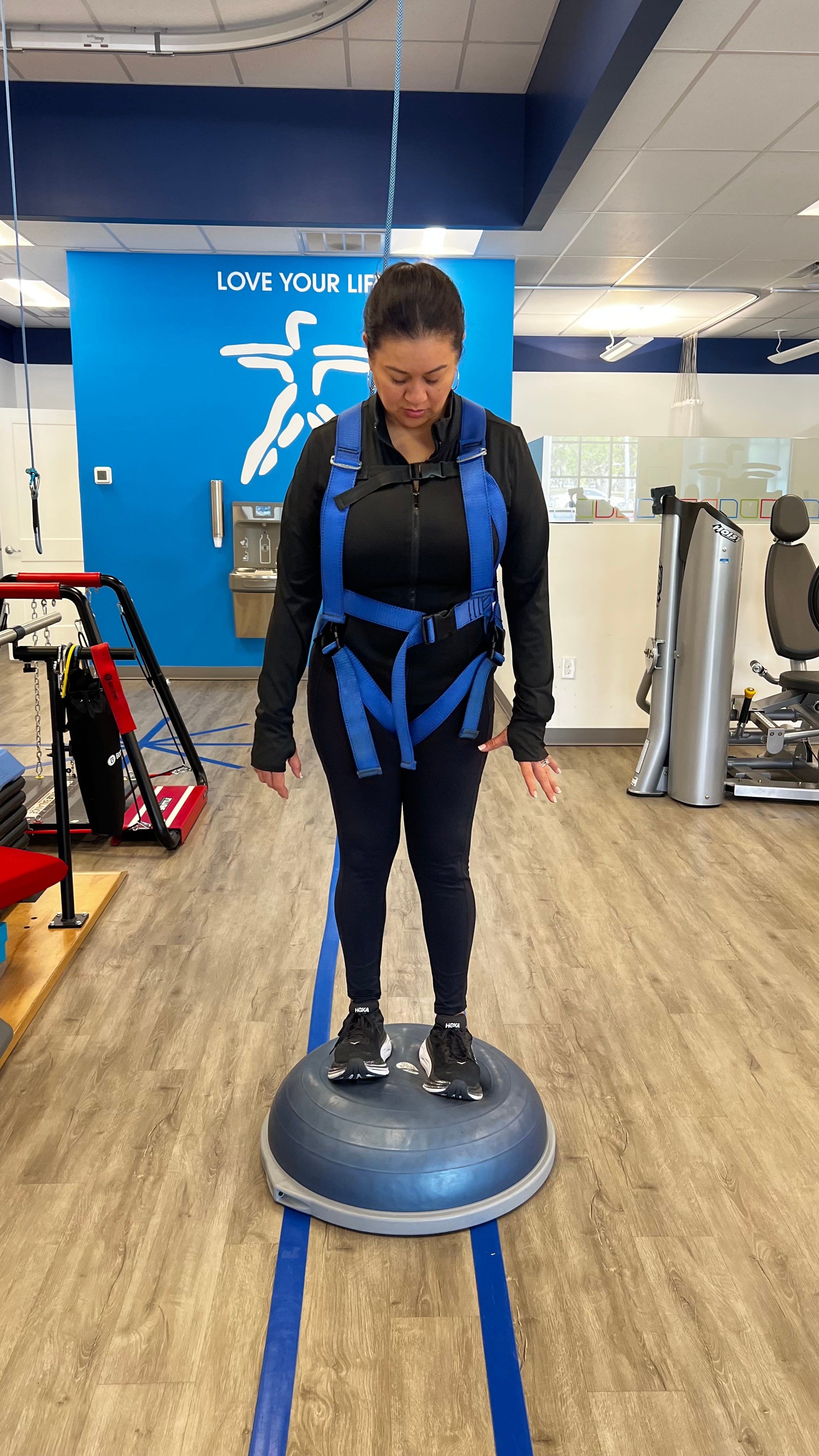
The study's finding that VE and CSE reduce fatigue is particularly significant for MS patients. Why does improving balance affect fatigue? When an individual has balance issues, their body, particularly the musculoskeletal system, has to work harder and expend more energy for the same tasks than a well-balanced person. For instance, maintaining an upright posture or walking requires constant, often subtle, corrective movements to prevent falls. This continuous, heightened effort taxes the muscles and neurological systems.
Furthermore, a person with balance deficits may adopt an inefficient gait pattern, often taking more steps to cover the same distance because their steps might be smaller or more cautious. This increased number of steps directly translates to greater energy expenditure over time, leading to accelerated fatigue. The body can operate more efficiently by improving balance, reducing compensatory effort, and diminishing fatigue.
The Crucial Role of Cervical Stabilization in Balance
The cervical spine plays a critical role in balance due to its high levels of afferent input. The sensors (proprioceptors) located within the neck muscles and joints send vital messages to the brain about the position and movement of the head relative to the body and vice versa. This information, along with input from the inner ear (vestibular system) and the eyes (visual system), is integrated by the brain to create a coherent sense of orientation and to control posture.
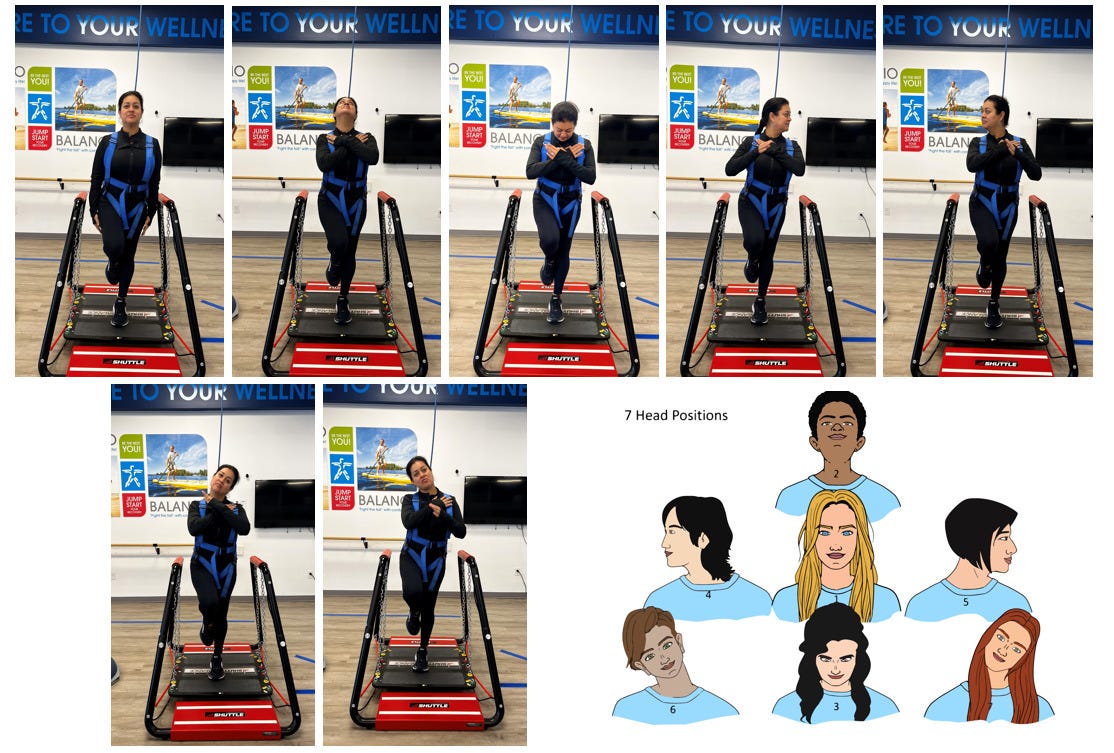
If the cervical system isn't functioning optimally—for example, sending erroneous signals (e.g., indicating a 5-degree head turn to the right when the inner ear and eyes do not sense this movement)—it creates a sensory mismatch. This leads to conflicting information for the brain, resulting in inefficient, uncoordinated movements, dizziness, and further challenges to maintaining balance. Training cervical stabilization helps to ensure that this critical afferent input is accurate and effectively integrated, contributing to overall postural control and reducing sensory confusion.
The FYZICAL Difference: Precision in Sensory Assessment for Training Vestibular Balance
The study brilliantly validates the importance of targeted VE and CSE. However, it also implicitly underscores a crucial step that precedes effective exercise prescription: the precise assessment of an individual's sensory function and weighting. This step is not to be overlooked, as it is a key factor in ensuring the effectiveness of the prescribed exercises.
At FYZICAL, our approach to the Theoretical Framework of the FYZICAL Balance Paradigm (FBP) is epitomized by our FYZICAL-CTSIB (Clinical Test of Sensory Interaction on Balance). This framework recognizes that dizziness and balance impairments often involve patients prioritizing or misinterpreting sensory information. As vestibular professionals, we know that dizzy patients frequently use maladaptive or inappropriate sensory strategies to control their balance. The FBP guides us in understanding and addressing these maladaptive strategies, making it the first step in effectively training the vestibular system.
Our model identifies various sensory strategies, from Normal to Aphysiological, including:
Vh-SOM (Vestibular Hypofunction with Somatosensory Over-reliance): Over-reliance on surface cues due to vestibular hypofunction.
Vh-VIS (Vestibular Hypofunction with Visual Over-reliance): Over-relying on visual cues due to vestibular hypofunction.
SVM (Somatosensory-Vestibular Mismatch): Over-reliance on surface cues.
VVM (Visual-Vestibular Mismatch): Over-reliance on visual cues.
SVVM (Somatosensory > Visual-Vestibular Mismatch): Profound vestibular dysfunction leading to extreme reliance on surface cues over visual.
VSVM (Visual > Somatosensory-Vestibular Mismatch): Profound vestibular dysfunction leads to greater reliance on visual cues than surface cues.
Understanding these specific sensory strategies—identifying if a patient is over-relying on visual input (VVM, VSVM), surface input (SVM, SVVM), or has a profound vestibular hypofunction leading to dependencies (Vh-SOM, Vh-VIS)—is paramount. This deep dive into a patient's ‘sensory strategy’ is not explicitly detailed in the research abstract. Still, the critical missing piece guides us in prescribing the right vestibular and cervical stabilization exercises.
Approaching MS Patients Struggling with Balance: A Targeted Strategy
When approaching MS patients struggling with balance, our strategy at FYZICAL is always to be targeted and individualized. We address balance both restoratively and, where possible, preventatively. The ‘targeting’ comes from our comprehensive assessment, particularly the sensory component:
Comprehensive Assessment: Beyond standard balance tests, we perform a detailed sensory evaluation to identify the specific sensory strategy the patient is using (e.g., Vh-SOM, Vh-VIS, etc.).
Individualized Exercise Prescription: Based on this sensory strategy, we tailor exercises (like the vestibular and cervical stabilization exercises we discussed previously) to challenge the maladaptive strategy and reinforce the appropriate sensory integration. For example, a patient with a Vh-VIS strategy would benefit from exercises that challenge visual reliance while enhancing vestibular integration.
Progression and Prevention: As patients improve, exercises progress to continue challenging their systems. For MS patients, this also involves a preventative approach, helping them build resilience and adaptive strategies to manage the progressive nature of their condition and maintain functional independence. This often involves integrating balance challenges into functional tasks to maximize carryover to daily life.
Are the Study Findings Surprising?
The finding that traditional balance exercises were less practical than those training vestibular systems and enhancing cervical stabilization is not surprising to us as vestibular professionals. Our understanding of the complex interplay between the vestibular system, vision, somatosensation, and cervical proprioception in maintaining balance strongly suggests that a general approach would yield suboptimal results, especially for a population like MS patients with diverse and often profound sensory processing challenges.
While the exact nature of the ‘standard balance exercise’ used in the study is not detailed, it's reasonable to infer they lacked the specificity needed to address the multi-faceted balance deficits common in MS. Our clinical experience consistently shows that merely performing generic balance tasks without understanding the underlying sensory mismatches and targeting specific vestibular and cervical components will have limited efficacy. This study provides strong research validation for our targeted, individualized, and sensory-driven approach to vestibular rehabilitation.
Reference
Polat, H., & Usgu, S. (2025). Long-term effects of various exercise training modalities on balance, gait, and fatigue in patients with multiple sclerosis: a randomized controlled study. Neurological Research, 47(5), 383–392. https://doi.org/10.1080/01616412.2025.2481427