
The Counterintuitive Truth: Understanding Optokinetic Direction for Precise Vestibular Torque


You stand before your patient, ready to apply precision optokinetic stimulation (OKS). You know your patient has a left vestibular hypofunction, and you need to generate a powerful 'torque' to drive adaptation on that paretic left side. You find an optokinetic flow, perhaps on the Mount Sinai Stimulator, and you see stripes moving from Right to left across the screen.
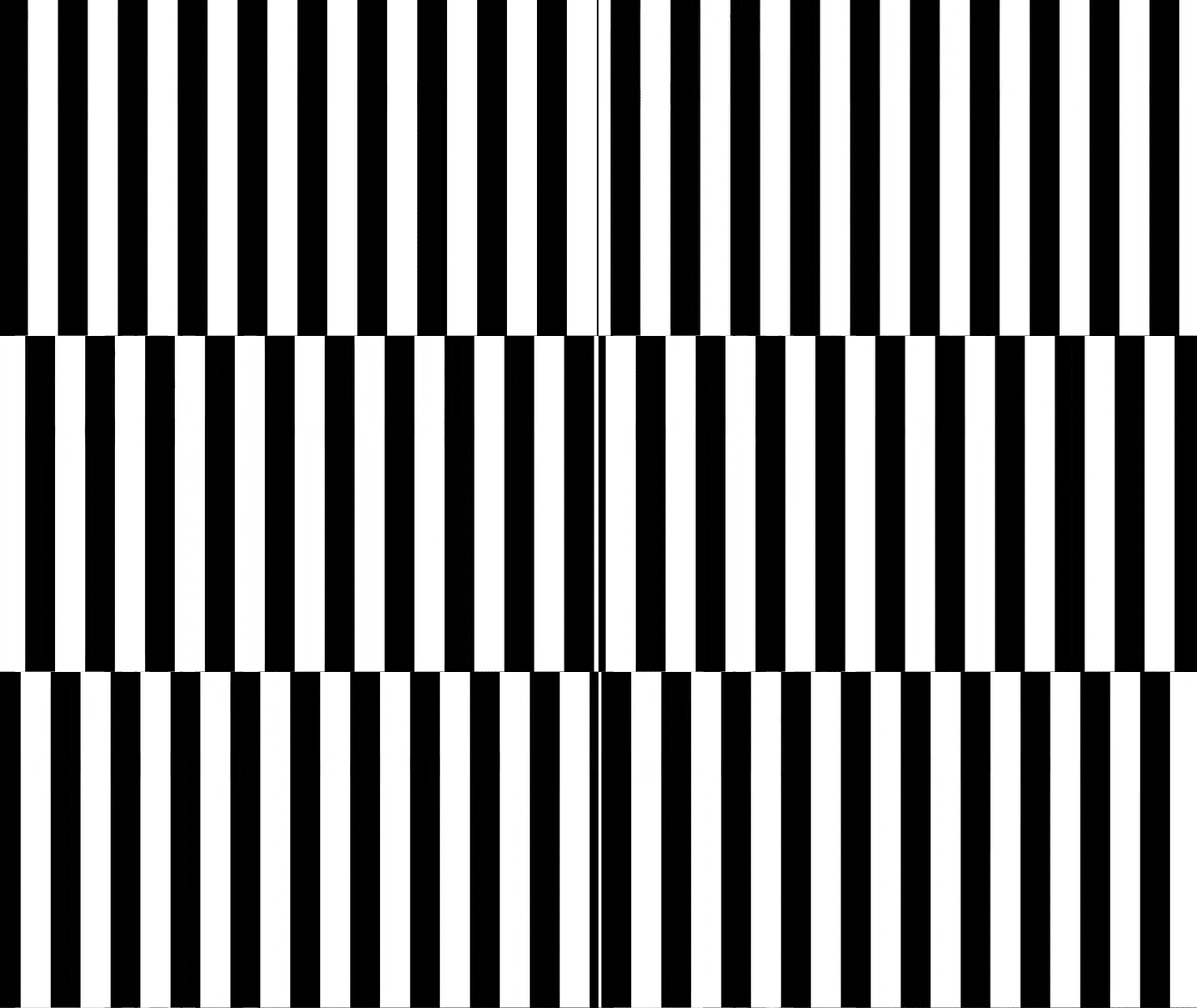
Your instinct might tell you, 'This flow is going to the left, so it must be helping my left ear!' But then, you remember the directive: for a left hypofunction, the flow must move Left to Right.
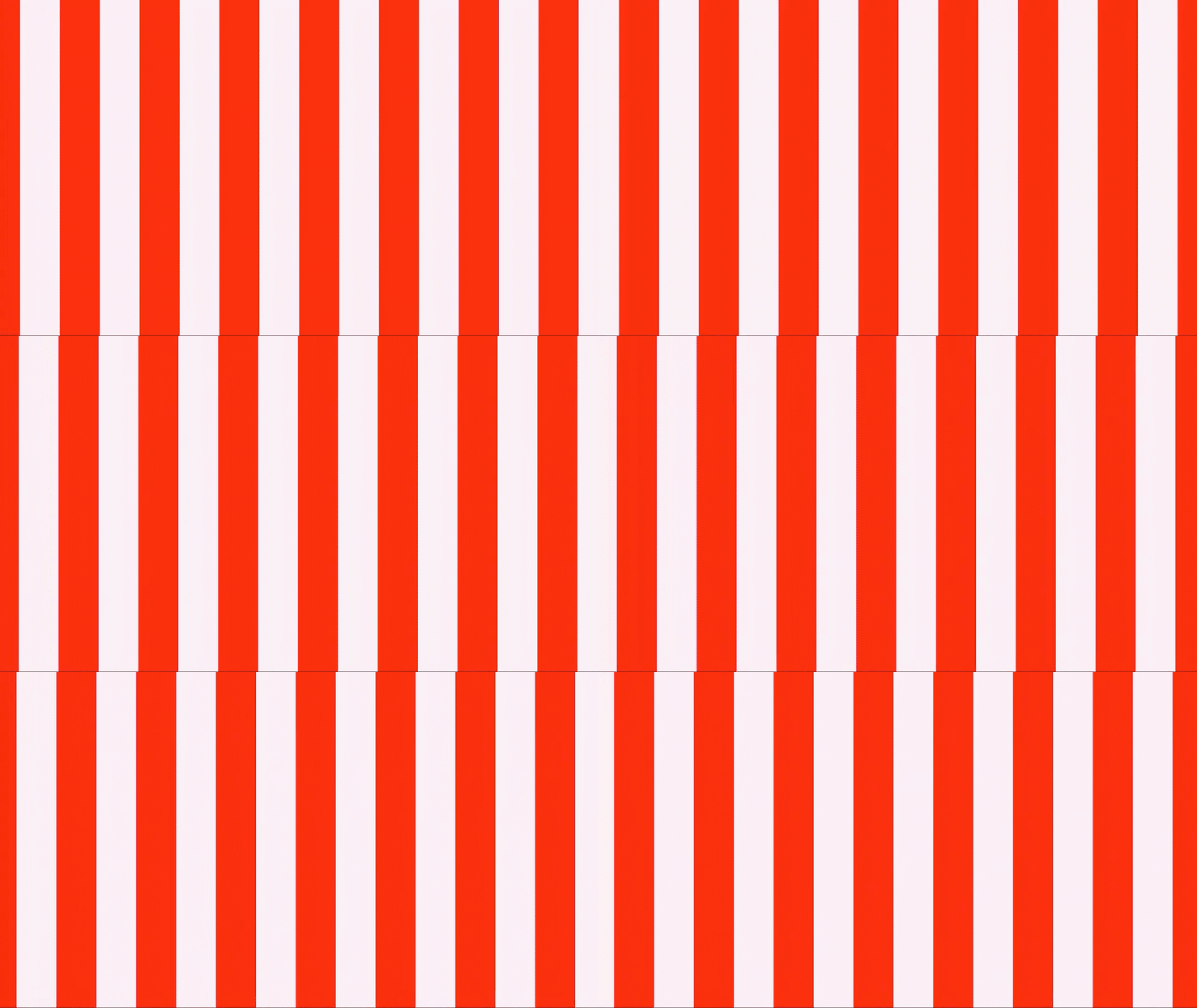
This feels contradictory. It feels like the flow is going the 'wrong' way. This confusion is widespread, highlighting a crucial, counterintuitive truth about how our visual and vestibular systems interact. Understanding this precise relationship is not only essential but also fundamental to effectively producing targeted 'torques' through the visual system.
The Dynamics of Optokinetic Nystagmus (OKN) and Vection
To grasp this, we must first revisit the basics of Optokinetic Nystagmus (OKN) and vection.
When a large visual field moves coherently (like stripes across a screen), our eyes automatically perform OKN. This reflexive eye movement has two phases:
Slow Phase: Our eyes slowly track and follow the direction of the moving visual stimulus.
Fast Phase: Our eyes then rapidly 'snap back' in the opposite direction, resetting to pick up new incoming stimuli.
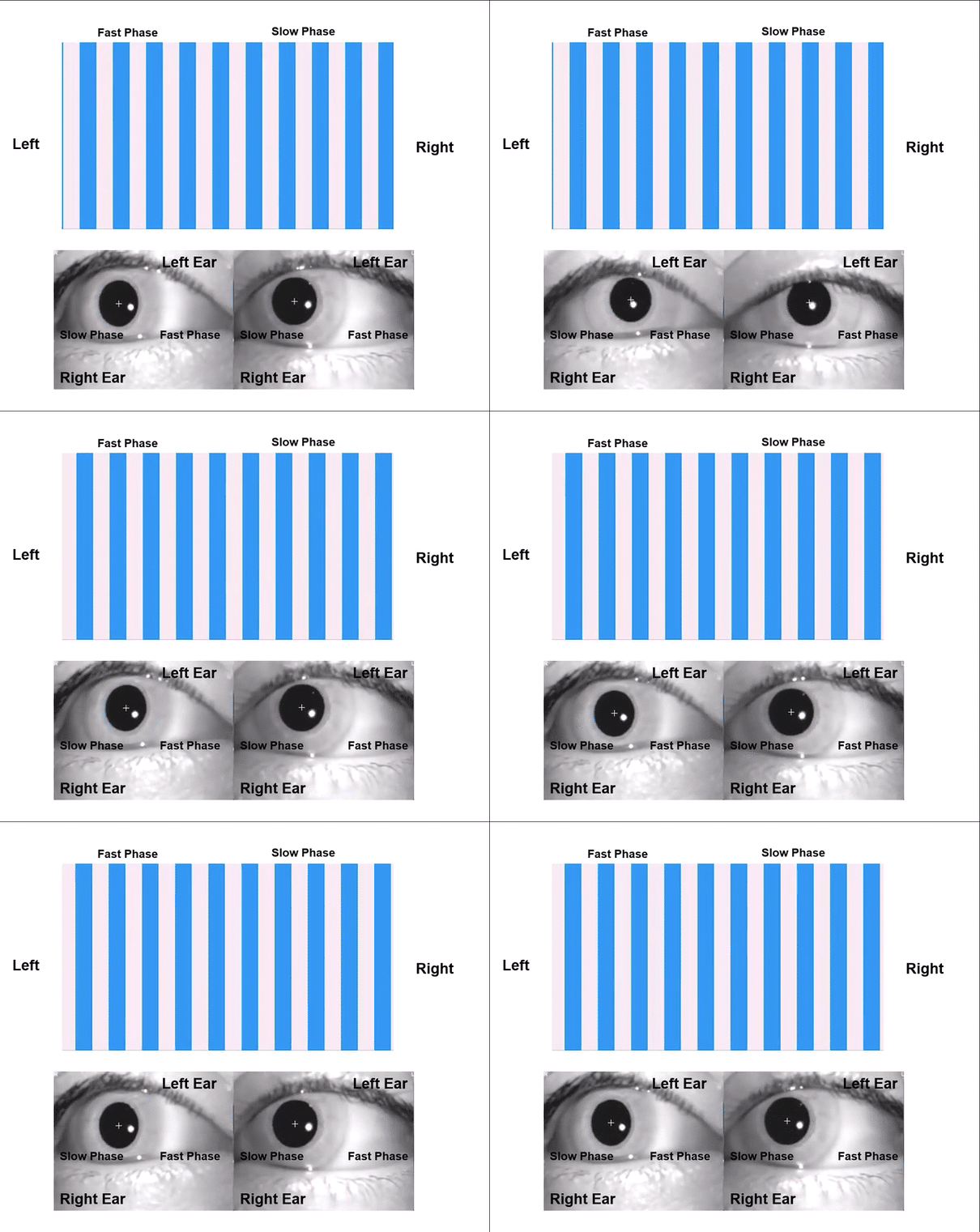
Simultaneously, when this visual motion fills a significant portion of our visual field, it creates vection – the compelling, often overwhelming illusion that we are moving or turning in the direction of the slow phase (i.e., the direction in which the visual stimulus is moving). Imagine sitting on a stationary train, and the adjacent train starts moving forward; you feel as though your train is moving backward. The visual world appears to move backward, and you perceive yourself moving backward.
The Counterintuitive Connection: Visual Flow, Perceived Turn, and Therapeutic Torque
Now, let's apply this to a patient with a left vestibular hypofunction.
The Problem: Due to the diminished input from their left inner ear, their brain perceives a constant, uncompensated 'turn to the right.' This is the pathological bias we must correct.
The therapeutic goal is to 're-level' this bias; we need to induce a compensatory 'torque' that makes the brain feel as though it is turning to the left. We aim to stimulate activity in the correct vestibular pathways to counteract the perceived leftward drift.
Here is where the counterintuitive part becomes clear:
To induce a perceived 'left turn' (i.e., to induce leftward vection), the visual world must flow from Left to Right. Imagine yourself turning your head to the left: the world visually sweeps across your field of view from left to Right.
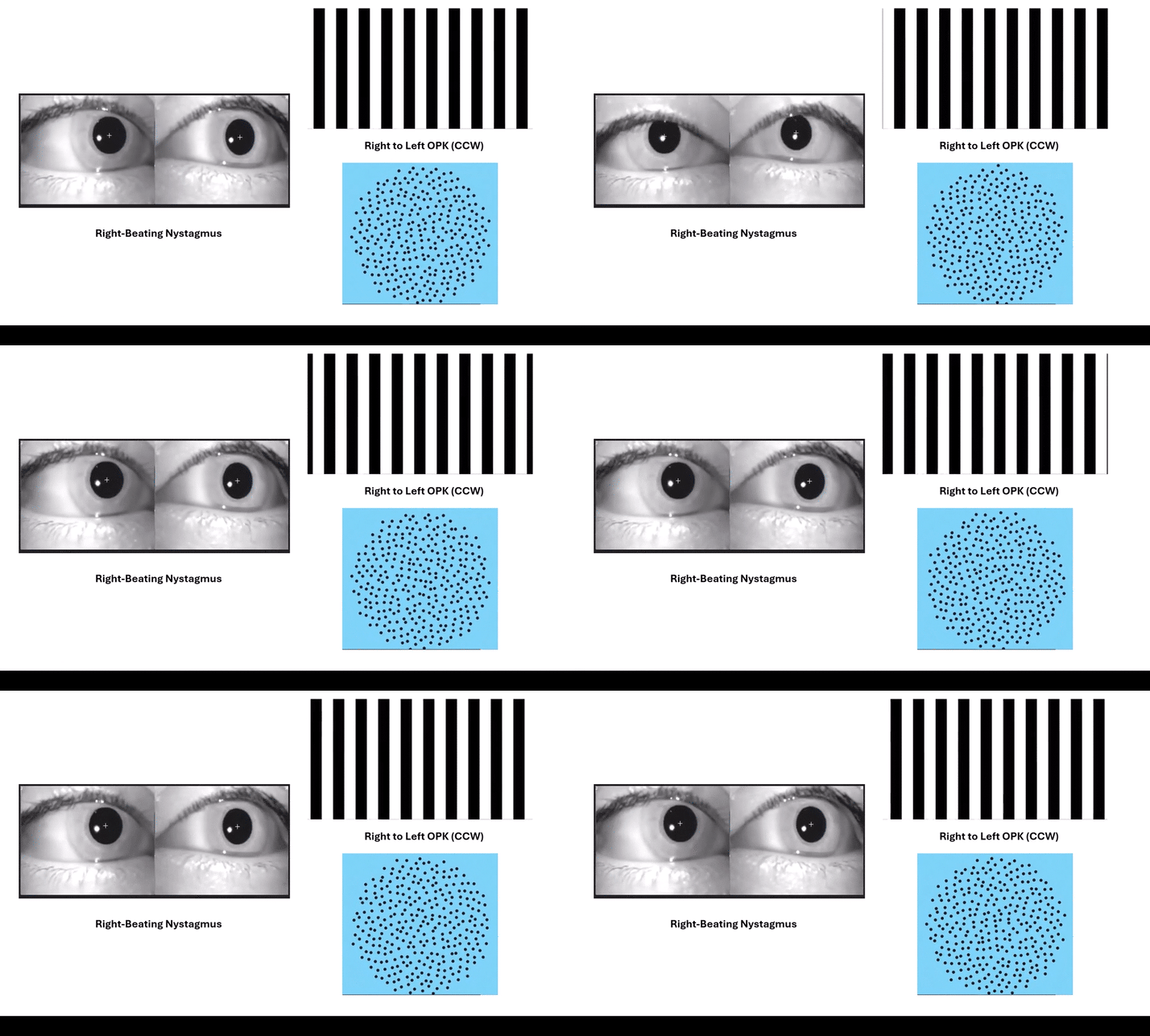
This Left-to-Right visual flow then elicits an OKN with a slow phase to the Right (following the stripes) and, crucially, a fast phase to the left (snapping back).
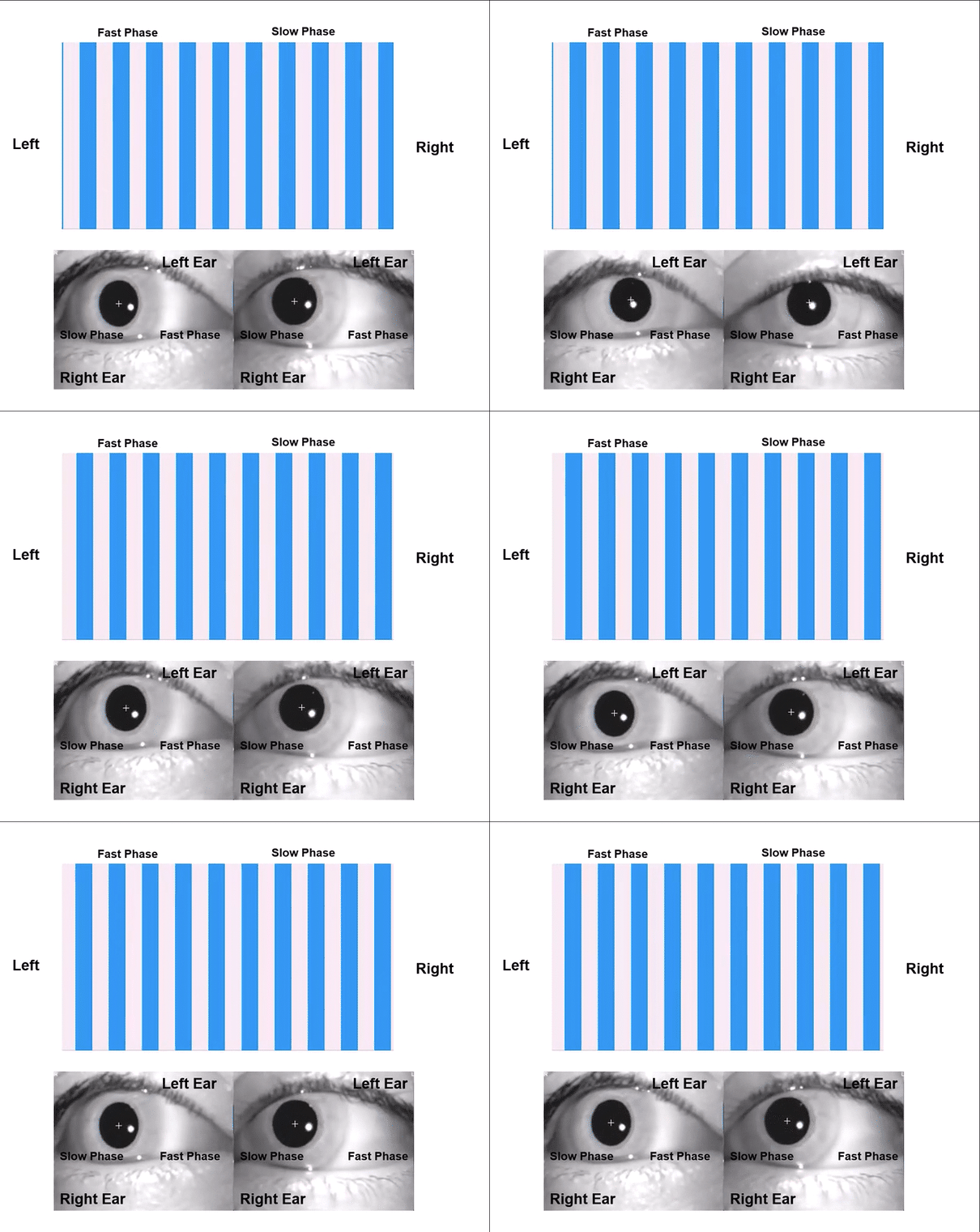
It is this fast phase to the left that becomes our primary therapeutic driver for a left hypofunction. This rapid eye movement, generated repeatedly and forcefully, directly stimulates and pushes the paretic left vestibular system, attempting to 'balance' the pathological tonic input and drive adaptation.
Conversely, if you were to use a visual flow moving from Right to Left (as in our initial confusing scenario), it would induce a perceived 'right turn' (rightward vection) and an OKN with a fast phase to the Right. This would exacerbate the existing bias in a patient with a left hypofunction, pushing them further into their perceived rightward turn, rather than correcting it.
Why This Precision Matters
The confusion between the direction of the visual stimulus and the desired therapeutic effect is a common pitfall. Many instinctively assume the visual stimulus should move towards the paretic side. However, the mechanism relies on inducing the correct vection and, more directly, the correct OKN fast phase to drive adaptation.
Understanding this precise, counterintuitive relationship is paramount for every physical therapist utilizing OKS. It ensures you are not just showing a patient moving stripes. Still, you are applying a highly specific, physiologically targeted 'torque' to their vestibular system, forcing the exact neuroplastic changes required for true and lasting compensation. This level of understanding is what separates effective intervention from mere activity.