

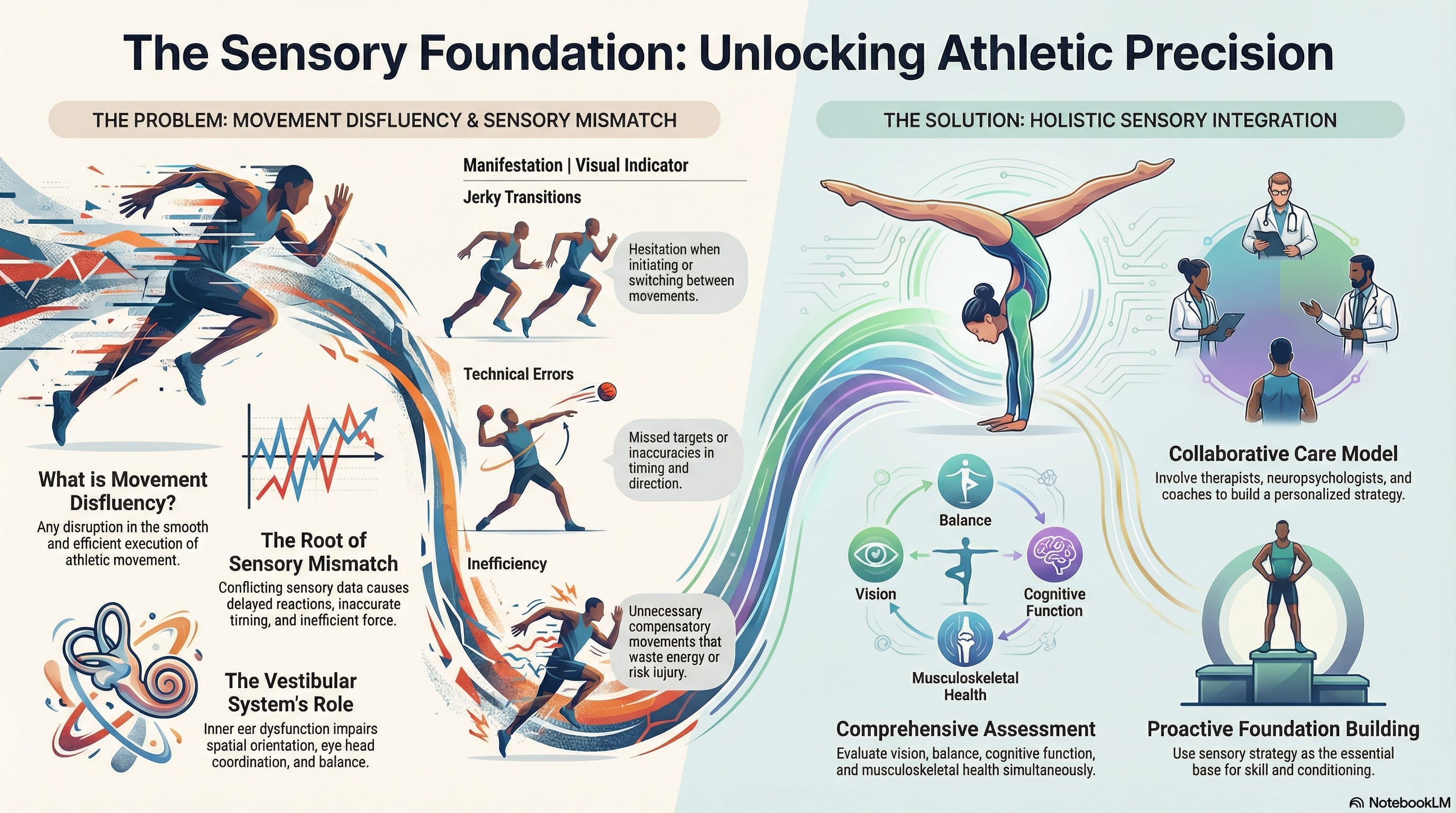
Movement disfluency is the disruption of smooth, efficient motor execution caused by an underlying conflict between the body’s primary sensory inputs. This clinical phenomenon occurs when the brain receives incongruent data from the vestibular, visual, and somatosensory systems, forcing the central nervous system to utilize inefficient compensatory strategies.
In this audio deep dive, we explore:
What are the primary roots of movement disfluency? We break down the transition from fluid athletic movement to hesitant, jerky, or inaccurate patterns. We discuss how these disruptions are rarely a result of poor “conditioning” but are instead a failure of sensory processing.
How does sensory mismatch create a ‘ghost in the machine’? The discussion focuses on the internal conflict between the vestibular system and visual inputs that provide conflicting spatial data. We examine how this mismatch leads to a maladaptive sensory strategy, where the athlete becomes overly dependent on surface or visual cues to navigate their environment.
Why must we look beyond simple sensation? We analyze the complex interplay of cognitive load, emotional state, and musculoskeletal integrity. You will learn why addressing sensory integration is the foundational requirement for supporting motor control and optimizing athletic output.
Can athletes simply ‘adapt’ to these disfluencies? We address the common misconception that athletes can train through these issues. We explain why proactive intervention is necessary to coordinate the microenvironment of the inner ear and facilitate proper signaling, rather than allowing the body to settle into high-risk compensatory patterns.


