
The Gravity Reference: Why the Sensory Organization (SOT) Conditions 5 and 6 Are the Definitive Functional Assessment of the Otolith Organs


The physical task of maintaining an upright human stance against earth’s gravitational field dictates that the motor output of the central nervous system must align the body’s center of mass with a true linear vertical reference. While traditional vestibular diagnostics focus primarily on semicircular canal kinetics using angular acceleration, Computerized Dynamic Posturography (CDP) isolates the functional processing of the otolith organs (Keshner et al., 2023).
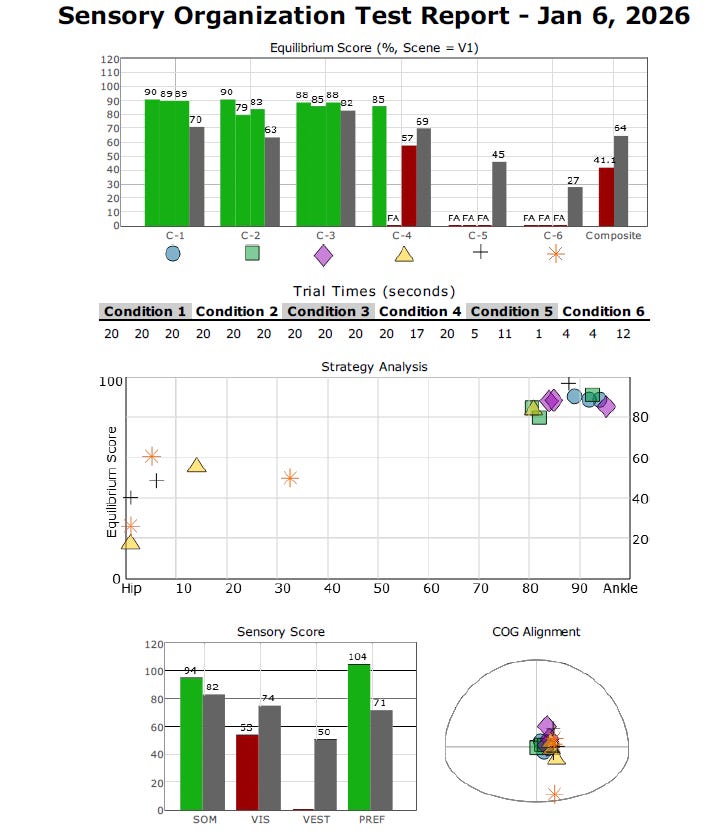
When a patient undergoes the Sensory Organization Test (SOT), particularly under conditions that remove or disrupt orientation boundaries, the internal reference frame defaults to the gravity-sensing maculae of the utricle and saccule. Analyzing biomechanical parameters, low-frequency thresholds in quiet stance, and historical post-flight aerospace data reveals why SOT Conditions 5 and 6 constitute the definitive functional assessments of human otolith translation.
The Biomechanical Realities of Quiet Stance: Why Canal Thresholds Fail
Evaluating whether a diagnostic system isolates a specific sensory organ requires a strict analysis of the physical stimulus acting upon that organ during a given task. The semicircular canals function as fluid-filled angular accelerometers that respond to angular acceleration. The neural transduction of canal afferents depends on the volumetric displacement of the endolymph and the subsequent mechanical deflection of the cupula.
During a quiet upright stance, the human body behaves biomechanically as an inverted pendulum, exhibiting low-frequency micro-stochastic corrections.
These corrective sway patterns typically occur at frequencies below 0.5 Hz, generating exceptionally low angular velocities (Paloski et al., 2006). These micro-movements frequently fail to cross the biological activation thresholds of the semicircular canal hair cells. If the central nervous system relied exclusively on canal-ocular or canal-spinal pathways to preserve equilibrium during slow postural drift, the signal-to-noise ratio would be insufficient to execute timely motor corrections.
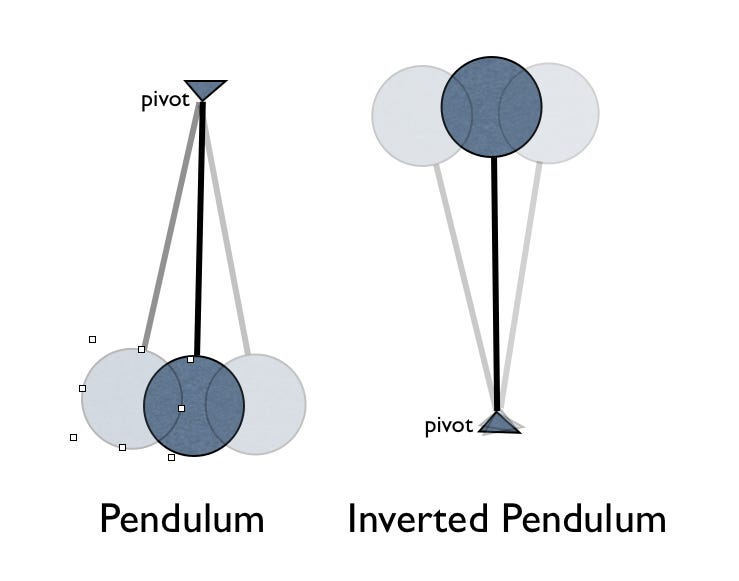
Conversely, the otolith organs are structurally engineered as linear accelerometers. The otolithic membrane, weighted by dense calcium carbonate otoconia, has a specific gravity significantly higher than that of the surrounding endolymph. Consequently, the utricular and saccular maculae experience a continuous, static 1g downward linear acceleration vector (9.8 m/s^2) under the influence of earth’s gravity (Paloski et al., 2006).
When a patient sways on a posturography platform, the absolute direction of this gravity vector shifts relative to the orientation of the macular surfaces.
This angular deviation modifies the shearing forces acting upon the stereocilia, altering the baseline tonic firing of the vestibular nerve. Because maintaining an upright posture requires the brain to compute the center of mass relative to this linear gravitational line, the primary sensory input driving this motor loop is inherently otolithic.
Nashner, Black, and the Disruption of External Orientation Boundaries
The clinical framework of CDP relies on the systematic isolation of these physiological systems. Dr. Lewis Nashner designed the SOT to observe how the central nervous system reweights sensory inputs when environmental parameters change.
The baseline profile of a healthy adult changes radically depending on the stability of the environmental boundaries:
Stable Environmental Conditions: When standing on a firm, fixed surface with accurate vision, the central nervous system allocates its sensory resources with a heavy reliance on a strong somatosensory component:
Somatosensory Input: 70%
Vestibular Inflow: 20%
Visual Reference: 10% (Keshner et al., 2023).
Unstable Environmental Conditions (Body in Transport): When the surface becomes compliant or sway-referenced, such as during SOT Conditions 4, 5, and 6, the feet and eyes can no longer provide accurate orientation info. The central nervous system immediately executes a sensory reweighting protocol, fundamentally shifting the hierarchy to prioritize an internal reference frame:
Vestibular Inflow: 60%
Visual Reference: 30%
Somatosensory Input: 10%
The entire clinical utility of SOT Condition 5 and Condition 6 relies on systematically dismantling this distribution to expose the underlying vestibular core.
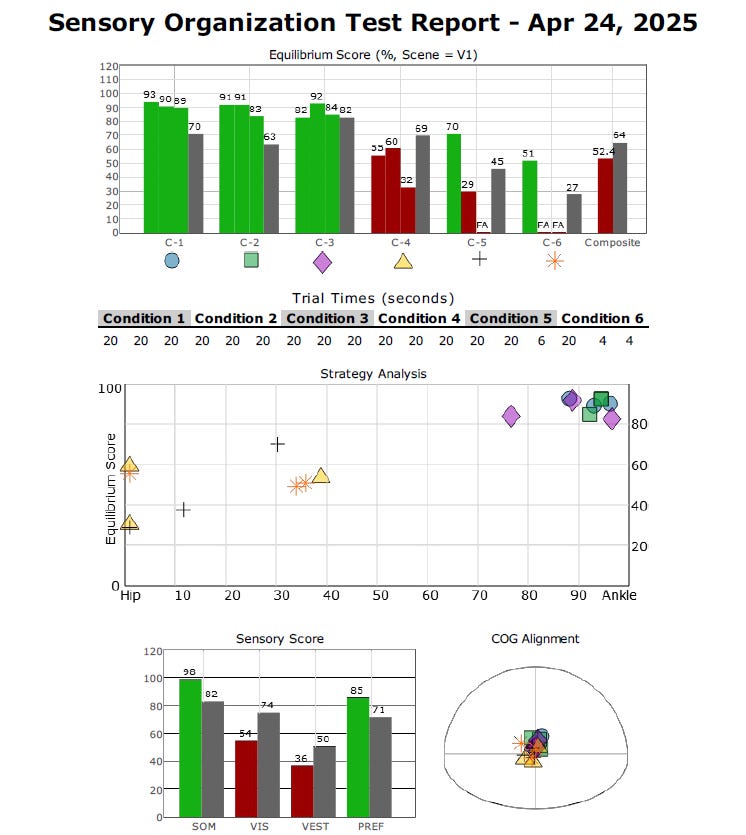
Sensory Organization Test (SOT) - Condition Five (C5)
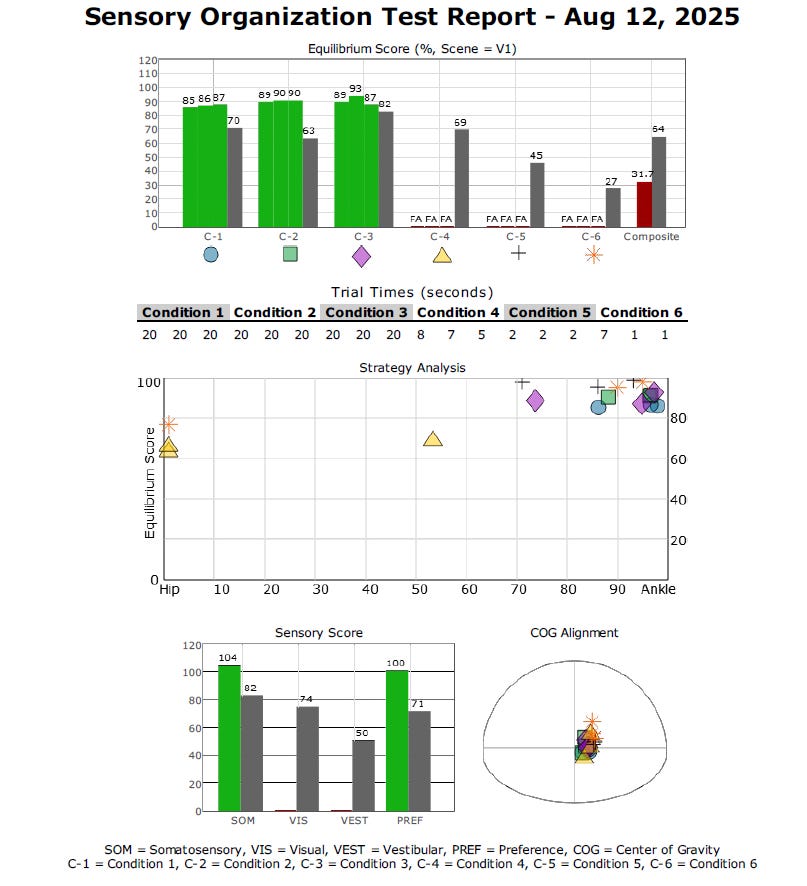
In SOT Condition 5, the eyes are closed, eliminating visual orientation cues. Simultaneously, the platform tilt is sway-referenced, moving in direct proportion to the patient’s real-time anteroposterior center-of-mass movement. This continuous tracking maintains a constant ankle joint angle, effectively neutralizing the ankle proprioceptors and rendering the somatosensory orientation reference completely unreliable.
Sensory Organization Test (SOT) - Condition Six (C6)
In SOT Condition 6, the somatosensory reference remains minimized via sway-referencing, while the visual surround is sway-referenced as well, tilting in tandem with the patient’s sway to create a false impression of stability.
By systematically disengaging the somatosensory and visual inputs, the central nervous system is forced to abandon external spatial markers. It must extract a vertical coordinate system from the only remaining veridical sensor: the linear gravity receptors of the inner ear.
“If a patient displays a significant drop in equilibrium scores on Conditions 5 and 6, it indicates a functional failure of the central nervous system to read, weigh, and apply the internal linear coordinates provided by the otolith organs.”

The Aerospace Legacy: Post-Flight Posturography as an Otolith Model
The definitive proof that SOT Conditions 5 and 6 isolate otolithic function emerged from Dr. F. Owen Black's research during his tenure investigating vestibular adaptation for NASA (Black & Paloski, 1998; Keshner et al., 2023). When astronauts are exposed to long-duration spaceflight, they enter a microgravity environment in which the constant 1g gravitational vector is absent. In this state, the semicircular canals continue to function normally during angular head rotations, but the otolith organs undergo profound neural recalibration. Because there is no gravity to shear the otoconia, the brain suppresses the gain of the otolith afferents to prevent sensory confusion (Black & Paloski, 1998).
Upon returning to Earth, these astronauts exhibit a highly specific neurotological profile:
Normal Canal Function: Standard caloric, rotary chair, and video head impulse test (vHIT) metrics demonstrate normal canal-ocular reflexes, proving that the angular acceleration sensors survived the journey intact.
Profound Postural Collapse: When placed on a computerized posturography platform under SOT Conditions 5 and 6, returning astronauts exhibit near-total postural collapse, frequently triggering safety-harness suspensions (Black & Paloski, 1998).
Because the microgravity environment selectively deconditioned the linear gravity-sensing pathways while leaving the angular canal pathways unaltered, the immediate post-flight failure on Conditions 5 and 6 served as a clear, real-world model.
“It proved that executing these specific posturographic tasks requires a fully functional, earth-calibrated otolithic translation system.”
The NeuroCom Clinical Interpretation Blueprint: Comprehensive Baseline Deficits
Further confirmation of the role of the otolith organs in postural stability is found in the official NeuroCom clinical interpretation guidelines. The NeuroCom Systems Clinical Interpretation Manual outlines specific posturographic patterns that indicate severe or widespread equilibrium deficits. A primary configuration detailed within this framework is the global, or across-the-board, dysfunction pattern, characterized by abnormal equilibrium scores across all six SOT conditions (NeuroCom International, 2005).
According to the diagnostic criteria established by NeuroCom, when a patient presents with comprehensive deficits across Conditions 1 through 6, the pathology is not limited to a single peripheral end organ or a single sensory pathway. Instead, this severe pattern is classically associated with two primary underlying clinical conditions:
Central Vestibular and Postural Control Disorders: Structural or metabolic impairments within the brainstem, cerebellum, or vestibulospinal tracts that disrupt the central integration of all sensory signals.
Global Otolithic Dysfunction: A profound loss of the baseline, linear gravitational reference system.
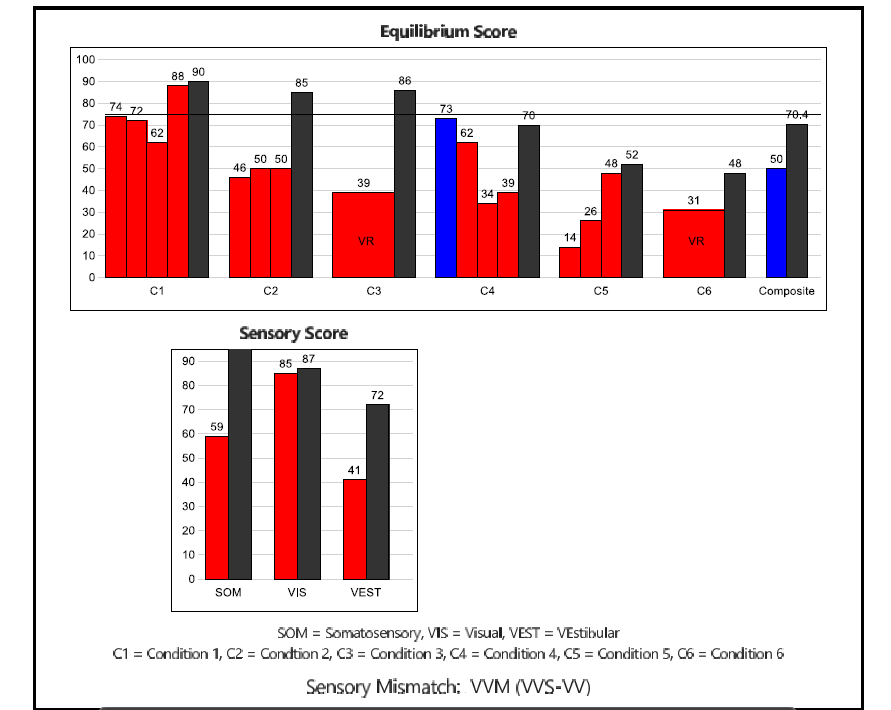
Because the otolith organs provide the continuous tonic background force and linear orientation coordinate system required for basic upright posture, a complete failure of the utricular and saccular maculae degrades postural stability even when the platform is stable, and vision is present. Without a functional internal gravity reference to anchor the postural loop, the central nervous system cannot accurately weigh incoming somatosensory or visual information, leading to depressed equilibrium scores across the entire SOT continuum.
Peer-Reviewed Clinical Corroboration
This physiological framework is validated by clinical trials that correlate posturographic sway profiles directly with macular and otolithic performance:
Otolithic Degeneration and Increased Postural Sway:
Serrador et al. (2009) cross-referenced specific otolith-ocular metrics—ocular counter-rolling during roll tilt—with computerized posturographic parameters across varying age groups. The investigators demonstrated that age-related degradation of the utricular and saccular maculae directly correlates with a distinct increase in both anteroposterior and mediolateral sway when patients are forced to stand on compliant, sensory-altered surfaces.
Adaptation and Sensory Reweighting Failure:
Long-term post-flight tracking of space-shuttle crew members demonstrated that the recovery curve for equilibrium scores on SOT Conditions 5 and 6 tracks identically with the neurophysiological re-adaptation of otolith-driven spinal reflexes (Wood et al., 2015). This tracking underscores that the SOT is a direct measurement of functional otolithic integration within the broader central nervous system.
Isolating Macular Pathology via Dynamic Modifications:
To further isolate the otoliths from the canals in functional posturography, Jain et al. (2010) incorporated dynamic head tilts into the SOT paradigm. By applying a static or dynamic head tilt during sway-referenced conditions, clinicians alter the gravito-inertial vector acting on the maculae while bypassing canal activation.
“This specific posturographic modification demonstrated 94.9% sensitivity for identifying isolated otolithic lesions that conventional, canal-focused diagnostic tests failed to detect.”
Beyond Reflex Arcs: The Clinical Mandate for Functional Testing
Modern neurotology frequently relies on Vestibular Evoked Myogenic Potentials (VEMPs) to evaluate the otolith pathways. The cervical VEMP (cVEMP) provides a metric for saccular and inferior vestibular nerve pathways, while the ocular VEMP (oVEMP) maps the utricular and superior vestibular nerve pathways.
However, a VEMP is fundamentally an assessment of a simple, lower-level reflex arc. It is an electrophysiological measurement of muscle activation or inhibition in response to a high-intensity acoustic or mechanical click. It tells the clinician whether the pathway is anatomically open, but it offers no insight into how the central nervous system integrates that pathway to maintain balance.
A patient can have completely normal bilateral VEMP responses yet remain functionally incapacitated when walking in low-light conditions or on uneven surfaces. This mismatch occurs because standing upright requires complex, higher-level sensory reweighting. The brain must receive the otolithic signal, cross-reference it against an internal gravitational template, suppress erroneous visual or somatosensory noise, and coordinate a real-time motor response through the vestibulo-spinal tract.
Computerized Dynamic Posturography evaluates this exact system. SOT Conditions 5 and 6 do not consider isolated loops in a vacuum; they assess the overall efficiency of the gravity-detection engine. For the vestibular specialist, viewing the SOT through this physiological lens changes the clinical approach.
“A drop in equilibrium scores under these conditions represents a specific, functional failure of the central nervous system to read, weigh, and apply the internal linear coordinates provided by the otolith organs.”
References
Black, F. O., & Paloski, W. H. (1998). Computerized dynamic posturography: What have we learned from space? Otolaryngology - Head and Neck Surgery, 118(3 Pt 2), S45-S51. https://doi.org/10.1016/s0194-5998(98)70009-9
Jain, V., Wood, S. J., Feiveson, A. H., Black, F. O., & Paloski, W. H. (2010). Diagnostic accuracy of dynamic posturography testing after short-duration spaceflight. Aviation, Space, and Environmental Medicine, 81(7), 625-631. https://doi.org/10.3357/asem.2710.2010
Keshner, E. A., Mallinson, A. I., Longridge, N. S., Sinno, S., Petersen, H., & Perrin, P. (2023). Evolution of postural control assessment: From dynamic posturography to virtual reality. Frontiers in Neurology, 13, Article 1054346. https://doi.org/10.3389/fneur.2022.1054346
NeuroCom International. (2005). System clinical interpretation manual. Clackamas, OR: NeuroCom International.
Paloski, W. H., Wood, S. J., Feiveson, A. H., Black, F. O., Hwang, E. Y., & Reschke, M. F. (2006). Destabilization of human balance control by static and dynamic head tilts. Gait & Posture, 23(3), 315-323. https://doi.org/10.1016/j.gaitpost.2005.04.009
Serrador, J. M., Wood, S. J., Lipa, J. J., Scott, R. E., Paloski, W. H., & Black, F. O. (2009). Loss of otolith function with age is associated with increased postural sway measures. Neuroscience Letters, 465(1), 10-15. https://doi.org/10.1016/j.neulet.2009.08.057
Wood, S. J., Paloski, W. H., & Black, F. O. (2015). Chronic vestibular adaptation to microgravity: Postural reweighting strategies. Journal of Vestibular Research, 25(1), 23-31. https://doi.org/10.3233/VES-150542