


Persistent Postural-Perceptual Dizziness (PPPD) and Mal de Débarquement Syndrome (MdDS) represent chronic functional vestibular disorders characterized by central processing failures rather than peripheral pathology. PPPD manifests as a hypervigilant, hypersensitive neural state reacting to normal external stimuli (Staab et al., 2017). In contrast, MdDS functions as a hyperactive internal pacemaker, driven by a malfunctioning velocity-storage mechanism that fails to re-adapt after passive motion (Cha et al., 2020).
Understanding these distinct neurophysiological phenotypes allows clinicians to properly decouple the disorders and apply targeted rehabilitation strategies rather than generic habituation.

How Do Central Processing Mechanisms Differ Between PPPD and MdDS?
The clinical presentation of both PPPD and MdDS routinely frustrates practitioners because standard peripheral vestibular evaluations, including caloric testing and video head impulse tests, return completely normal results. The hardware of the inner ear remains intact, but the central software routing the spatial data fails.
For a patient with PPPD, the central vestibular system functions in a state of severe hypervigilance. Following an initial vestibular insult or psychological stressor, the brain fails to return to baseline. Instead, it over-amplifies normal environmental noise.
The central processor is not actively generating motion; it is reacting to the world with an intolerably high gain (Staab et al., 2017).
Conversely, MdDS functions as a hyperactive state of central connectivity. The pathology stems from the brain failing to turn off a learned internal rhythm, typically triggered by passive motion such as sea or air travel. The velocity storage integrator—normally responsible for prolonging vestibular signals—becomes an overwhelmed pacemaker. It acts much like a functional syncytium, constantly firing and propagating an internal rhythm.
The central nervous system itself becomes the motion generator, stuck in a continuous loop of hyperactivity (Cha et al., 2020).

Why Do Somatosensory and Visual Inputs Provoke Opposing Responses?
Both patient populations exhibit a strong somatosensory and visual component as their brains attempt sensory substitution to ground their orientation. However, their divergent central processing mechanisms lead to entirely opposite reactions to identical stimuli.
Patients with PPPD employ their somatosensory system to offset the computational load on their hyper-sensitized networks.
They typically report, “As long as I am lying down or sitting, I tend to feel better.”
The firm tactile feedback provides a reliable physical reference that overrides faulty central processing, reassuring the hypervigilant brain that the environment is stable.
In direct contrast, a patient with MdDS typically states,
“I feel often worse when I lie down or sit.”
Because their pathology is driven by a continuous internal oscillation, a stable physical environment removes all external noise. Without external motion to process, the brain reflects the internal maladaptive reference directly off the stable somatosensory input, forcing the patient to feel the rocking sensation with stark clarity.
The visual component presents a similar paradox, particularly regarding optokinetic flow. Patients with PPPD cannot filter complex visual noise. When placed in a moving car, the optokinetic stimulus overwhelms the visual cortex, leading to a profound sensory mismatch and heightened dizziness. However, a patient with MdDS frequently finds relief in the exact same vehicle. The intense optokinetic flow and passive surface motion feed directly into the nervous system, perfectly matching its internal hyperactive expectations. This external stimulus temporarily masks the internal strife, granting the patient a brief reprieve.
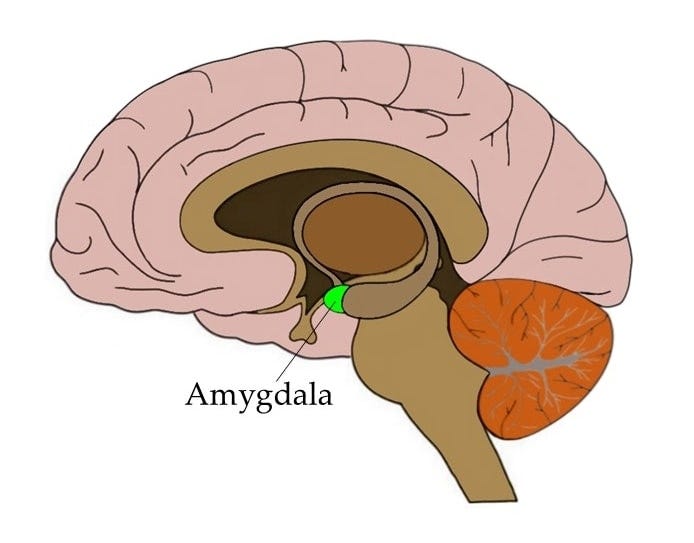
What Role Does the Amygdala Play in Functional Vestibular Disorders?
Anxiety and behavioral challenges represent hallmark comorbidities for both disorders, driving significant distress. Both conditions manifest as amygdala-based disorders, but the mechanism that triggers this fear response differs entirely.
In PPPD, the amygdala fires because the hypervigilant brain interprets normal external motion as an immediate physical threat. The panic serves as a reactive defense mechanism to a perceived sensory mismatch in the environment.
In MdDS, the amygdala fires because the internal pacemaker never stops. The constant, inescapable internal firing exhausts the nervous system, leading to chronic anxiety and autonomic arousal. The PPPD patient fears the environment, while the MdDS patient cannot escape their own hyperactive central processing loop.

Why Does The Zero the Øut Method™ Provide a Targeted Clinical Solution?
Understanding this pathophysiological divide explains exactly why generic vestibular habituation fails these patients. Clinicians must apply The Zero Øut Method™ precisely based on the specific state of the patient’s central nervous system.
For patients with MdDS, the clinical objective is to bring them down to zero. Clinicians often mistakenly assume they need to challenge the system to force adaptation. Instead, pushing a hyperactive system harder simply reinforces the pathological loop.
The goal of The Zero the Øut Method™ is to eliminate conflicting stimuli, strip away the maladaptive compensatory strategies, and allow the central velocity storage mechanism to quiet down and recalibrate.
For patients with PPPD, the clinician must start them at zero but move them away. The initial step is to establish a completely secure sensory baseline in which the patient experiences no symptoms. This effectively proves to the amygdala that stability is possible.
Once the nervous system drops its hypervigilant state, the clinician systematically introduces incremental visual and somatosensory challenges, guiding the patient safely away from zero and back toward normal functional mobility.
References
Cha, Y. H., Baloh, R. W., Cho, C., et al. (2020). Mal de débarquement syndrome diagnostic criteria: Consensus document of the Classification Committee of the Bárány Society. Journal of Vestibular Research, 30(5), 285-293. https://doi.org/10.3233/ves-200714 Cited by: 104
Staab, J. P., Eckhardt-Henn, A., Horii, A., et al. (2017). Diagnostic criteria for persistent postural-perceptual dizziness (PPPD): Consensus document of the committee for the Classification of Vestibular Disorders of the Bárány Society. Journal of Vestibular Research, 27(4), 191-208. https://doi.org/10.3233/ves-170622 Cited by: 1062