
Unlocking Movement: The Potential of AlterG Treadmills in Parkinson's Rehabilitation with a Focus on Vestibular Impairment


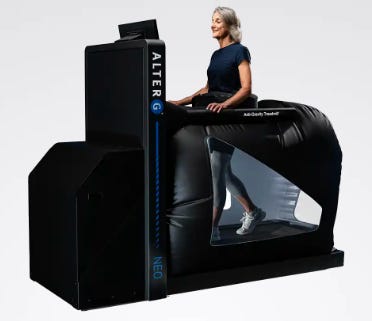
Parkinson's disease and parkinsonism present formidable challenges for vestibular rehabilitation specialists. Gait disturbances, particularly festination, are hallmarks of these conditions, significantly impacting patients' mobility and quality of life. While traditional rehabilitation approaches address motor control and balance, they often fail to consider vestibular dysfunction's role in gait abnormalities fully. Emerging evidence suggests that the AlterG Anti-Gravity Treadmill® may offer a unique solution by allowing for precise unweighting and controlled loading, potentially mitigating the impact of vestibular impairment on gait and facilitating more effective rehabilitation.
Vestibular Dysfunction and Gait Disturbances in Parkinson's
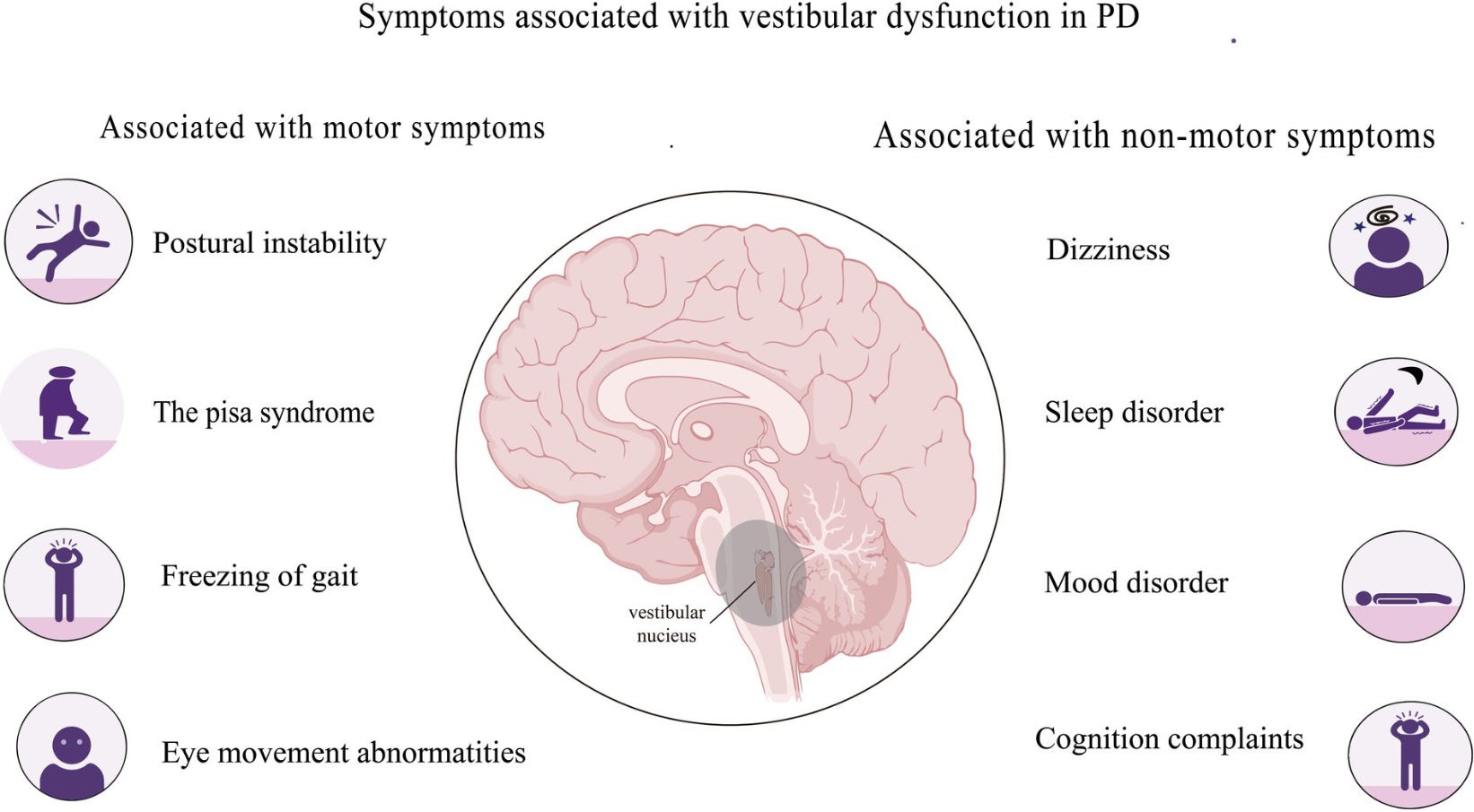
Individuals with Parkinson's frequently exhibit vestibular deficits, including impaired vestibulo-ocular reflex (VOR), reduced otolith function, and altered vestibular perception. These deficits can contribute to spatial disorientation, postural instability, and difficulty adapting gait to changing environmental conditions. Festination, a common gait disturbance in Parkinson's, is characterized by shortened stride length, increased cadence, and a forward-leaning posture. While the exact mechanisms underlying festination are complex and multifactorial, vestibular dysfunction likely plays a significant role.
Why Vestibular Dysfunction in Parkinson's?
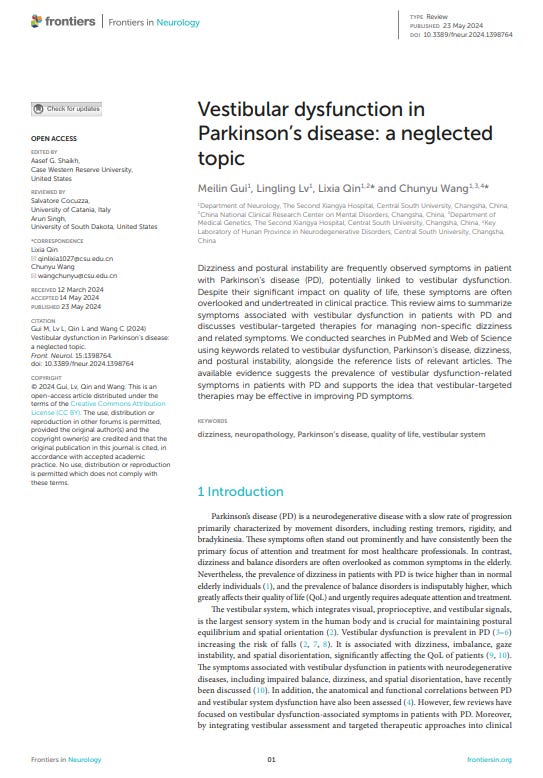
Vestibular dysfunction in Parkinson's is a complex issue with several contributing factors (Gui et al., 2024). While the primary pathology of Parkinson's involves dopamine depletion in the basal ganglia, research suggests that vestibular dysfunction may arise from a combination of:
Neurodegenerative Processes: Dopamine depletion may directly impact vestibular function, as some studies have found decreased dopamine levels in the vestibular nuclei of Parkinson's patients.
Lewy body pathology, a hallmark of Parkinson's, has been identified in brain regions involved in vestibular processing, potentially disrupting neuronal function.
The widespread neurodegeneration associated with Parkinson's can affect multiple sensory and motor systems, including the vestibular system, leading to a decline in function.
Immobility and Reduced Activity: Reduced movement and physical activity can lead to decreased sensory input and motor output, negatively impacting vestibular function due to the principle of use-dependent plasticity.
Deconditioning can further contribute to vestibular dysfunction, as muscle weakness, balance deficits, and decreased physical fitness can exacerbate vestibular symptoms.
Other Contributing Factors: Medications used to treat Parkinson's may have side effects that affect balance and vestibular function.
Comorbidities such as diabetes, cardiovascular disease, and inner ear disorders can contribute to vestibular problems.
Age-related decline in vestibular function can exacerbate existing vestibular issues in Parkinson's patients.
The AlterG Advantage: Unweighting and Controlled Loading
The AlterG's unique unweighting capability allows for precise reduction of gravitational forces on the body, effectively reducing the load on the vestibular system. This can be particularly beneficial for Parkinson's patients with vestibular impairment, as it allows for:
Reduced Vestibular Strain: By decreasing the sensory input related to gravity and body weight, the AlterG can alleviate the sensory overload and mismatches contributing to gait disturbances.
Improved Postural Control: Unweighting can facilitate improved postural alignment and stability, reducing the forward lean and instability associated with festination.
Enhanced Gait Mechanics: With reduced gravitational load, patients can practice and refine gait patterns with greater ease and control, potentially leading to increased stride length, normalized cadence, and improved overall gait quality.
Integrating AlterG into Vestibular Rehabilitation Programs
The AlterG can be a valuable tool within a comprehensive vestibular rehabilitation program for Parkinson's patients. Here are some key considerations for its integration:
Assessment: Thorough vestibular assessment, including videonystagmography (VNG), computerized dynamic posturography (CDP), and clinical balance tests, is crucial for identifying patients who may benefit from AlterG intervention.
Protocol Development: Individualized protocols should be developed based on the patient's specific vestibular deficits, gait impairments, and overall functional limitations.
Progression: Gradual progression of unweighting and exercise intensity is essential to avoid overwhelming the vestibular system and ensure patient safety.
Outcome Measures: Gait speed, stride length, dynamic gait index (DGI), and patient-reported outcome measures (PROMs) can be used to track progress and evaluate the effectiveness of AlterG intervention.
Addressing Safety and Collaboration
Safety is paramount when using AlterG with Parkinson's patients. Careful monitoring of vital signs, especially blood pressure, is crucial to prevent orthostatic hypotension. Close supervision and appropriate assistive devices may also be necessary to minimize fall risk.
Collaboration with neurologists and other healthcare professionals is essential to integrate AlterG intervention into a comprehensive Parkinson's management plan. This collaborative approach can optimize patient outcomes and promote a holistic approach to care.
Future Directions and Conclusion
While the AlterG holds promise for improving gait and balance in Parkinson's patients with vestibular impairment, further research is needed to establish its efficacy and develop evidence-based protocols. Future studies should investigate the long-term effects of AlterG intervention on gait parameters, fall risk, and quality of life in this population.
By embracing innovative tools like the AlterG and integrating them into comprehensive vestibular rehabilitation programs, we can potentially unlock new levels of movement and improve the quality of life for individuals with Parkinson's.
References
Carvallo, A., Corcos, D. M., Horak, F. B., & Almeida, Q. J. (2020). The effects of an anti-gravity treadmill training program on gait and dynamic balance in patients with Parkinson's disease. Gait & Posture, 75, 130-136.
Cherise, L., Bagwell, J., Powers, C., Fisher, B., & E. (2015). Pressure-controlled treadmill training in chronic stroke. Journal of Neurologic Physical Therapy, 39(2), 127-133.
Gui M, Lv L, Qin L, Wang C. Vestibular dysfunction in Parkinson's disease: a neglected topic. Front Neurol. 2024 May 23;15:1398764. doi: 10.3389/fneur.2024.1398764. PMID: 38846039; PMCID: PMC11153727.
Melbourne, A., Butler, J., Gear, R., & Coote, S. (2017). The effect of body weight supported treadmill training on walking performance and function in people with multiple sclerosis. Disability and Rehabilitation, 39(17), 1713-1720.
So would certain sensory weighting dysfunction respond better to the AlterG? Based on Parkinsons known effects and common presentations, would they stereotypically fall (pun not intended) into a certain dysfunction? How much does the Sensory input from the AlterG itself affect sensory weighting? Since it's compression for the hips/thighs and a different input from underneath (lifting up)? Sorry, a lot of questions for this one. Fascinating aubject...