
Vestibulolithiasis Unveiled: Part 1 - Unraveling the Mystery
A Journey into the Intriguing World of Atypical BPPV


Welcome to the first installment of our deep dive into vestibulolithiasis, a fascinating and often perplexing phenomenon within Benign Paroxysmal Positional Vertigo (BPPV). This series, designed for vestibular professionals like yourself, will guide you through this unique condition's history, terminology, key concepts, and clinical implications.
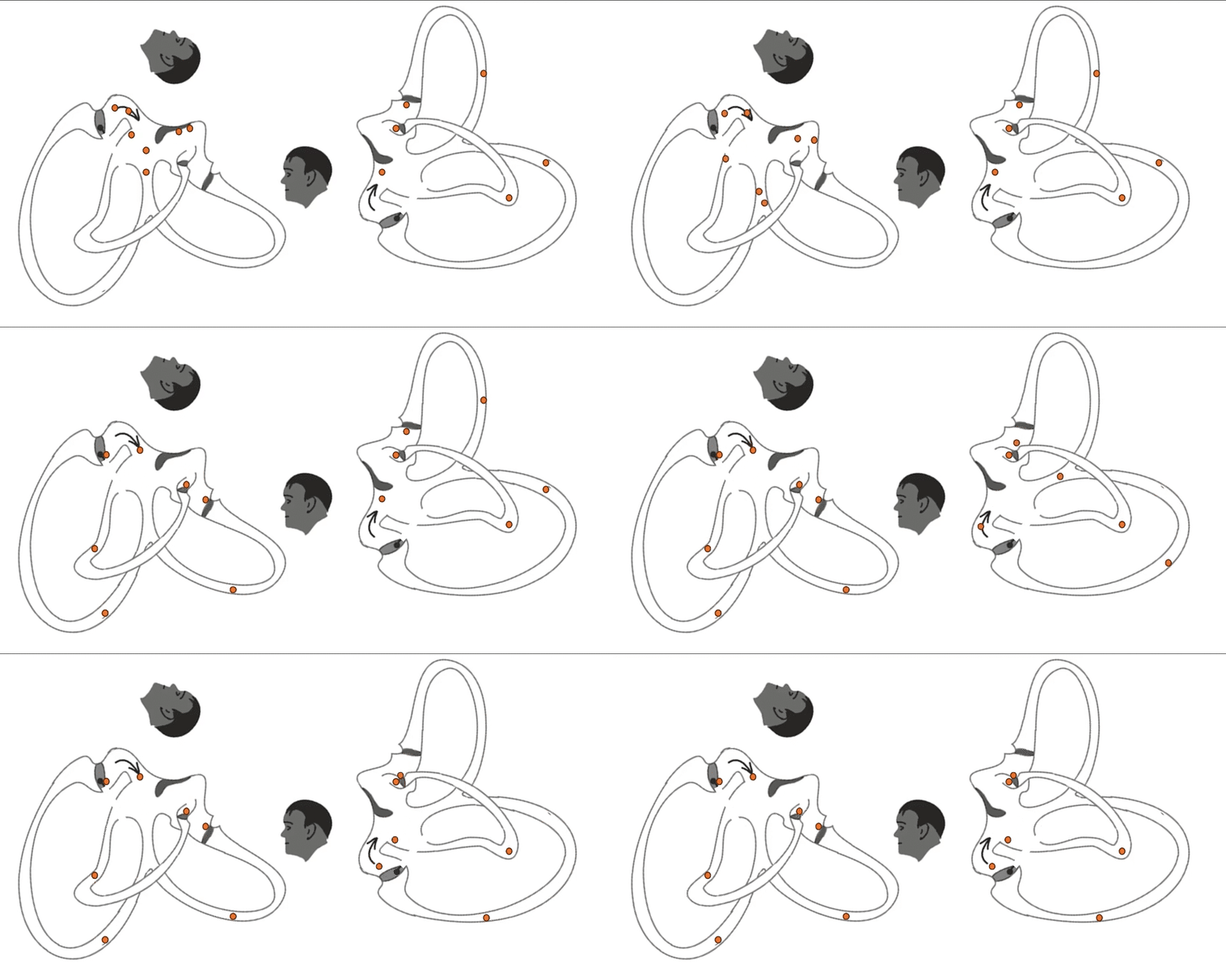
Vestibulolithiasis, characterized by the elusive movement of otoconial debris, can present atypical nystagmus patterns that defy traditional BPPV diagnoses. In my experience as a vestibular therapist, I've come to view vestibulolithiasis as a dynamic process involving debris moving in and out of the vestibule and potentially into the canals—either the long or short arms—during positional testing and treatment. This perspective highlights the complexities of accurately identifying and managing this condition.
In this first part, we'll explore the historical evolution of vestibulolithiasis, clarify key terminology, and set the stage for a deeper exploration in the subsequent parts of this series.
A Brief History of Vestibulolithiasis
Our understanding of vestibulolithiasis has evolved, shaped by the contributions of numerous researchers who sought to unravel the mysteries of BPPV.
The Early Days: Robert Bárány, a pioneer in vestibular research, laid the foundation for our understanding of BPPV in the early 20th century. His work on positional nystagmus and the role of otoconia paved the way for future investigations into the complexities of this condition.
Schuknecht's Insights into Cupulolithiasis: In the mid-20th century, Harold Schuknecht significantly advanced our understanding of BPPV by proposing the concept of cupulolithiasis. He suggested that in some cases of BPPV, otoconia might adhere to the cupula of the semicircular canal rather than being free-floating within the canal. This explained specific clinical presentations of BPPV that didn't fit the classic canalithiasis model, such as persistent nystagmus. Schuknecht's work expanded our understanding of the diverse manifestations of BPPV and paved the way for further research into atypical forms.
Moriarty's Seminal Work: In 1992, Moriarty, Rutka, and Hawke published a landmark paper that significantly advanced our understanding of atypical BPPV. They described the presence of free-floating otoconia within the vestibule, a condition they termed "vestibulocytosis." They proposed that this could lead to debris entering the canals and causing unusual nystagmus patterns. This work laid the foundation for the concept of vestibulolithiasis as we know it today.
Büki's Call for Expanded Definitions: In 2014, Büki emphasized the need for broader definitions of BPPV to encompass the diverse range of clinical presentations, including those associated with vestibulolithiasis. This underscored the importance of recognizing atypical patterns and expanding our diagnostic framework.
Terminology and Definitions
Precise terminology is crucial for effective communication and accurate diagnosis of vestibular disorders. Let's clarify some key terms related to the broader category of otolithiasis, which encompasses various forms of BPPV involving otoconia:
Otolithiasis: This is a general term referring to disorders caused by the displacement of otoconia within the vestibular system. It encompasses several subtypes, including:
Canalithiasis refers to the classic form of BPPV, where free-floating otoconia are located within the long arm of a semicircular canal.
Cupulolithiasis: In this variant of BPPV, otoconia are adhered to the cupula of a semicircular canal.
Vestibulolithiasis describes a unique phenomenon where otoconial debris within the vestibule transiently enters the semicircular canals during head movements, typically through the common crus or the short arm. This can lead to positional vertigo and nystagmus, which have characteristics that differ from typical canalithiasis or cupulolithiasis. While the debris may momentarily behave like canals or cupuloliths, the critical distinction is its origin in the vestibule and its tendency to move in and out of the canals, creating a dynamic and sometimes elusive presentation.
Conclusion
This concludes Part 1 of our exploration into vestibulolithiasis. We've set the stage by reviewing the historical evolution of this condition and clarifying key terminology within the broader context of otolithiasis. In the next installment, we'll delve into Ewald's Laws and the intricacies of nystagmus interpretation. Stay tuned for a deeper dive into the fascinating world of atypical BPPV!
References
Bárány, R. (1916). Some new methods for functional testing of the vestibular apparatus. Nobel Lecture.
Büki, B. (2014). Benign paroxysmal positional vertigo--toward new definitions. Otol Neurotol, 35(2), 323-328.
Moriarty, B., Rutka, J., & Hawke, M. (1992). The incidence and distribution of cupular deposits in the labyrinth. Laryngoscope, 102(1), 56-59.
Schuknecht, H. F. (1969). Cupulolithiasis. Archives of Otolaryngology, 90(6), 765-778.
Great part 1
Looking forward to reading part 2