

When Your Body's Internal GPS Gets Confused: Understanding Sensory Mismatch and SVM


Brian K. Werner, PT, MPT, here from FYZICAL. As a physical therapist specializing in vestibular and balance disorders, I often see patients struggling with dizziness and unsteadiness. Usually, the root cause isn't a problem with one specific system but rather how your brain interprets and pieces together information from different 'sensors' in your body. This is what we call sensory mismatch.
Think of your body as having an incredible, sophisticated internal GPS. To keep you upright and moving safely, your brain constantly receives input from three central sensory systems:
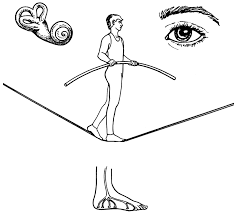
Your Vestibular System: Located in your inner ear, this is your body's motion sensor. It tells your brain about head movements and where your head is in space, helping you stay oriented.
Your Somatosensory System: Your sense of touch and proprioception (your body's awareness of where it is in space). Sensors in your skin, muscles, and joints tell your brain about the surface you're on, the pressure, and the position of your limbs and body.
Your Visual System: Your eyes provide critical information about your surroundings, how you're moving relative to objects, and the stability of your environment.
Ideally, these three systems work together seamlessly, like a well-tuned orchestra. They provide consistent, accurate information to your brain, allowing you to maintain your balance without even thinking about it.
What Happens During a Sensory Mismatch?
A sensory mismatch occurs when the information from these three systems doesn't 'match up' in your brain. This can happen when one of your systems isn't working as well as it should or when you're in a challenging environment. For example, if you're on a wobbly boat (unreliable somatosensory input) in the dark (reduced visual input) and have a vestibular weakness, your brain gets conflicting or insufficient data. This confusion can lead to dizziness, unsteadiness, and disorientation.
Your brain is incredibly adaptable and will try to compensate. It might start to 'over-rely' on one or two of the remaining sensory systems to try and make sense of things and keep you upright. While this is a brilliant compensatory mechanism, it can sometimes lead to new movement patterns and symptoms.
Focusing on Somatosensory > Visual-Vestibular Mismatch (SVM)
We encounter a common type of sensory mismatch called Somatosensory-Vestibular Mismatch (SVM). While the acronym might say 'S-V-M,' we're talking about a Somatosensory > Visual-Vestibular Mismatch. This means that when your balance is challenged, your brain is over-relying on information from your somatosensory (surface) cues much more than visual cues to compensate for a profound underlying vestibular weakness.
Let's break that down:
Vestibular Weakness: This is often the primary issue. Your inner ear system isn't providing clear, consistent information about your head movements and position.
Over-reliance on Somatosensory: Because your vestibular system is struggling, your brain instinctively tries to find another reliable source of information. In SVM, it relies heavily on the sense of touch and pressure from your feet and body on the surface you're standing on. You might find yourself gripping the floor with your toes, walking with a wider stance, or feeling more stable when you have something to hold onto. You are using too much surface queuing to offset that vestibular weakness.
Visual input takes a Backseat: Although your eyes might be providing helpful information, with SVM, your brain isn't prioritizing it as much as the surface cues, or it is using it appropriately. This isn't to say your vision isn't working, but your brain is essentially saying, 'I trust the ground under my feet more than what I'm seeing to keep me stable.'
This over-reliance on somatosensory input can lead to specific symptoms. You might feel more dizzy or unsteady in environments with unreliable surface cues (like a soft carpet, uneven ground, or even standing still with closed eyes). Conversely, you feel better on a firm, predictable surface.
Common Misconceptions About Balance and Dizziness
Trying to understand what's happening when you experience dizziness or balance problems is natural. However, there are a few common misunderstandings that can sometimes lead people down the wrong path:
'It's Just My Age': While balance can decline with age, it's rarely 'just' age. Many balance issues are treatable, and assuming it's an inevitable part of aging can prevent you from seeking help and improving your quality of life. We often hear patients say, 'Well, I'm just getting old,' but the reality is that specific, addressable problems like vestibular weakness or a sensory mismatch are often the true culprits.
'I Just Need to Be More Careful': While caution is always wise, simply 'being more careful' isn't a long-term solution for underlying balance problems. Not being careful will resolve the core issue if your body's sensory systems aren't communicating effectively. Over-restriction can worsen things by limiting your body's opportunity to adapt and improve. We don't want you to 'fly by the seat of your pants' when it comes to your balance!
'My Dizziness Isn't That Bad, I Can Live With It': Dizziness, even mild dizziness, can significantly impact your daily activities, confidence, and overall well-being. It can also increase your risk of falls. Waiting until it's 'bad' might mean a longer road to recovery. Early intervention is often key to better outcomes.
'Physical Therapy Is Only for After Surgery or Injuries': This is a big one! Many people don't realize that physical therapy, mainly specialized vestibular and balance therapy, is incredibly effective for dizziness and balance disorders. We don't just treat post-surgical recovery; we directly address the sensory system dysfunctions that cause these issues.
How We Can Help
At FYZICAL, we use a comprehensive approach, like the FYZICAL-CTSIB, to assess how your brain weighs and uses information from your sensory systems. If you're experiencing symptoms consistent with SVM, our physical therapists can design a targeted rehabilitation program. We'll work to:
Strengthen your vestibular system: We can help your inner ear system more effectively send accurate balance signals through specific exercises.
Reduce your over-reliance on somatosensory input: We'll gradually challenge your balance on different surfaces and in varying visual environments, encouraging your brain to re-learn how to integrate all three sensory inputs more effectively. This often involves using our Safety Overhead Support (SOS) System to ensure safety as you challenge your balance.
Improve your overall balance and confidence: The goal is to help your brain integrate all three sensory inputs harmoniously, reducing your dizziness and unsteadiness and allowing you to move through the world with greater ease and confidence rather than flying by the seat of your pants!
If you've been struggling with dizziness or balance issues, understanding sensory mismatch, particularly SVM, is a big step toward finding solutions. Don't hesitate to contact an FYZICAL Therapy & Balance Center near you for an evaluation. We're here to help you live your life to the fullest, balanced, and free from dizziness.